

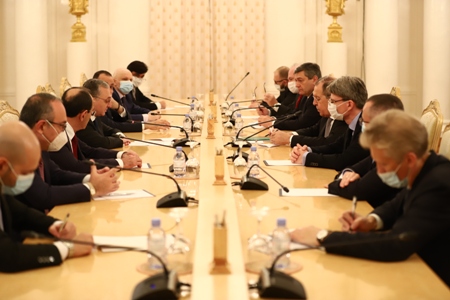
ArmInfo. What our compatriots are facing today in Nagorno- Karabakh is the embodiment of an existential threat that has been ripening for several decades, and about which Yerevan has been constantly talking. On October 12, at the opening of talks with his Russian counterpart Sergey Lavrov in Moscow, Armenia's Foreign Minister Zohrab Mnatsakanyan stated this, noting that despite the broad agenda of Armenian-Russian relations, the key topic of the talks will still be the situation in the Nagorno-Karabakh conflict zone, which carries threats for the entire region.
"We were able to achieve a certain result thanks to you, Mr. Lavrov, and the direct involvement of Russian President Vladimir Putin. We managed to agree on a joint statement at the ministerial level on a ceasefire, " Mnatsakanyan said, adding that the personal contribution of Lavrov, Putin and Russia in achieving this result is highly appreciated in Yerevan.
At the same time, the Armenian Foreign Minister emphasized that today it is necessary to achieve an end to hostilities. "The role of Russia in this remains extremely important. Unfortunately, we cannot say that in practice we have full implementation of the ceasefire agreements. Literally before arriving here, information continued to arrive that Azerbaijan did not fulfill its ceasefire obligations," said the Armenian Minister, in this context, pointing out the importance of introducing mechanisms to investigate incidents, which will allow achieving and observing the ceasefire regime.
At the same time, the Armenian Foreign Minister stressed that since September 27, a large-scale military aggression against the people of Artsakh has been continuing, while the true goals of the military solution of the Karabakh conflict and the physical extermination of the NKR population are being openly demonstrated.
According to him, the armed forces of Azerbaijan ignore the obligation to delimit military targets and the civilian population, and the absence of military facilities near the attack of Azerbaijan once again demonstrates the intention of Baku, which is tantamount to war crimes.
"During the implementation of this aggression, the Azerbaijani Armed Forces attacked more than 120 civilian settlements of Artsakh, including densely populated cities, including the capital Stepanakert, as well as Shushi and other cities. During the above period, as a result of indiscriminate strikes with the support of Turkey and the use of aviation , drones, artillery, rocket launchers, there are numerous civilian casualties, many killed and wounded in connection with the use of cluster munitions by the Azerbaijani side. As of October 10, 23 civilians died from the actions of the Azerbaijani armed forces and the forces supporting them, more than 100 people were injured in various degrees, 81 people - severe. The number of internally displaced persons has increased, some of whom have moved to Armenia," the Minister said, indicating serious damage to the civil infrastructure and housing stock of the NKR - more than 6,000 civil targets (houses, shops, apartments.);over 960 infrastructure facilities and public buildings for energy and water supply, communications, schools and kindergartens.
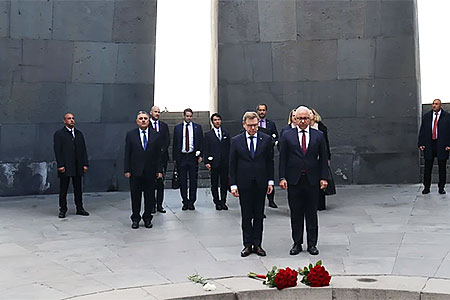
At the same time, he added that the situation is aggravated by two new factors, the direct involvement of Turkey in these processes and the transfer of mercenaries to the conflict zone. "Terrorist militants and radicals are widely used to project the current interests of the Turkish leadership and export influence to other regions. The transfer of militants from Syria and Libya by Turkey to Azerbaijan has not only been proven by our sources, but also recorded by the world community. Having resorted to the help of pro- Turkish terrorists, Azerbaijan itself became a platform for expanding Turkey's influence and a hotbed for international terrorism," he said. In conclusion, Mnatsakanyan added that Armenia attaches importance to maintaining the dynamics of relations with the Russian Federation. It should also be noted that Mnatsakanyan, within the framework of his official visit to Moscow, before the start of negotiations, visited the Tomb of the Unknown Soldier and laid a wreath.






















 A security sphere expert commented on a video about Papikyan`s achievements during his five years as Defense Minister
 The future of the South Caucasus was discussed in the capital of a country whose problem remains unresolved — Davtyan
 An Armenian orientalist presented possible US actions against Iran
 Prime Minister: The Constitution is our collective agreement on the fundamental principles of our internal and external relations
 Ultra-Orthodox Jews continue to desecrate Armenian holy sites in Jerusalem’s Armenian Quarter
 The Yerevan Museum of Russian Art Turns 42
 Armenia wants to host COP-34 in 2029
 Speaker: Armenia has never approached the CSTO regarding the Karabakh issue
 Lavrov: Armenia will not be expelled from the CSTO
 Drmeyan: The ECHR rejected Azerbaijan`s appeal in the case of Artsakh Defense Army Major Hayk Toroyan
 "Strong Armenia": The brawl in parliament was staged to distract public attention from Pashinyan`s failed foreign policy
 Zakharova commented on the scandalous epithets of the governor of Armenia`s Shirak region about "Ivanov"
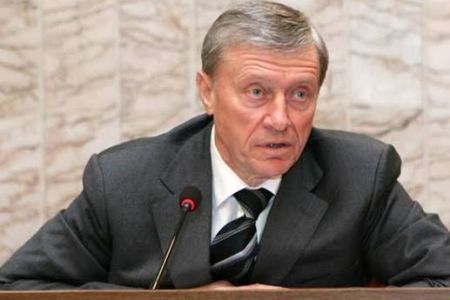 Nikolai Bordyuzha proposed excluding Armenia from the CSTO.
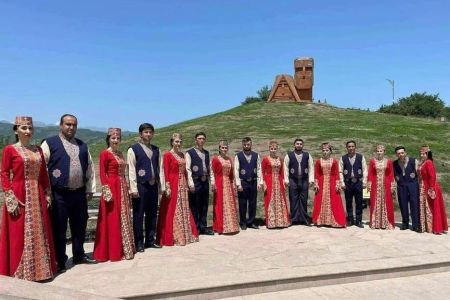 The participation of Artsakh ensembles in an international festival in Vienna was cancelled following the intervention of several foreign embassies