

ArmInfo. US Department of State has published annual <Trafficking in Persons> report 2018, which downgraded Armenia to Tier 2.
According to the report the Government of Armenia does not fully meet the minimum standards for the elimination of trafficking; however, it is making significant efforts to do so. The government made significant efforts to meet the minimum standards during the reporting period by providing robust training for law enforcement, initiating slightly more prosecutions, and organizing various awareness campaigns. However, these efforts were not serious and sustained compared to the efforts during the previous reporting period. The government did not proactively identify victims or conduct proactive investigations and relied on victims to self-identify; the number of victims identified decreased compared to the previous reporting period. Authorities dropped most cases categorized as trafficking by local police due to a lack of evidence and first responders did not use uniform indicators to screen vulnerable populations. Investigators repeatedly interrogated victims, including children, and victims always appeared in front of their traffickers in court; risking re-traumatization. International organizations reported cases of child labor and child abuse in state childcare institutions, and noted the institutions lacked measures to prevent the exploitation of children. The government continued to suspend the majority of labor inspectorate functions, hindering regular inspections that had the potential to identify forced labor; no labor inspections were conducted during the reporting period. Therefore Armenia was downgraded to Tier 2, the report reads.
At the same time the US Department of State recommends Armenia to vigorously investigate, prosecute, and convict traffickers under articlesfull 132 and 132-2; establish and implement preventative 77 measures for child labor and potential child trafficking in state child care institutions; increase efforts to proactively identify trafficking victims; develop standard operating procedures for screening trafficking victims and train officials on screening for trafficking among individuals in prostitution, migrants, refugees, and other at-risk populations; proactively investigate all potential trafficking offenses, even those complaints filed by victims that do not specifically mention trafficking; train investigators, prosecutors, and judges on victim-centered approaches to trafficking cases, including for children, and provide advanced training on trafficking investigations and prosecutions; allow labor inspectors to conduct regular inspections and identify victims through unannounced visits; establish formal procedures for repatriating trafficking victims from abroad, including measures to cover logistical costs; license, regulate, and educate local employment agencies and agents so they can help prevent the forced labor of Armenians abroad; work with Russian authorities to identify Armenian forced labor victims and prosecute labor traffickers; work with NGOs to find ways to identify and assist Armenian victims in Turkey; and approve legislation to establish victim-witness protection measures.




















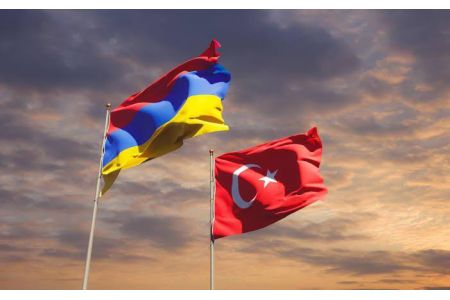 Armenian experts, leading Turkish think tanks discuss prospects for expanding cooperation
  Political Scientist: As long as the opposition remains silent, Pashinyan can use Plan B and secure a constitutional majority
 US-Iranian memorandum more beneficial for Iran from political and economic perspective - expert
  Political analyst: While Pashinyan pledges peace with Azerbaijan, Baku continues promoting the "Western Azerbaijan" project
 Zakharova: Armenia`s pro-EU pivot poses economic security risks to EAEU member states
 It`s time for South Caucasus countries to think of South Caucasus as single, unified region - RA premier
  Pashinyan: Armenia and Azerbaijan should leave each other alone
 Moscow sees situation with Armenia as attempt to attack Russia-involving integration associations - Russian presidential aid
 Zakharova: Armenia views relations with Russia as tool for financially securing reorientation toward EU
 The Armenian Minister of Justice and the EU Ambassador discussed visa liberalization issues for Yerevan.
 Azerbaijan`s aggressive plans against Armenia became possible in wake of Pashinyan`s decisions on Artsakh - expert
  Zakharova: Russia sent a note of protest to Armenia over the act of vandalism at the "Mother Armenia" memorial in Gyumri
 Samvel Karapetyan proposes creating a post-election opposition coalition
 Artsakh`s Cultural Heritage Ombudsman called on Moscow to respond to destruction of WWII monuments by Azerbaijan in occupied NKR
 Prosecutor General`s Office petitions Central Electoral Commission for criminal prosecution of Robert Kocharyan
 Dutch Prime Minister expresses his support for Armenia`s democratic reform and economic diversification agenda
 Heritage: It`s time for Armenia`s opposition to present people with legitimate alternative to power
 RA Security Council Sec, Assistant to President of Azerbaijan hold negotiations in Dilijan
 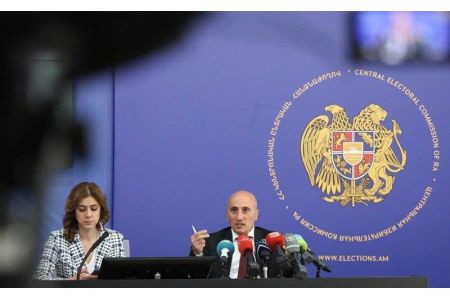 CEC Neutralizes PAP: Three Political Forces to Enter Armenian Parliament Following Election Vote