
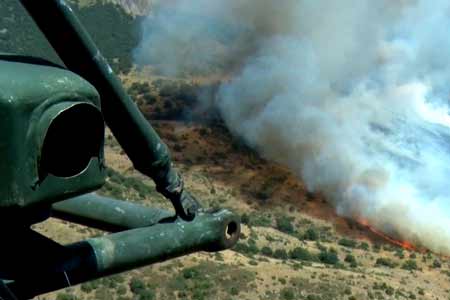
ArmInfo. On August 25 in Khosrov reserve in Armenia works continue on extinguishing remaining fire, according to Armenian MES press service.
81 rescuers and 29 forestry workers will be involved in the work today. According to RA Ministry of Emergency Situations, the number of fires is decreasing. The day before, 90 rescuers, 40 forestry workers and five employees of the Ararat police department took part in the works. There were also conducted reconnaissance works on 600 hectares of forest land, where 86 foci were recorded, which is almost half as much as the previous day. All outbreaks have been extinguished. The reserve has 24-hour duty.
Regarding the restoration of damage, as well as the implementation of active firefighting measures, according to Artsvik Minasyan, the Ministry of Emergency Situations and the Ministry of Nature Protection of Armenia will sign a grant agreement with the United Nations Development Program (UNDP) for $ 1 million until September 1. "A major component of the agreement Concerns the purchase of fire fighting equipment," Minasyan said. The Khosrov Reserve is a nature conservation zone in Armenia in the Ararat region in the southern part of the Geghama mountain range. It was founded in 1958. Occupies an area of 29 000 hectares in the basins of the Azat and Khosrov rivers at altitudes of 1 400-2 250 m above sea level. The Khosrov Forest is located in the Ararat region of Armenia, 61 km southeast of Yerevan. Most of the reserve covers the zone of highland xerophytes - drought-resistant plants that can withstand high temperatures. The area is distinguished by a special variety and richness of flora and fauna. In the Khosrov Reserve there are 1686 plant species, 146 of which are listed in the Red Books. Among them are a wild pear, apple, plum, cherry, mountain ash, hawthorn, almonds, Vavilov rye. Also here are protected forests of juniper and oak, mountain xerophytes, mountain-steppe and wormwood semi-desert formations. In the Khosrov Reserve there are rare species of arachnids, crustaceans, insects, among which a large variety of butterflies listed in the Red Book. And also 5 species of amphibians and fish, 33 species of reptiles, 142 species of birds, 55 species of mammals, in particular, Transcaucasian brown bear, wild boar, broad-eared hedgehog, Armenian moufflon, bezoar goat, lynx, wolf, fox, leopard, and others.

















 Expert: The arrest of opposition figures in Armenia for social media posts is a systematic attempt to intimidate the public and suppress dissent.
 Azerbaijani Studies Expert: While Azerbaijan Prepares Its Generation for War, Aliyev’s Aide Calls on Armenia to Prepare Armenian Society for “Peace”
 Turkologist: Azerbaijan will never, under any circumstances, stop pressuring the Armenian people
 Political scientist: We need to move away from the question of "when" and replace it with more important questions
 Lukashenko called for Armenia to assume the CIS presidency in 2029
 Dmitry Medvedev predicted a Ukrainian-like fate for Armenia amid the country`s shift in foreign policy
 Russian Security Council: In Armenia, they want to force Russian asset owners to dispose of their assets
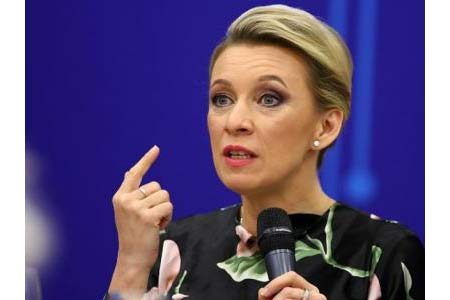 Zakharova: Russia ready to discuss with Armenia the prospects for expanding military cooperation as part of a review of bilateral ties
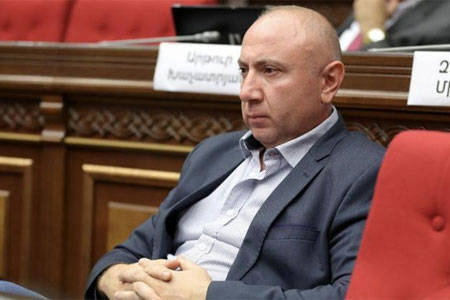 Tevanyan: Armenia, like Ukraine and Moldova, is being drawn into the EU’s global war
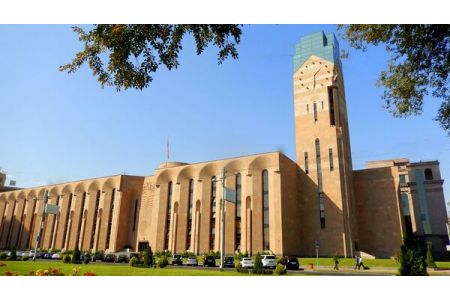 Yerevan City Hall is considering introducing a valet parking system in the city
 Expert: The circus surrounding the “Albanization” of Armenian culture in the presence of foreign ambassadors in occupied Artsakh is genocide
 Political scientist: If Russian-Armenian relations are destroyed, Turkey will take Russia`s place
 Political scientist: The Armenian public is simply obliged to significantly change the entire content of public discourse and struggle
 Cross tattoos are being removed from the skin of Christian prisoners in Azerbaijan by fire, according to a human rights activist.
 Zakharova: Armenia`s likely introduction of visas with Russia will be a step against Yerevan itself
 Putin: Armenia`s recognition of Karabakh as part of Azerbaijan in Prague has given Russia`s position on this issue an ambivalent character
 Putin: Armenia`s adoption of the law on EU accession means an announcement of its withdrawal from the Eurasian Economic Union