
ArmInfo.Parliamentary elections in Armenia started on April 2, at 8 am. These are the first elections after the constitutional reforms implying transition from the semi-presidential to the parliamentary form of government.
According to the Central Electoral Commission of Armenia, as many as 2009 polling stations opened in the republic at 8 am. The total number of voters is 2 mln 564 thsd 795. 9 political forces run in the elections: 4 blocs (Yelq, Tsarukyan, Ohanyan-Raffi- Oskanian and Congress-PPA), and 5 parties (Republican Party of Armenia, Communist Party, Free Democrats, ARF Dashnaktsutyun, Armenian Renaissance).
1500 candidates are running under the rating-based system.
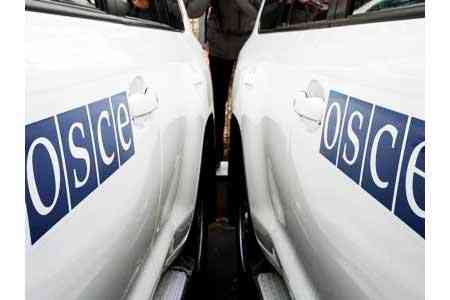
49 local organizations (28 thsd observers) and 6 international organizations (OSCE/ODIHR, OSCE PA, PACE, CIS, CIS PA and European Parliament, with the total number of observers being 640) are observing the elections.
As many as 1244 reporters from 89 local media outlets and 80 representatives of 31 foreign media outlets have been accredited to cover the elections.
Advanced technologies will be applied during the elections - identification cards, surveillance cameras - to minimize the possible fraud risks. The list of those who went to the polling stations will be publicized to prevent repeated voting.
If the parliamentary elections are held in one round (this will depend on whether a force or a bloc manages to form the majority), the National Assembly will be comprised of 105 lawmakers - 101 from political forces and 4 representatives of ethnic minorities. 50% of the lawmakers will receive parliamentary seats based on the preferential voting and 50% - on the proportional party lists. If the second round is held (experts rule out such a possibility), the number of the seats will be increased.






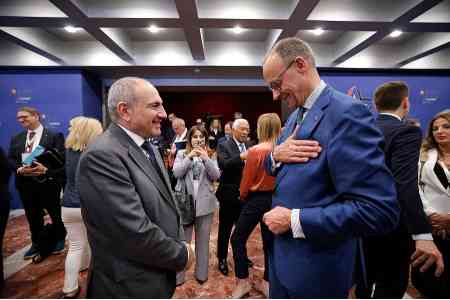


 Opinion: Following Berlin talks, Baku gains expanded influence within EU and strengthens cooperation ties with main European powerhouse
 Armenian expert: Could modern Azerbaijan even exist without Russian and Soviet modernization?
 Zatulin: Pashinyan was eager to get back to Russia because he actually lost the elections
 Human rights activist Ruben Melikyan dismissed from YSU
 Pashinyan removed from INNOPROM guest list
 Zakharova: Armenia`s pro-EU pivot poses economic security risks to EAEU member states
 It`s time for South Caucasus countries to think of South Caucasus as single, unified region - RA premier
  Pashinyan: Armenia and Azerbaijan should leave each other alone
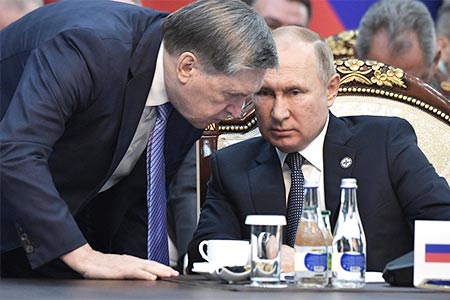 Moscow sees situation with Armenia as attempt to attack Russia-involving integration associations - Russian presidential aid
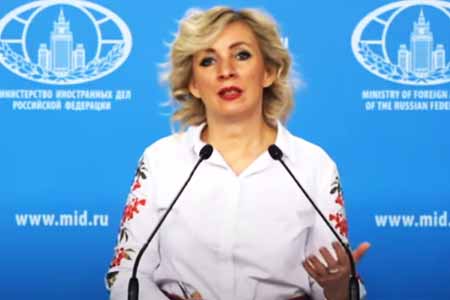 Zakharova: Armenia views relations with Russia as tool for financially securing reorientation toward EU
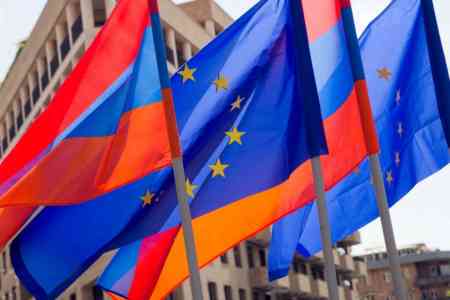 The Armenian Minister of Justice and the EU Ambassador discussed visa liberalization issues for Yerevan.
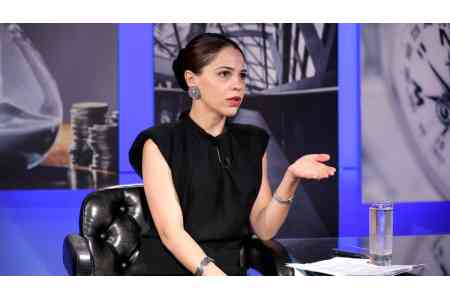 Azerbaijan`s aggressive plans against Armenia became possible in wake of Pashinyan`s decisions on Artsakh - expert
 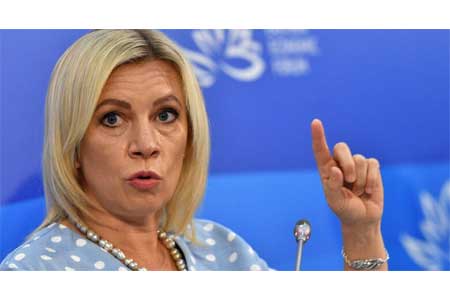 Zakharova: Russia sent a note of protest to Armenia over the act of vandalism at the "Mother Armenia" memorial in Gyumri
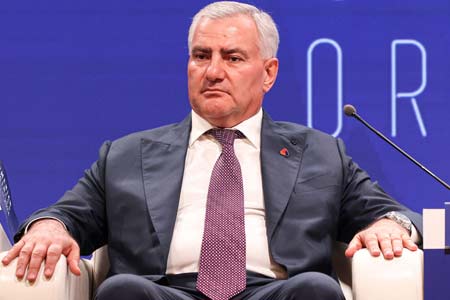 Samvel Karapetyan proposes creating a post-election opposition coalition