

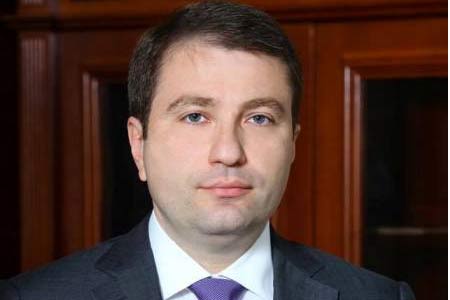
ArmInfo.Macroeconomic and financial stability are the most important achievements of the Central Bank and the Government of the Republic of Armenia in 2016, David Sargsyan, ex-Finance Minister of Armenia, Chief Financial Officer of Ardshinbank, one of the leading banks in Armenia, says in an interview with ArmInfo.
“This is the most significant achievement of our economic and financial authorities in 2016 due to the notable improvement of the country’s balance of payments. In 2016, the deficit of the current account of the balance of payments dropped to 3%, and this considerably reduced the risks of further depreciation of the national currency,” Sargsyan stresses. He thinks the notable decline in imports caused by the decrease in consumption neutralized the decline of the private remittances to the country, while a significant growth in exports considerably improved the balance of payments and removed the depreciation risks. “As a matter of fact, this achievement is a very important when the matter concerns the prospects for 2017-2018. These favorable macroeconomic factors have increased the overall market liquidity and created grounds to overcome the stagnation. If there is liquidity, the rest is just a matter of time. The most important thing is that there is a good fundamental for the future,” he notes.
When asked how he assesses the monetary policy of the regulator, Sargsyan replies that it is hard to overestimate the Central Bank’s role in ensuring stability. “Given the CBA’s decisions on the key interest rate, which I think is politically speculated upon, the policy aimed at reducing the rates was launched as early as in Q4 2015. Let’s recall the previous events. In late 2014, Armenian dram experienced sudden devaluation (mainly due to situation with the Russian ruble), the market was panic-stricken and the regulator considerably increased the rates, toughened the reserve requirement and took some other measures, thereby ensuring stability within a short time. Shortly after, measures were taken to ensure that there's enough liquidity. In Q4 2015, the CBA made its first decision to reduce the refinancing rate. Q1 and Q2 of 2016 saw a considerable economic growth and it seemed there was no need to keep reducing the rates. However, the regulator realized that the growth potential would run out by the end of the year. This happened in Q3, but since the decision to reduce the rate had been taken half a year before, the situation was mitigated to the extent possible. In this regard, the CBA’s work was quite adequate and correct. Now the refinancing rate has reached 6%. The reduction of the key interest rate, along with the decision to increase the minimum regulatory capital (30 bln AMD starting from 1 Jan 2017), resulted in the increase of the liquidity in the banking system. nd high liquidity stimulates growth,” the expert says.
At the same time, Sargsyan thinks that the CBA has recently sent a message, saying that now its capacities of using monetary policy tools are limited. “This does not mean that the CBA has faded away its capacities to use the tools and is now washing its hands of the affair. The latest decisions demonstrate that the regulator is going to use more delicate tools to maintain growth. I mean the decision to reduce the risk weights for some borrowers when calculating the capital adequacy ratio if the state supervisory bodies consider the borrower is a bona fide taxpayer without “hidden” bookkeeping and having all prerequisites to be considered a reliable business entity. If you remember, the State Revenue Committee has recently awarded “certificates of disciplined taxpayers” to 20 enterprises of Armenia. The CBA, in turn, is going to reduce the standard load of the banks, which lend to the enterprises with adequate and accurate accountability. I think the regulator has found a good method to motivate not only the banks, but also business entities, encouraging them to evade shadow bookkeeping and enhancing the affordability of loans. I believe the CBA will increase the number of new and non-standard tools to expand the lending market within the bounds of admissible risks and to stimulate growth,” Sargsyan says.
Remindersince late 2015 the CB has been regularly reducing the refinancing rate from 9.75% to 6%. The latest decision to reduce the rate by 0.25 pct points was taken on 14 Feb 2017.

























 Expert: Economic pressure on Armenia may be virtually painless for other EAEU members, but not for Armenia itself
 Expert on protests in France: Civilizations fade when society loses a vision of the future
 Turkologist: Azerbaijan is not all-powerful—its vulnerabilities should become part of Armenia’s security strategy
 Opinion: The development of the Amulsar mine near the resort town of Jermuk is the beginning of an environmental disaster in Armenia
 Expert: The arrest of opposition figures in Armenia for social media posts is a systematic attempt to intimidate the public and suppress dissent.
 The Armenian Foreign Minister commented on the country`s return to work within the CSTO.
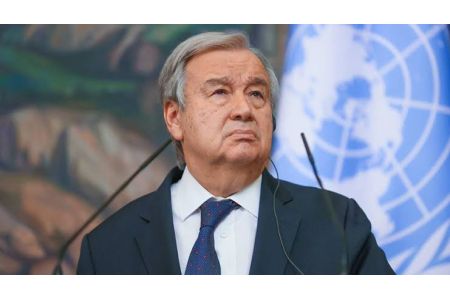 The Artsakh Public Council expressed outrage at the UN Secretary-General`s behavior
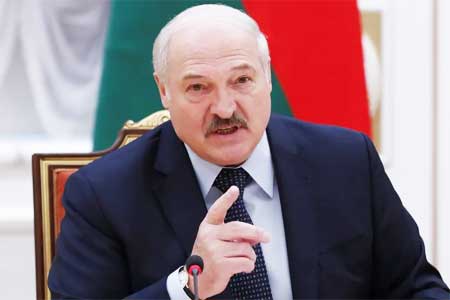 Lukashenko called for Armenia to assume the CIS presidency in 2029
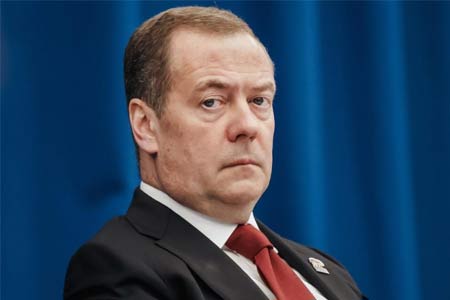 Dmitry Medvedev predicted a Ukrainian-like fate for Armenia amid the country`s shift in foreign policy
 Russian Security Council: In Armenia, they want to force Russian asset owners to dispose of their assets
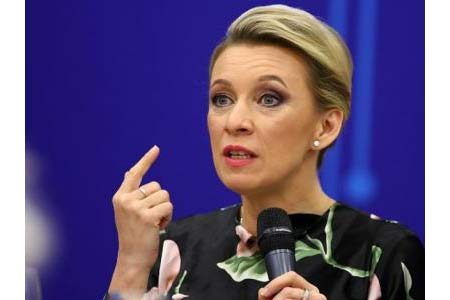 Zakharova: Russia ready to discuss with Armenia the prospects for expanding military cooperation as part of a review of bilateral ties
 Tevanyan: Armenia, like Ukraine and Moldova, is being drawn into the EU’s global war
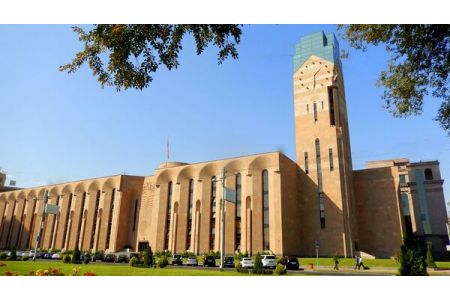 Yerevan City Hall is considering introducing a valet parking system in the city
 Expert: The circus surrounding the “Albanization” of Armenian culture in the presence of foreign ambassadors in occupied Artsakh is genocide
 Political scientist: If Russian-Armenian relations are destroyed, Turkey will take Russia`s place
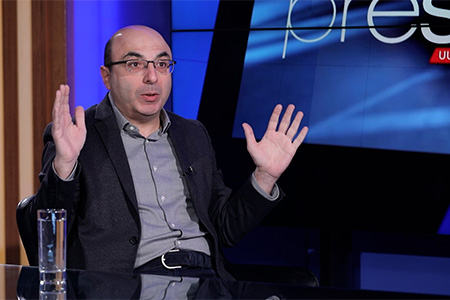 Political scientist: The Armenian public is simply obliged to significantly change the entire content of public discourse and struggle
 Cross tattoos are being removed from the skin of Christian prisoners in Azerbaijan by fire, according to a human rights activist.
 Zakharova: Armenia`s likely introduction of visas with Russia will be a step against Yerevan itself
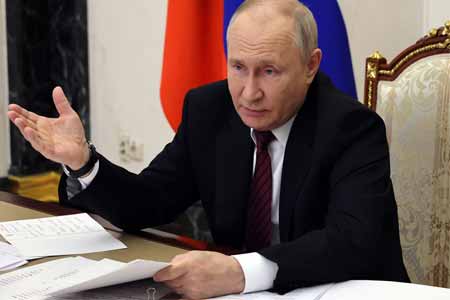 Putin: Armenia`s recognition of Karabakh as part of Azerbaijan in Prague has given Russia`s position on this issue an ambivalent character
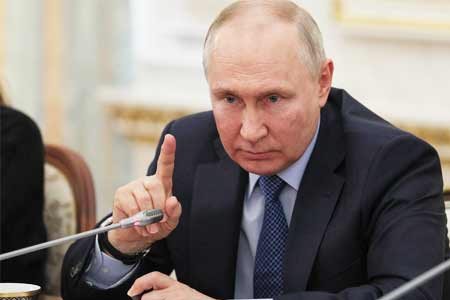 Putin: Armenia`s adoption of the law on EU accession means an announcement of its withdrawal from the Eurasian Economic Union