

Armenian police used excessive force against peaceful protesters on July 29, 2016 and assaulted journalists reporting on the demonstrations, Human Rights Watch said today. Police used stun grenades, which wounded dozens of demonstrators and some journalists, some severely. The police also beat journalists and protesters and detained dozens of people. Armenian authorities have opened an investigation into police actions on July 29.
"Armenia's investigation of the police assaults on demonstrators on July 29 should be swift and thorough," said Giorgi Gogia, South Caucasus director at Human Rights Watch. "While the police have an obligation to maintain public order, they do not have carte blanche to use violence against people gathered to peacefully express their views."
Protests have been ongoing in Armenia since July 17, when armed men from a radical opposition group seized a police station in Yerevan's Erebuni district, killing one policeman and taking several hostages, demanding political concessions from the government. Before the gunmen surrendered on July 31, public support for them grew into a wide protest movement in Yerevan, HRW reports.
According to the HRW, while police and protesters have scuffled several times, on the night of July 29 police used excessive and disproportionate force to disperse a peaceful crowd. Other protests took place without incident or police interference.
Human Rights Watch spoke with victims and witnesses of the violence. Several said that at about 11 p.m., police rapidly fired numerous rocket-projected stun grenades and threw hand-held stun grenades into the peaceful crowds near the police station in the Erebuni district. When the grenades landed, they emitted thick smoke and a loud sound, stunning many people for several seconds.
Interviewees told Human Rights Watch that the crowd was not attempting to cross the cordon when police started launching the stun grenades. Video footage of the events reviewed by Human Rights Watch supports the witness accounts.
While police could legitimately seek to prevent protesters from getting too close to the police station, they were still bound to uphold human rights and respect standards on the use of force, Human Rights Watch said.
Security forces should not fire stun grenades directly into crowds. Although the grenades are technically non-lethal, their fragmentation can foreseeably cause serious injuries in an indiscriminate manner, exposing non-violent protesters and on-lookers to grave harm. Polystyrene in some stun grenades will melt in the heat created when they are discharged, and cause serious burn wounds.
Human Rights Watch documented that many protesters had first- and second-degree burns. Police had told several journalists to move away from the main crowd, claiming it was necessary for their safety. Most journalists complied, but were still injured by the exploding stun grenades. Journalists said police fired several stun grenades in their direction. Video footage supports these accounts.
Immediately after firing and throwing the stun grenades into the crowd, uniformed police and unidentified people in civilian clothes acting with them, ran toward the protesters, detaining many.
Police and the unidentified men also punched, kicked, and used wooden clubs to beat some journalists and protesters, and damaged or seized journalists' equipment.
"Police should not interfere with the legitimate work of journalists, let alone attack and punish them for doing their jobs," Gogia said.
















 South Caucasus is entering a new phase of turbulence - ex-official
  Expert: Azerbaijan`s political leadership states `occupation of Armenia is their new national goal`
  Expert: Armenian society falls into security trap of totalitarianism
 Expert: Pashinyan`s visit to Russia creates prerequisites for restoring dialogue, but thaw in relations is more symbolic
 Human rights activist Ruben Melikyan dismissed from YSU
 Pashinyan removed from INNOPROM guest list
 Zakharova: Armenia`s pro-EU pivot poses economic security risks to EAEU member states
 It`s time for South Caucasus countries to think of South Caucasus as single, unified region - RA premier
  Pashinyan: Armenia and Azerbaijan should leave each other alone
 Moscow sees situation with Armenia as attempt to attack Russia-involving integration associations - Russian presidential aid
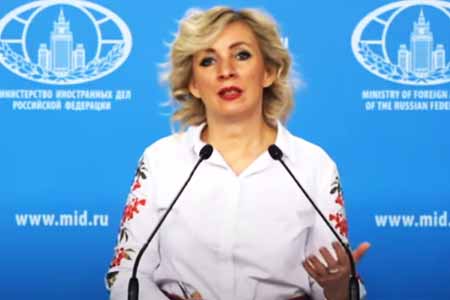 Zakharova: Armenia views relations with Russia as tool for financially securing reorientation toward EU
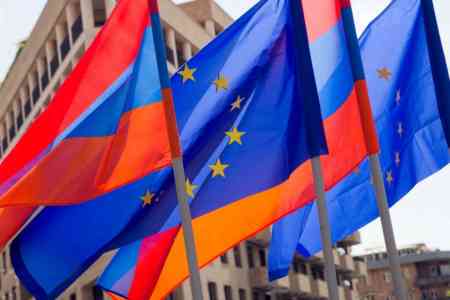 The Armenian Minister of Justice and the EU Ambassador discussed visa liberalization issues for Yerevan.
 Azerbaijan`s aggressive plans against Armenia became possible in wake of Pashinyan`s decisions on Artsakh - expert
 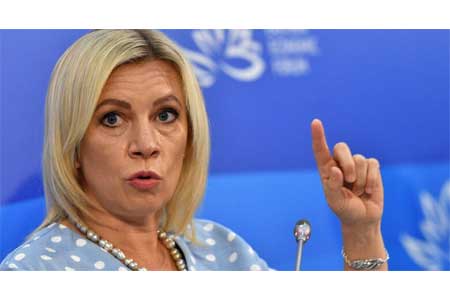 Zakharova: Russia sent a note of protest to Armenia over the act of vandalism at the "Mother Armenia" memorial in Gyumri
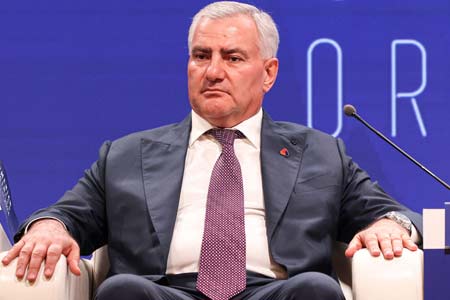 Samvel Karapetyan proposes creating a post-election opposition coalition
 Artsakh`s Cultural Heritage Ombudsman called on Moscow to respond to destruction of WWII monuments by Azerbaijan in occupied NKR
 Prosecutor General`s Office petitions Central Electoral Commission for criminal prosecution of Robert Kocharyan
 Dutch Prime Minister expresses his support for Armenia`s democratic reform and economic diversification agenda
 Heritage: It`s time for Armenia`s opposition to present people with legitimate alternative to power