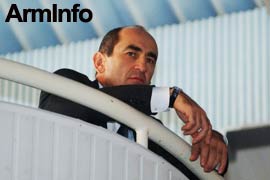
The April 2016 events in the Karabakh conflict zone were anticipated, the second president of Armenia, Robert Kocharyan, says in an interview with 2rd.am.
"The continuous increase of the military potential and bellicose rhetoric of Baku developed into practical steps, switching from sabotage attack to military settlement of the problem. Probably, Azerbaijan underestimated the combat readiness of the NKR Defense Army, as well as the high preparedness of the population of Karabakh and Armenia to resist the aggression. Apparently, the price of the unleashed military operation and its growing scale became unacceptable to Baku and the war was stopped. I would not qualify the developments as a victory or defeat," he says, stressing that the Azerbaijani troops have seized several Armenian positions, but failed to settle a single strategic military task.
Kocharyan thinks that Baku's euphoria of military victory is absolutely groundless. "We have failed to retrieve the territories. This inspires no optimism, regardless of the loss size. In addition, the human losses we suffered within 4 days are unusually high and unacceptable to us. So, one should not talk about moral victory. However, it has become obvious that even amid the broken military balance, there is no easy military solution to the conflict and that the frozen negotiation process can really be continued," he says.
However, he notes that if Baku had been prepared for a long-term war, the April aggression would not have lasted for four days only. "The fact that Azerbaijani military hardware prevailed over ours was not a secret, but it is one thing to know it and quite another thing to face it on the battlefield. The irony is that Armenia - a CSTO member with a Russian military base on its territory - was considerably inferior to the adversary in terms of weapons. The painful public response is clear here. Everyone wanted to believe that a military alliance with Russia ensures respect for the military balance and security of Armenia and Karabakh (before implementation of the Baku-Moscow contract signed in 2011, the arms parity was observed) ", Kocharyan says, adding that in the reality everything is much more complicated.
Meanwhile, he notes that the escalation of the military conflict is not favorable for Russia because it makes Russia choose between the responsibilities of a mediator, a military ally of Armenia and the striving for further rapprochement with Azerbaijan. "The supplies of the up-to-date offensive weapons to Baku have broken the balance, significantly increasing the probability of this scenario," he says, stressing that Armenia should have managed to stop the implementation of the contract or it should have at least limited the range of the arms items or synchronized it with similar supplies to Armenia.
"I do not know how effectively the authorities tried to do it and why they failed to prevent it, therefore I would refrain from assessments. At the same time, we proved to be unprepared in terms of military equipment, the purchase of which needed no intergovernmental agreements. For over two years the adversary's army caused a lot of trouble at nights, because it was equipped with all necessary devices," he says, adding that nothing prevented the Armenian side from equipping the army with sufficient night vision devices and other necessary equipment. He stresses the need to immediately fill all the gaps and it is clear that measures are already being taken to that end. But this should be done at the institutional level, he said, noting that volunteers should not go to the front spontaneously but they should be sent to the military units with due regard for their military specialties.
When explaining the reason why he did not express his stand during the April war and why he visited Karabakh only a month after it, Kocharyan says: "I kept silence because in a critical situation - in case of an external threat - open discussion of security issues is problematic for obvious reasons. I did not want to speak with slogans or innuendos. I did not initiate a meeting with the president, because even in that situation the propaganda machine worked for domestic political purposes. I kept in touch with the NKR leadership, which was taking all the decisions. If the war lasted for a long time, I would certainly go to Karabakh, but I would do it without cameras and selfies," he says.












 Expert: Funeral of assassinated Khamenei became Iran`s diplomatic inventory of its contacts
 Armenian expert explains how Yerevan`s history is being rewritten in Azerbaijan
 Pashinyan removed from INNOPROM guest list
 Zakharova: Armenia`s pro-EU pivot poses economic security risks to EAEU member states
 It`s time for South Caucasus countries to think of South Caucasus as single, unified region - RA premier
  Pashinyan: Armenia and Azerbaijan should leave each other alone
 Moscow sees situation with Armenia as attempt to attack Russia-involving integration associations - Russian presidential aid
 Zakharova: Armenia views relations with Russia as tool for financially securing reorientation toward EU
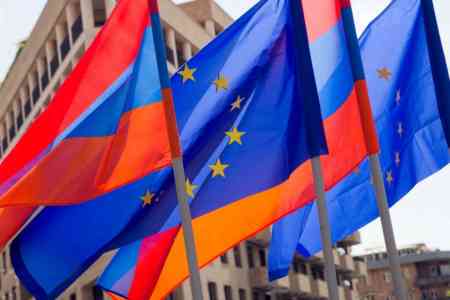 The Armenian Minister of Justice and the EU Ambassador discussed visa liberalization issues for Yerevan.
 Azerbaijan`s aggressive plans against Armenia became possible in wake of Pashinyan`s decisions on Artsakh - expert
  Zakharova: Russia sent a note of protest to Armenia over the act of vandalism at the "Mother Armenia" memorial in Gyumri
 Samvel Karapetyan proposes creating a post-election opposition coalition
 Artsakh`s Cultural Heritage Ombudsman called on Moscow to respond to destruction of WWII monuments by Azerbaijan in occupied NKR
 Dutch Prime Minister expresses his support for Armenia`s democratic reform and economic diversification agenda
 Heritage: It`s time for Armenia`s opposition to present people with legitimate alternative to power
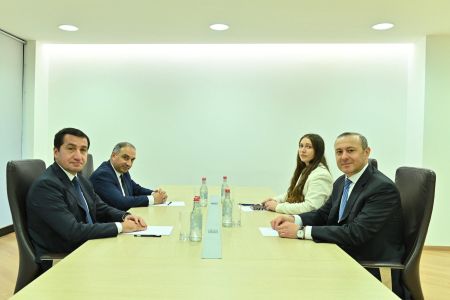 RA Security Council Sec, Assistant to President of Azerbaijan hold negotiations in Dilijan