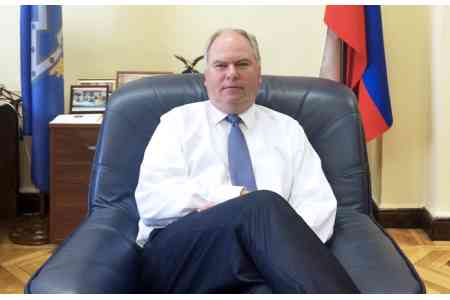
The parties to the Nagorno-Karabakh conflict have repeatedly declared their commitment to solving the conflict and addressing the disputed issues by peaceful, political and diplomatic means, Igor Popov, Russian Co-chair of the OSCE Minsk Group, says in an interview with APA.
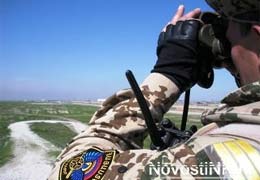
"The recent use of artillery, heavy machine guns and multiple rocket launchers on the contact line of the troops and along the Azerbaijani-Armenian border lead to the intensification of clashes. There is a significant increase in the number of causalities among civilians. The parties traditionally impose responsibility on each other for the violation of the ceasefire. However, neither the OSCE co-chairs nor its monitoring mission have the opportunity to identify the perpetrators without adequate investigations," he says. He recalls that during the Azerbaijani and Armenian presidents' meeting held in 2011 through the mediation of the Russian president, the parties agreed to investigate the incidents. He stresses that the Co- chairs together with Ambassador Andrzej Kasprzyk elaborated and presented the relevant investigation mechanism to the presidents.
"After considering it at the trilateral summit in Sochi in Jan 2012, the presidents instructed the Co-chairs to continue the work at the document. The mechanism was completed by joint efforts with the military experts of the OSCE and then it was handed over to the parties. I suppose the practical use of the mechanism would give an answer to the question which of the parties violates the ceasefire. Moreover, that document would make the parties think before initiating the ceasefire violation," he says.
When speaking of the confidence building measures, the Co-chair points out that the measures should not be restricted to the military field. He says in their time the parties agreed to contribute to development of humanitarian contacts because a dialogue between the intellectuals, scientific and public circles could have a positive effect on the atmosphere of the talks.
"Several such meetings were held. One cannot say that all of them were successful. There were both effective and failed discussions. I suppose it is very important to avoid politicizing such contacts," he says, noting that the positive experience could be used.
When asked whether there are any new proposals about sooner resolution of the Nagorno-Karabakh conflict because the previous proposals are ineffective, Igor Popov says, "I don't agree with your conclusions. Thanks to the assistance of the mediators, parties' positions on many controversial points have been brought closer. The basic principles for the settlement of the conflict were agreed upon. They are well known to everyone, the OSCE Minsk Group co-chairs have repeatedly mentioned them in their statements. The parties don't reject the agreed basic principles; they have different visions on the sequence of their implementation. The matter is not about cardinal change of approaches or refusing everything achieved from the settlement process. The main task is to help the parties find a balanced solution through making necessary corrections to the already achieved results," he says. Popov also notes that the OSCE Minsk Group co-chairs are working in this direction. "In parallel with it, Russia is making independent efforts within the approaches agreed by the co-chairs. Our high-level relations with Yerevan and Baku are always focused on the settlement of the Nagorno-Karabakh conflict," he says.
"The outcomes of all this collective work can be considered at the next Armenian-Azerbaijani summit. Of course, the final decision depends on Yerevan and Baku. We are planning to hold a detailed discussion on it during our trip to the region later this month", he stresses.
As regards possible deployment of peacekeepers in Karabakh, Popov says, "In practical terms, the issue of the deployment of peacekeepers can be raised upon a key agreement on the Nagorno-Karabakh conflict. The beginning of the operation of the multinational peacekeeping forces must be preceded by adoption of the relevant resolution of the UN Security Council, as required by the decision of the Budapest summit of the OSCE. The countries intending to send peacekeepers will form the contingent upon the consent of the conflicting parties," he says.











 Iranologist: Baku`s propaganda of might masks the country`s inability to provide water to its own population
 Analyst: Continued tensions between Yerevan and Moscow could entail new restrictive measures from Russia
 Political analyst: Russia intends to determine which "Camp" Armenia will choose through a referendum
 Armenia and France discuss further development of strategic partnership and EU cooperation
  To overcome risks Armenia must reduce domestic escalation - expert
 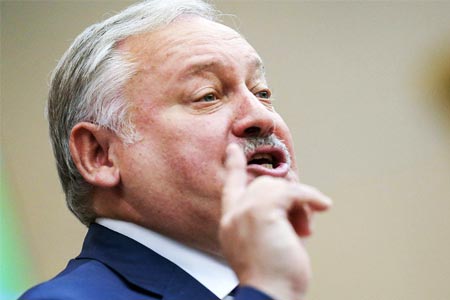 Zatulin: Pashinyan was eager to get back to Russia because he actually lost the elections
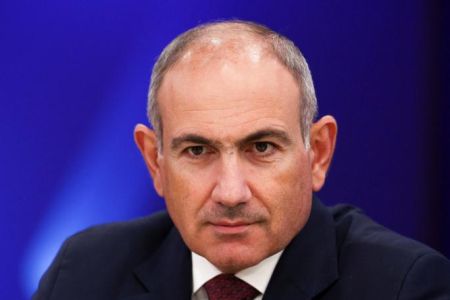 Pashinyan removed from INNOPROM guest list
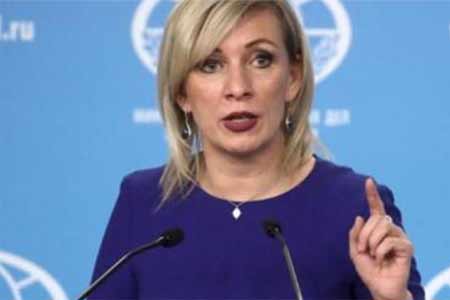 Zakharova: Armenia`s pro-EU pivot poses economic security risks to EAEU member states
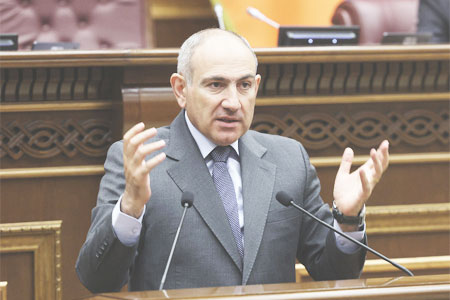 It`s time for South Caucasus countries to think of South Caucasus as single, unified region - RA premier
  Pashinyan: Armenia and Azerbaijan should leave each other alone
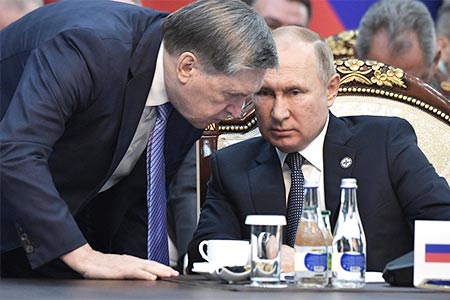 Moscow sees situation with Armenia as attempt to attack Russia-involving integration associations - Russian presidential aid
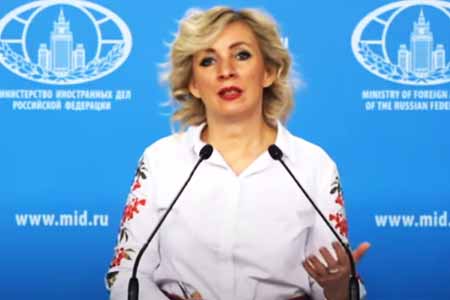 Zakharova: Armenia views relations with Russia as tool for financially securing reorientation toward EU
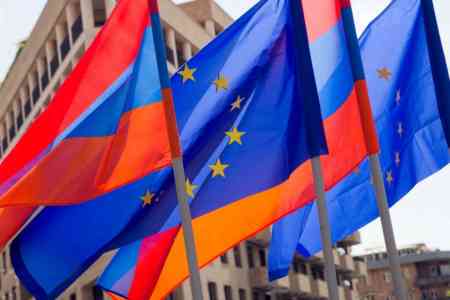 The Armenian Minister of Justice and the EU Ambassador discussed visa liberalization issues for Yerevan.
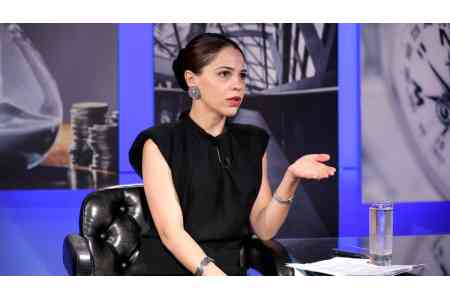 Azerbaijan`s aggressive plans against Armenia became possible in wake of Pashinyan`s decisions on Artsakh - expert
  Zakharova: Russia sent a note of protest to Armenia over the act of vandalism at the "Mother Armenia" memorial in Gyumri