

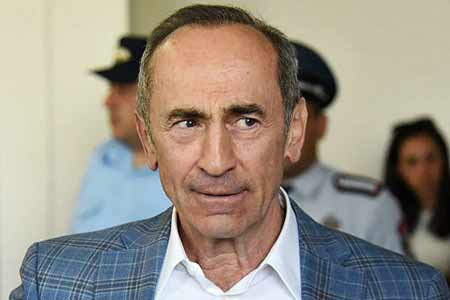
ArmInfo. Armenian Prime Minister Nikol Pashinyan, under the false pretext of establishing peace, is presenting to the public the text of a new constitution that strengthens his authoritarian rule at the constitutional level and will simply perpetuate his autocratic power. This was stated in a statement by Armenia's second president, Robert Kocharyan, from a pretrial detention center.
"There was no doubt that in the draft new Constitution of the Republic of Armenia, the authorities would satisfy the daily demands of Azerbaijan and Turkey regarding the Declaration of Independence, state symbols, and the retreat from Genocide recognition." However, the full content of this text makes it clear that Pashinyan, under the false guise of establishing peace, is presenting the public with a text that strengthens his authoritarian rule at the constitutional level, which will simply perpetuate his autocratic power," Kocharyan noted.
According to him, the constitution, rightly named after Azerbaijani President Ilham Aliyev, is such not only in its anti-Armenian nature, but also in the Azerbaijani model of governance it establishes.
"As far as this text is from being Armenian, it is equally, and perhaps even more, far from democracy. This is not a step toward a European path, but a great leap toward a sultanate. With such a constitution, adopted under duress, we not only harm our national dignity, but also, as a state, we lose any opportunity for restoration and development." "Armenia will become the most pitiful, frightened, denationalized, poor, and indebted territory in the region, with its cowardly dictator," Kocharyan is convinced.
The second president of Armenia added that this draft constitution is of Aliyev's origin and doubly Aliyev's content. "Even if by some miracle the authorities decide to restore the reference to the Declaration of Independence, the adoption of such a constitution is absolutely unacceptable," Kocharyan concluded.
On November 23, Armenian authorities released a draft of the country's new constitution. The text omits the declaration of independence, which mentions Nagorno-Karabakh, and international recognition of the Armenian Genocide in the Ottoman Empire. Furthermore, the text contains changes regarding the Armenian Apostolic Church, stating that its activities will be regulated by law, instead of the previous "may be regulated by law." Serious changes have been made regarding the activities of judges, a procedure for depriving a citizen of Armenian citizenship has been established, restrictions related to freedom of information are present, and so on.


















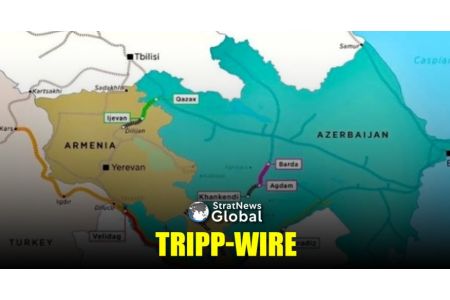



 Expert: Armenia should soberly assess the risks surrounding TRIPP
 Expert: In Armenia, 43% of families with three or more young children are poor—almost twice the national average
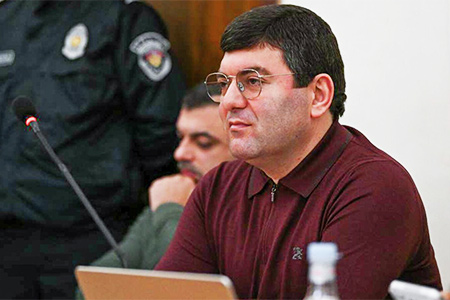
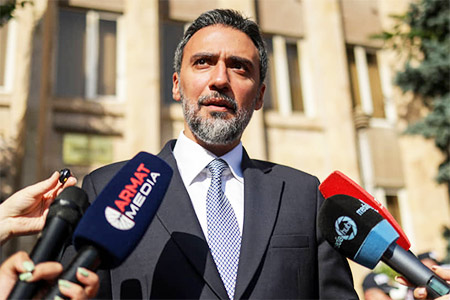 Vardevanyan: The international community has reached a consensus on political persecution in Armenia
 Armenia’s Deputy Minister of Justice Refused to Comment on Azerbaijan and Turkey’s Reaction to the Draft New Constitution
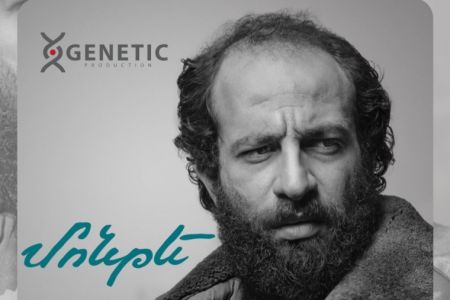 In several Russian cities, screenings of the film “Monte” have been canceled under pressure from the Azerbaijani lobby.
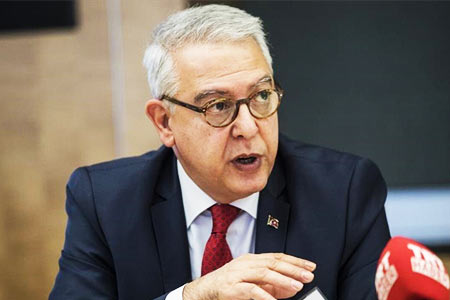 Turkish diplomat calls removal of references to the Armenian Genocide from Armenia’s draft new constitution historic
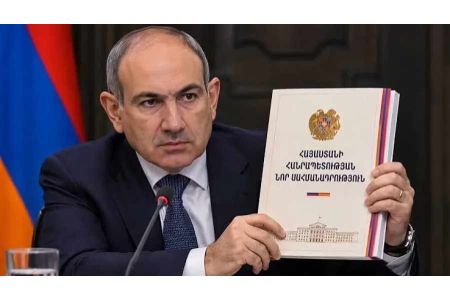 Prime Minister: The Constitution is our collective agreement on the fundamental principles of our internal and external relations
 Ultra-Orthodox Jews continue to desecrate Armenian holy sites in Jerusalem’s Armenian Quarter
 The Yerevan Museum of Russian Art Turns 42
 Armenia and Germany held consultations on defense issues
 Armenia wants to host COP-34 in 2029
 Speaker: Armenia has never approached the CSTO regarding the Karabakh issue
 Lavrov: Armenia will not be expelled from the CSTO
 Orientalist: In 2026, Baku made special efforts to achieve greater diplomatic effect on the issue of victory over Artsakh
 Drmeyan: The ECHR rejected Azerbaijan`s appeal in the case of Artsakh Defense Army Major Hayk Toroyan