

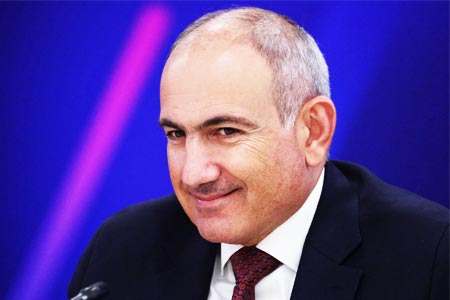
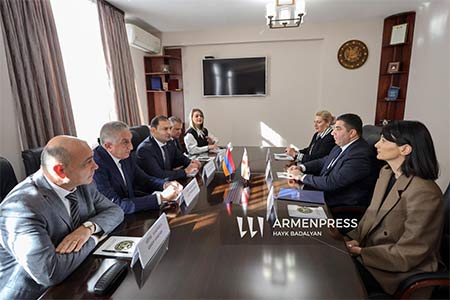
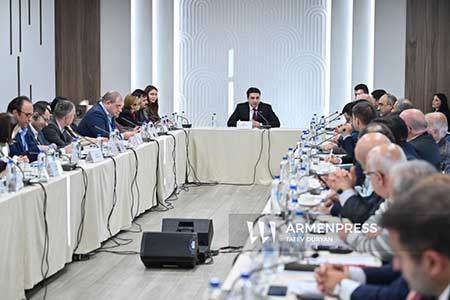
Arminfo. RA Prime Minister Nikol Pashinyan held a meeting of the National Commission on Disability Issues on November 27, which was also attended by representatives of civil society.
As reported by the government press service, before discussing the agenda, Nikol Pashinyan noted that it had already become a tradition to meet annually in this format on the occasion of the International Day of Persons with Disabilities to discuss the current state of the sector and sum up the work carried out. According to the prime minister, the problems in this sector are typical of many countries, including developed ones. "The same problems that exist today in Armenia exist everywhere. In our discussions, it sometimes seems that the world has solved this problem, while we have remained in the same place. This is absolutely not the case; countries with the highest standards in the field of human rights have exactly the same problems as Armenia," the prime minister said, adding that stating this fact is also important from the standpoint of organizing the discussion more effectively.
Nikol Pashinyan noted that the existing problems should be addressed through consistent steps. "In particular, not through big steps, because if we set ourselves the goal of taking big steps, those steps will inevitably fail, including for the objective and subjective reasons I mentioned. The problem is that we must consistently move forward in small steps, because here too the logic applies that the path to rapid change is slow but consistent steps. I will quote the proverb once again: "slowly, but without interruption," - the head of state noted.
He added that the government’s political commitment to consistently addressing the existing problems in this sector remains unwavering.
Reports were then presented on the implementation of programs in various sectors aimed at ensuring the rights and integration of persons with disabilities. The work was carried out pursuant to instructions given by the prime minister at the previous meeting.
Minister of Labour and Social Affairs Arsen Torosyan presented the policy vision and program initiatives for addressing key issues concerning persons with disabilities. "Of course, much remains to be done, but we are gradually moving toward their implementation, listening to the problems and correcting them. It seems to me that 2026 was quite effective in this regard, since in addition to the changes that took place in the sector itself, changes in related sectors are also very important. I would especially like to highlight the introduction of the health insurance system, because thanks to it we have not only expanded the range and scope of medical services provided to many of our citizens, especially those in the third disability group and with moderate functional limitations, but have also effectively discouraged many of our citizens from artificially obtaining disability status. For example, compared with 2025, in the first 10 months of 2026 we received 4,500 fewer applications for disability status and approximately 2,000 fewer assessments," the minister noted.
Referring to the changes being introduced in the sector, Arsen Torosyan recalled that as of April 1, benefits for citizens with disabilities, as well as for all other pensioners and benefit recipients, had been increased, and the provision of support measures had been expanded. As of November 20, 2026, 35,979 support measures had been provided to 17,000 citizens. Compared with the previous year, the number of service recipients increased by approximately 1,000, while the number of support measures provided increased by 2,000. "We have also expanded the types of support measures provided, adding expensive functional prostheses, innovative positioning devices and communication aids depending on the type of disability. One of our next steps will be to replace the semi-digital system for providing these measures with a fully digital one, which will also ensure transparency and efficiency," the minister stated.
From the perspective of developing independent-living skills among persons with disabilities, the minister stressed the importance of introducing and continuously developing the institution of personal assistants. "The government program specifically states that we will provide our citizens with 2,000 personal assistants. To date, 457 such programs are in operation, and we are also working on amendments to this program in order to improve it," Arsen Torosyan emphasized.
Touching on the employment of persons with disabilities, he reported that, in accordance with an instruction from the previous session, a relevant government decision had been drafted and approved, providing for the launch of a program to ensure the employment of persons with disabilities from January 1, 2027. The main objective of the program is to increase the competitiveness of persons with disabilities in the labor market, encourage employers to hire them and promote sustainable employment.
Minister of Health Anahit Avanesyan reported on an emergency response involving persons with disabilities.
Meanwhile, Minister of Education, Science, Culture and Sports Zhanna Andreasyan addressed the topic of inclusive education and noted that the results of the pilot program implemented in this area were quite good. "This is the resource-class program that we tested in three schools. The results of two years show that the effective integration of children with profound and severe functional limitations is growing significantly, and now we can present to the government for discussion the mechanism for working with this method in specific schools," Zhanna Andreasyan said.
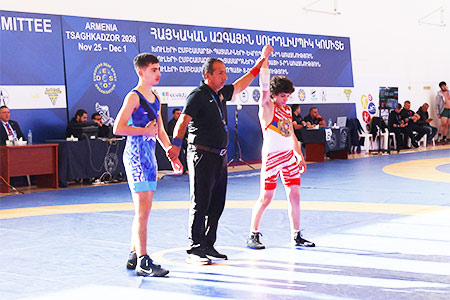
She also stressed the importance of more actively involving people with disabilities in sports and culture and reported that these days Tsaghkadzor is hosting the European Deaf Wrestling Championship, with delegations from 12 countries participating.
Human Rights Defender Anahit Manasyan, for her part, presented information indicating that monitoring conducted by the Ombudsman, written and oral appeals and complaints received, including calls to the hotline, show that a number of systemic problems remain relevant in terms of ensuring the right of persons with disabilities to independent living and integration into society. In the context of ensuring the right to independent living, the monitoring results indicate that the legal provisions concerning the institution of legal incapacity have not yet been revised, and a supported decision-making mechanism has not been introduced.
Discussion then took place on issues related to ensuring accessible conditions for the social integration of persons with disabilities, improving and expanding the programs being implemented, and creating equal opportunities. Representatives of non-governmental organizations asked representatives of the executive authorities questions about existing problems in this area and received explanations. The participants in the discussion also presented their proposals and comments.
The prime minister stressed the importance of consistently carrying out work in the areas presented and instructed that it continue, taking into account the proposals and questions raised during the discussion.











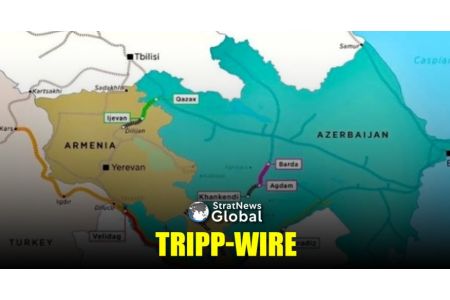








 Expert: Armenia should soberly assess the risks surrounding TRIPP
 Expert: In Armenia, 43% of families with three or more young children are poor—almost twice the national average
 A security sphere expert commented on a video about Papikyan`s achievements during his five years as Defense Minister
 Armenia’s Deputy Minister of Justice Refused to Comment on Azerbaijan and Turkey’s Reaction to the Draft New Constitution
 In several Russian cities, screenings of the film “Monte” have been canceled under pressure from the Azerbaijani lobby.
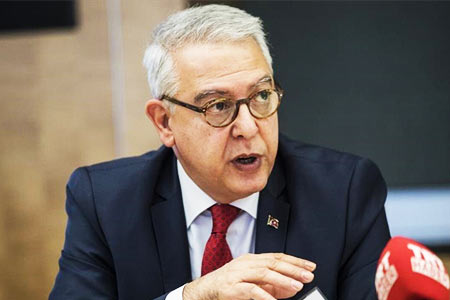 Turkish diplomat calls removal of references to the Armenian Genocide from Armenia’s draft new constitution historic
 Ultra-Orthodox Jews continue to desecrate Armenian holy sites in Jerusalem’s Armenian Quarter
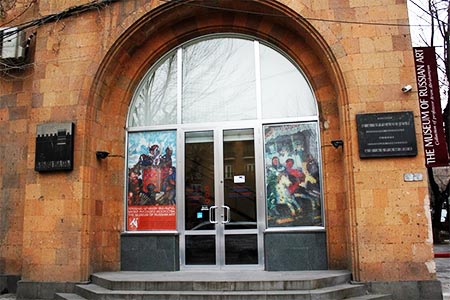 The Yerevan Museum of Russian Art Turns 42
 Armenia and Germany held consultations on defense issues
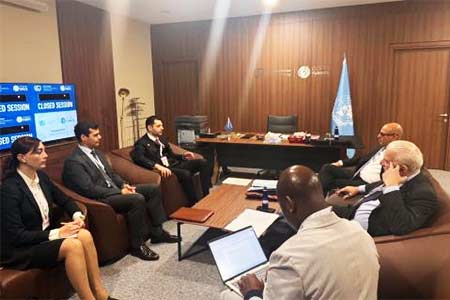 Armenia wants to host COP-34 in 2029
 Speaker: Armenia has never approached the CSTO regarding the Karabakh issue
 Lavrov: Armenia will not be expelled from the CSTO
 Orientalist: In 2026, Baku made special efforts to achieve greater diplomatic effect on the issue of victory over Artsakh
 Drmeyan: The ECHR rejected Azerbaijan`s appeal in the case of Artsakh Defense Army Major Hayk Toroyan
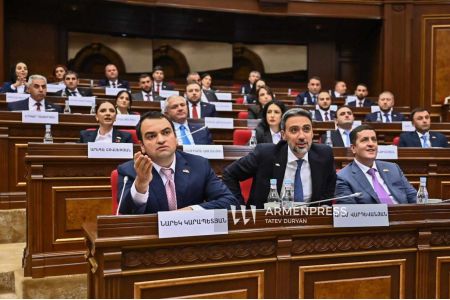 "Strong Armenia": The brawl in parliament was staged to distract public attention from Pashinyan`s failed foreign policy