


ArmInfo. Moscow is monitoring the dynamics of the TRIPP project’s development. This was stated by Russian Foreign Ministry spokeswoman Maria Zakharova at a briefing on November 26.
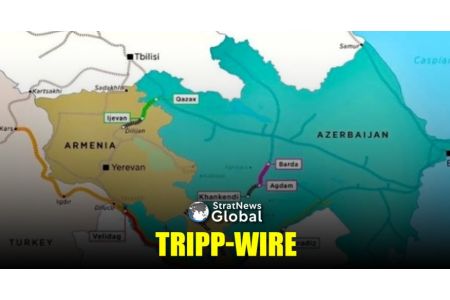
According to her, in essence, the “Trump Route” copies everything that was developed in previous years by the deputy prime ministers of Russia, Armenia and Azerbaijan במסגרת the trilateral working group on unblocking transport and economic communications in the region. At that time, however, as Zakharova noted, the issue concerned not only the transit of the main part of Azerbaijan and Nakhichevan through southern Armenia, but also the full unblocking of Armenia’s railway infrastructure with access to Turkey, Iran and Russia. In 2023, Yerevan froze its participation in the work of the trilateral working group, after which, in 2025, the “Trump Route” project emerged, which, according to the diplomat, raises more questions than answers. In particular, not a single target indicator for the project has been published regarding the parameters and timelines of construction, the use of the relevant infrastructure, or the prospects for freight transportation.
Moreover, as Zakharova emphasized, the project is already facing criticism from Iranian partners, who say that any physical presence of U.S. forces in the region is unacceptable to Tehran. “We believe it is important that the implementation of the project must not create new dividing lines in the region. Otherwise, this transport and logistics initiative will simply be doomed to failure,” the Russian Foreign Ministry spokeswoman said.
It should be recalled that on November 23, the launch of the practical phase of the Armenian-American transit project TRIPP (“Trump Route for International Peace and Prosperity”) was officially announced, while at a meeting of the Armenian government on November 26, Prime Minister Nikol Pashinyan announced the transition to the next stage and the forthcoming signing of a shareholders’ agreement within a week. The project’s main goal is to create transport and energy communications through the territory of Armenia, including a railway connection between the main part of Azerbaijan and Nakhichevan, as well as electricity transit and integration into the Middle Corridor. The initiative gained momentum following the Washington agreements of August 8, 2025, involving the leaders of Armenia, the United States and Azerbaijan. The project is being advanced on the basis of respect for the sovereignty, territorial integrity and jurisdiction of states; the Armenian authorities have stated that there are no “dark corners” and that the presence of U.S. military forces is excluded במסגרת the project.


































 Expert: Armenia should soberly assess the risks surrounding TRIPP
 Expert: In Armenia, 43% of families with three or more young children are poor—almost twice the national average
 A security sphere expert commented on a video about Papikyan`s achievements during his five years as Defense Minister
 The future of the South Caucasus was discussed in the capital of a country whose problem remains unresolved — Davtyan
 An Armenian orientalist presented possible US actions against Iran
 Turkish diplomat calls removal of references to the Armenian Genocide from Armenia’s draft new constitution historic
 Ultra-Orthodox Jews continue to desecrate Armenian holy sites in Jerusalem’s Armenian Quarter
 The Yerevan Museum of Russian Art Turns 42
 Armenia and Germany held consultations on defense issues
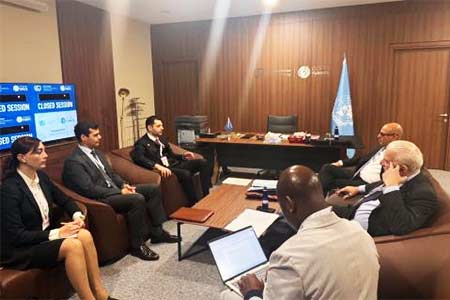 Armenia wants to host COP-34 in 2029
 Speaker: Armenia has never approached the CSTO regarding the Karabakh issue
 Lavrov: Armenia will not be expelled from the CSTO
 Drmeyan: The ECHR rejected Azerbaijan`s appeal in the case of Artsakh Defense Army Major Hayk Toroyan
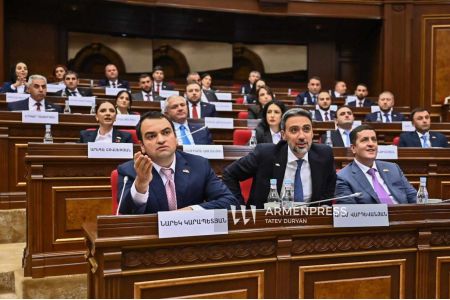 "Strong Armenia": The brawl in parliament was staged to distract public attention from Pashinyan`s failed foreign policy