

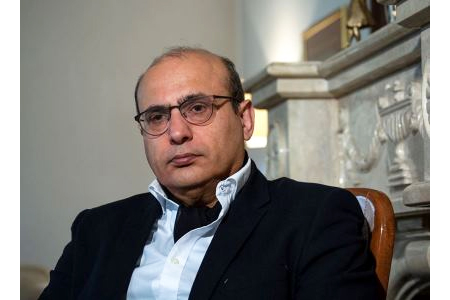
ArmInfo. Fear can force people into silence, but it cannot make the state strong. Political analyst Stepan Danielyan writes about this in his article.
"Nietzsche studied the psychological mechanisms of fear, obedience and so-called "accumulated helplessness." One of his important ideas is that thinking and the value system are often determined by the influence of an external adversary. In politics, this may manifest itself as follows: society is not offered a clear vision of the future, but is instead instilled with the idea of what catastrophes may occur in the event of an alternative scenario. As a result, fear becomes an ideology when the legitimacy of the government is based not on achievements, but on the promise of preventing possible catastrophes. In this case, the citizen no longer asks what kind of state is being built, but what will happen if the opposite occurs, God forbid, if the government changes," the political analyst noted.
He added that in the current situation in Armenia, it is important to study not only the results of external negotiations, but also the language in which the government explains its decisions to society. Is the peace program presented as a long-term program for the development of the state, security and economic cooperation, or primarily as the only possible way to prevent war? If society is constantly told that the coming to power of other political forces could lead to war, then the external threat turns into an instrument of domestic political competition.
"And here a dangerous chain is formed. An external force exerts pressure on the state leadership through threats. The leadership begins to shape its policy while avoiding this threat. The same threat is conveyed to society as the possibility of a permanent national catastrophe. The government positions itself as the only guarantor of preventing this catastrophe. Political alternatives begin to be perceived as security threats. Thus, external fear can turn into an internal ideology. This is the ideology of the so-called "Real Armenia." This does not mean that Armenia's security threats are fabricated. They are real. The problem lies in the limitations of their political use and their influence on society. The state must prepare society to confront threats, rather than teach it to live in constant fear of them. What should the alternative be? Armenia needs a foreign policy that simultaneously takes into account the real balance of forces and preserves the independence of the state," Stepan Danielyan emphasized.
In his conviction, to achieve this it is necessary to link every concession to clear and mutual obligations, conduct negotiations not to avoid threats but to ensure long-term security, strengthen the army, economy and state institutions, diversify external ties without creating new dependencies, not use external threats to suppress domestic political dissent, and present the public not only with threats but also with realistic plans to overcome them. The strength of the state lies not only in the army or diplomatic capabilities; it also lies in public trust, respect for state institutions and faith in the future. Fear cannot replace the will of the state. What happens when the head of state, under the influence of external threats, begins to rule his own people by instilling fear in them? Then external pressure can turn into a justification for domestic policy, and the idea of peace into an ideology for maintaining power. It is necessary to distinguish peace from obedience under conditions of fear, state caution from political negligence, and diplomatic compromise from strategic self-restraint. The state exists not to keep its citizens in constant danger, but to ensure their security and future," Stepan Danielyan noted.





















 Expert: Armenia should soberly assess the risks surrounding TRIPP
 Expert: In Armenia, 43% of families with three or more young children are poor—almost twice the national average
 A security sphere expert commented on a video about Papikyan`s achievements during his five years as Defense Minister
 The future of the South Caucasus was discussed in the capital of a country whose problem remains unresolved — Davtyan
 An Armenian orientalist presented possible US actions against Iran
 Turkish diplomat calls removal of references to the Armenian Genocide from Armenia’s draft new constitution historic
 Ultra-Orthodox Jews continue to desecrate Armenian holy sites in Jerusalem’s Armenian Quarter
 The Yerevan Museum of Russian Art Turns 42
 Armenia and Germany held consultations on defense issues
 Armenia wants to host COP-34 in 2029
 Speaker: Armenia has never approached the CSTO regarding the Karabakh issue
 Lavrov: Armenia will not be expelled from the CSTO
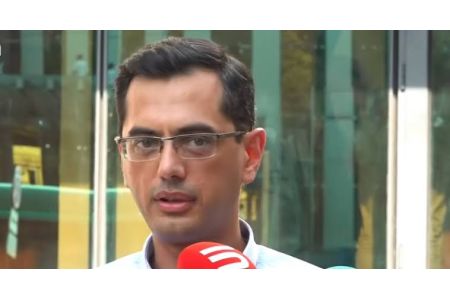 Drmeyan: The ECHR rejected Azerbaijan`s appeal in the case of Artsakh Defense Army Major Hayk Toroyan
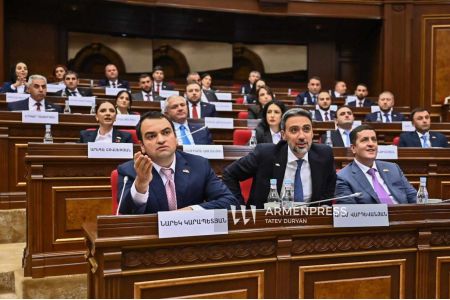 "Strong Armenia": The brawl in parliament was staged to distract public attention from Pashinyan`s failed foreign policy
 Zakharova commented on the scandalous epithets of the governor of Armenia`s Shirak region about "Ivanov"