

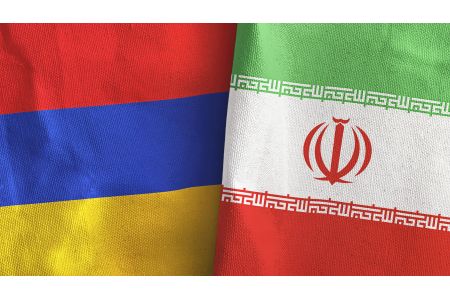
ArmInfo. “Fake routes” will never replace “real corridors,” whether in the south of Iran or in the north. This is how Iranian Supreme Leader’s adviser Mohammad Mokhber reacted to the launch of the practical implementation of the “Trump Route for International Peace and Prosperity” (TRIPP) project.
“‘Fake routes’ will never replace ‘real corridors,’ whether in the south of Iran or in the north, whether it is the southern route through the Strait of Hormuz or TRIPP (Zangezur). Iran’s geopolitical interests in the region are our red line, and we will not allow it to be bypassed. Learn from the example of the Strait of Hormuz,” he noted in a post on Twitter (X).
Armenia and the United States officially launched the TRIPP project on November 23.
Let us recall that on August 8, 2025, Armenian Prime Minister Nikol Pashinyan and Azerbaijani President Ilham Aliyev signed a joint seven-point “Declaration on Peace” in Washington. It provides for a joint appeal to the Organization for Security and Co-operation in Europe (OSCE) to terminate the OSCE Minsk Process and related structures, as well as the creation of a transport corridor through Armenian territory that will connect Azerbaijan with its Nakhchivan exclave, surrounded by Armenia, Turkey and Iran. And on January 14, 2026, the Armenian Foreign Ministry published a framework document signed with the American side in Washington on the implementation of the “Trump Route for International Peace and Prosperity” (TRIPP). The 12-page document presents the project’s main objectives and mechanisms for its operation.
Among other things, the document emphasizes that Armenia intends to authorize and support the establishment of TRIPP Development Company. At the same time, the company is expected to be responsible for developing the TRIPP project, receiving an initial development right for a period of 49 years. Armenia intends to offer the United States 74% of the shares in TRIPP Development Company, retaining 26%. It is envisaged that this partnership will be extended for another 50 years, with an additional ownership stake granted to the Armenian government, bringing its share to 49%.
















 A security sphere expert commented on a video about Papikyan`s achievements during his five years as Defense Minister
 The future of the South Caucasus was discussed in the capital of a country whose problem remains unresolved — Davtyan
 An Armenian orientalist presented possible US actions against Iran
 Prime Minister: The Constitution is our collective agreement on the fundamental principles of our internal and external relations
 Ultra-Orthodox Jews continue to desecrate Armenian holy sites in Jerusalem’s Armenian Quarter
 The Yerevan Museum of Russian Art Turns 42
 Armenia wants to host COP-34 in 2029
 Speaker: Armenia has never approached the CSTO regarding the Karabakh issue
 Lavrov: Armenia will not be expelled from the CSTO
 Drmeyan: The ECHR rejected Azerbaijan`s appeal in the case of Artsakh Defense Army Major Hayk Toroyan
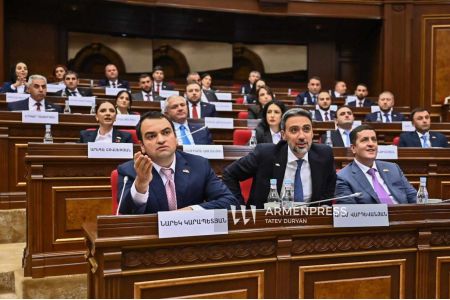 "Strong Armenia": The brawl in parliament was staged to distract public attention from Pashinyan`s failed foreign policy
 Zakharova commented on the scandalous epithets of the governor of Armenia`s Shirak region about "Ivanov"
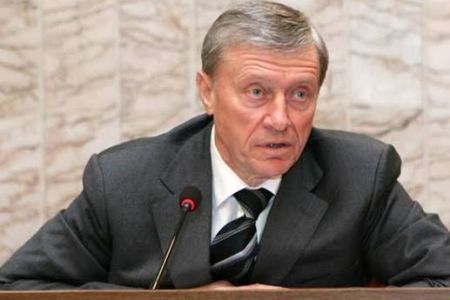 Nikolai Bordyuzha proposed excluding Armenia from the CSTO.
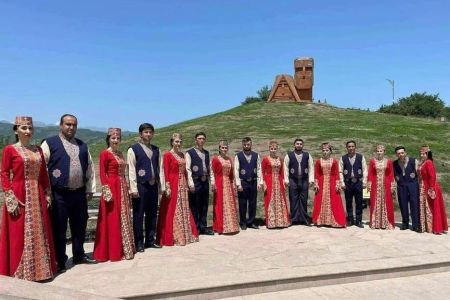 The participation of Artsakh ensembles in an international festival in Vienna was cancelled following the intervention of several foreign embassies
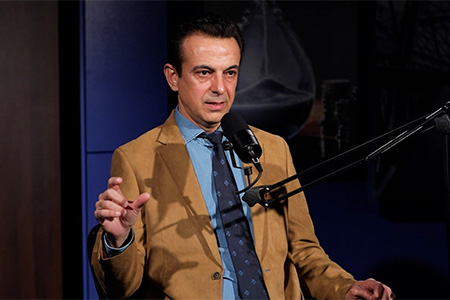 Expert: It`s time for Armenia to move away from uncertainty and choose between West and East