


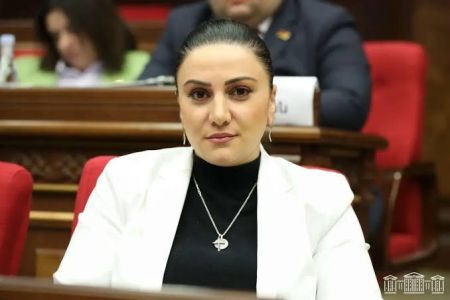
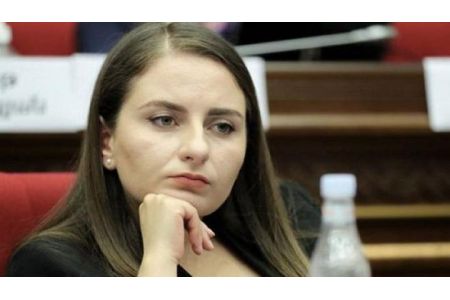
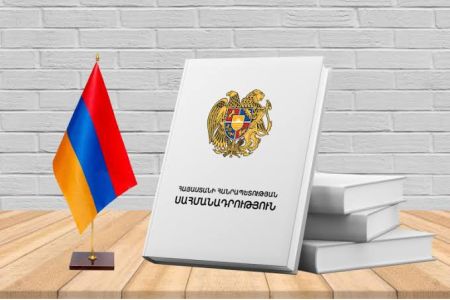
Arminfo. Some provisions of Armenia’s draft constitution contradict international standards. This was stated by Taguhi Tovmasyan, president of the human rights NGO “The Power of the Word” and a former member of the Armenian parliament.
She drew attention to the fact that the Armenian authorities, headed by Nikol Pashinyan, have chosen the European path, but compliance with the standards of European democracy implies much more than merely talking about foreign policy orientation at press conferences.
Tovmasyan stated that this requires a genuine limitation of government power, an independent judicial system, effective protection of human rights, institutional guarantees for the opposition, and transparency in public administration.
"The independence of the judicial system is not a professional privilege of judges, but a fundamental guarantee of the protection of human rights. The existence of an independent court guarantees that decisions concerning the rights and freedoms of each person are made on the basis of the law, free from political, administrative, or other external influence. The changes proposed by the draft new constitution to the structure and principles governing the formation of the judicial system raise a number of serious concerns from the standpoint of human rights protection," the head of the NGO noted.
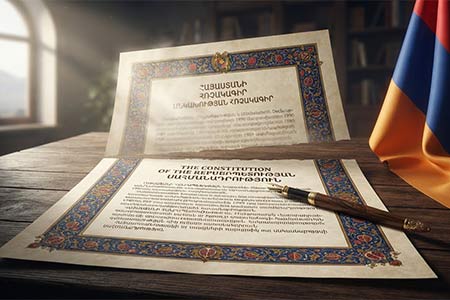
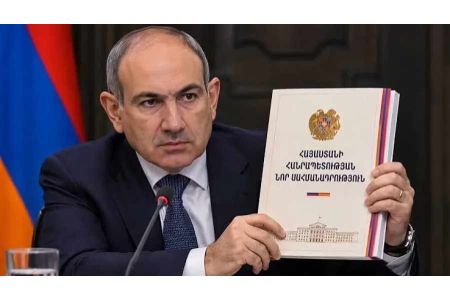
She then cited a number of provisions from the published document that contradict international instruments.
"Granting all incumbent judges the status of acting judges (Article 85 of the draft) puts at risk the principle of the immutability of judges’ tenure and the guarantees thereof. It contradicts paragraphs 11-12 of the UN Basic Principles on the Independence of the Judiciary. Moreover, the large-scale re-certification of judges creates a risk that judges’ future terms of office will depend on the certification commission. This is problematic in light of paragraphs 17-18 of the UN Basic Principles," she noted.
According to Tovmasyan, the absence of direct judicial review of the conclusions of the certification commission may limit the right to an effective remedy, which contradicts Article 6 of the ECHR and paragraph 20 of the UN Basic Principles.
Moreover, she continued, the election of all members of the Supreme Judicial Council by the National Assembly weakens guarantees of the self-governance of the judiciary and increases the risk of political influence, which is problematic in the context of paragraph 27 of Council of Europe Recommendation CM/Rec(2010)12.
"The combination of judicial and disciplinary functions in the Supreme Court creates risks to independence, impartiality, and conflicts of interest, and must be assessed on the basis of Article 6 of the ECHR. The introduction of a jury system without sufficient constitutional guarantees creates a risk of legal uncertainty concerning the selection, independence, and impartiality of jurors. The impression is created that they will become the decisive representatives of the authorities in court. Compliance with the requirements of Article 6 of the ECHR must be ensured," Tovmasyan further noted.
At the same time, she drew attention to the fact that the political component in the appointment of judges to the Court of Cassation, from the standpoint of parliamentary elections, may create a risk of the politicization of judicial appointments. This is problematic from the standpoint of paragraphs 10 and 13 of the UN Basic Principles.
"The contradiction between the proclamation of the independence of the judiciary and the transitional provisions: Article 60 of the draft proclaims the independence of judges, while Article 85 makes their tenure conditional on reassessment. This raises the issue of the internal inconsistency of constitutional guarantees. From the standpoint of human rights, these changes may lead to a weakening of the right to an independent and impartial court, a fair trial, effective judicial protection, and legal certainty," Tovmasyan believes.
In her view, the greatest danger is that a judge may feel accountable not to the law and the Constitution, but to the system that determines his or her future tenure.
"And when a judge’s independence is weakened, the protection of citizens from state arbitrariness is also put at risk," she concluded.

















 A security sphere expert commented on a video about Papikyan`s achievements during his five years as Defense Minister
 The future of the South Caucasus was discussed in the capital of a country whose problem remains unresolved — Davtyan
 An Armenian orientalist presented possible US actions against Iran
 Expert: Official Yerevan should not base its calculations in relations with Ankara on the "crack" in the Turkish-Azerbaijani alliance
 Armenia and Germany held consultations on defense issues
 Armenia wants to host COP-34 in 2029
 Speaker: Armenia has never approached the CSTO regarding the Karabakh issue
 Lavrov: Armenia will not be expelled from the CSTO
 Drmeyan: The ECHR rejected Azerbaijan`s appeal in the case of Artsakh Defense Army Major Hayk Toroyan
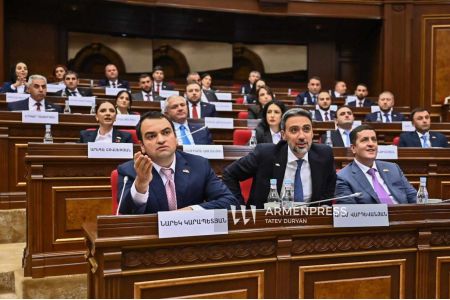 "Strong Armenia": The brawl in parliament was staged to distract public attention from Pashinyan`s failed foreign policy
 Zakharova commented on the scandalous epithets of the governor of Armenia`s Shirak region about "Ivanov"
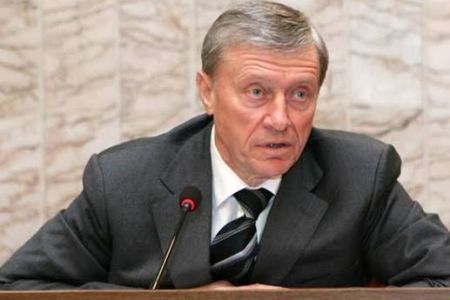 Nikolai Bordyuzha proposed excluding Armenia from the CSTO.
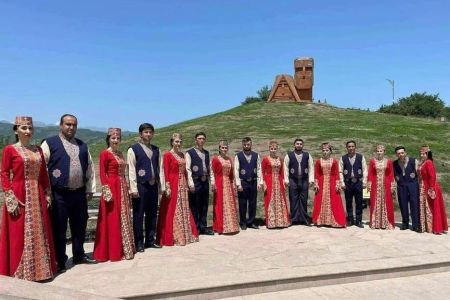 The participation of Artsakh ensembles in an international festival in Vienna was cancelled following the intervention of several foreign embassies
 Expert: It`s time for Armenia to move away from uncertainty and choose between West and East
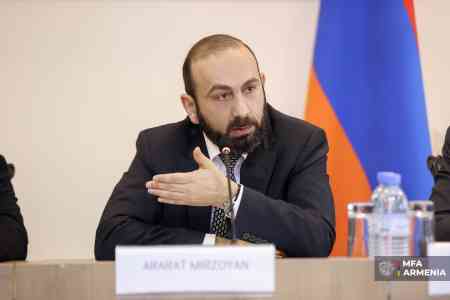 The Armenian Foreign Minister commented on the country`s return to work within the CSTO.