
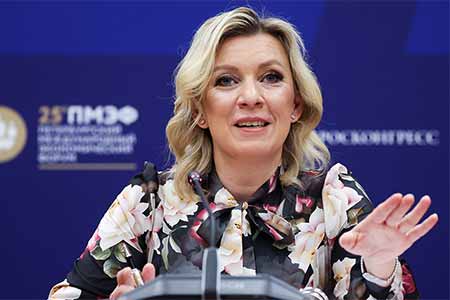
ArmInfo. Moscow welcomes and supports the continuation of the process of establishing interstate relations between Armenia and Azerbaijan. This was stated by Russian Foreign Ministry spokesperson Maria Zakharova at a briefing on November 20.
According to her, lasting peace between Baku and Yerevan is one of the factors behind the stability and prosperity of the entire South Caucasus. "And it is not only the states of this region themselves that are interested in this, but also their immediate neighbors — Russia, Iran and Turkey," she said.
In this context, Zakharova considered it important to recall that the current stage of the Armenian-Azerbaijani settlement was launched in 2020, specifically at the initiative of the Russian side. Zakharova emphasized that significant results had been achieved in the negotiating process during this time. She added that, based on the trilateral agreements reached by the leaders of Armenia, Russia and Azerbaijan in 2020, a roadmap had been developed covering all key areas of cooperation: the coordination of a peace treaty; the comprehensive unblocking of transport and economic links in the region; the delimitation and demarcation of the border; and the establishment of contacts between civil society representatives.
"And all these developments are, of course, still relevant today. None of the parties has withdrawn its signature from the agreements, and at present, as we can see, Baku and Yerevan prefer to conduct a direct dialogue with each other. We naturally respect this decision, while remaining ready to assist our partners, should it be requested, across the broadest possible range of issues," she concluded.
The trilateral statement on the cessation of hostilities in Nagorno-Karabakh was signed on the night of November 10, 2020, by Armenian Prime Minister Nikol Pashinyan, Azerbaijani President Ilham Aliyev and Russian President Vladimir Putin. The document halted military operations in the Nagorno-Karabakh conflict zone and defined the procedure for further settlement.










 A security sphere expert commented on a video about Papikyan`s achievements during his five years as Defense Minister
 The future of the South Caucasus was discussed in the capital of a country whose problem remains unresolved — Davtyan
 An Armenian orientalist presented possible US actions against Iran
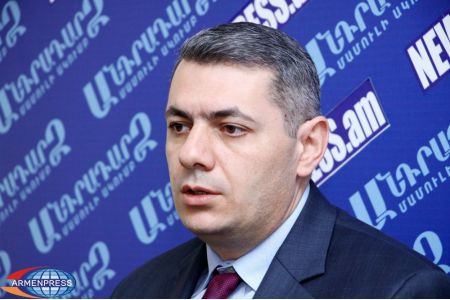 Expert: Official Yerevan should not base its calculations in relations with Ankara on the "crack" in the Turkish-Azerbaijani alliance
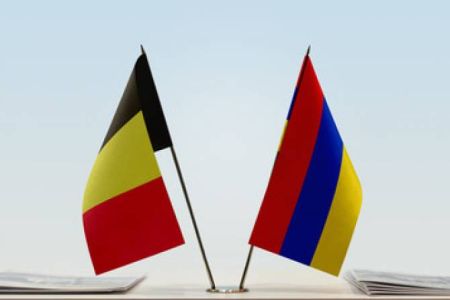 Armenia and Germany held consultations on defense issues
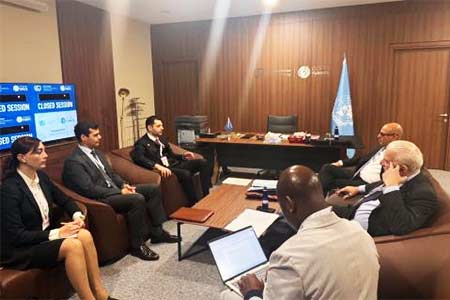 Armenia wants to host COP-34 in 2029
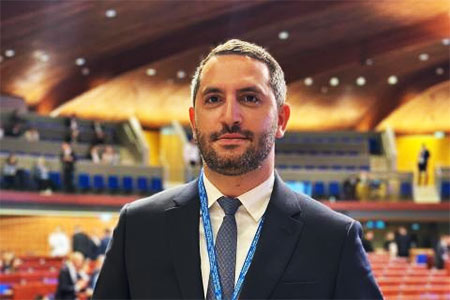 Speaker: Armenia has never approached the CSTO regarding the Karabakh issue
 Lavrov: Armenia will not be expelled from the CSTO
 Drmeyan: The ECHR rejected Azerbaijan`s appeal in the case of Artsakh Defense Army Major Hayk Toroyan
 "Strong Armenia": The brawl in parliament was staged to distract public attention from Pashinyan`s failed foreign policy
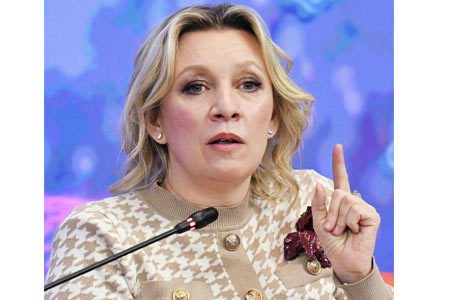 Zakharova commented on the scandalous epithets of the governor of Armenia`s Shirak region about "Ivanov"
 Nikolai Bordyuzha proposed excluding Armenia from the CSTO.
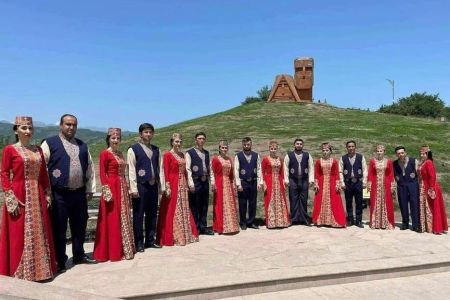 The participation of Artsakh ensembles in an international festival in Vienna was cancelled following the intervention of several foreign embassies
 Expert: It`s time for Armenia to move away from uncertainty and choose between West and East
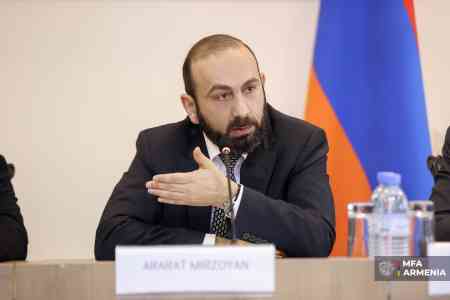 The Armenian Foreign Minister commented on the country`s return to work within the CSTO.
 The Artsakh Public Council expressed outrage at the UN Secretary-General`s behavior
 Lukashenko called for Armenia to assume the CIS presidency in 2029
 Dmitry Medvedev predicted a Ukrainian-like fate for Armenia amid the country`s shift in foreign policy
 Russian Security Council: In Armenia, they want to force Russian asset owners to dispose of their assets