
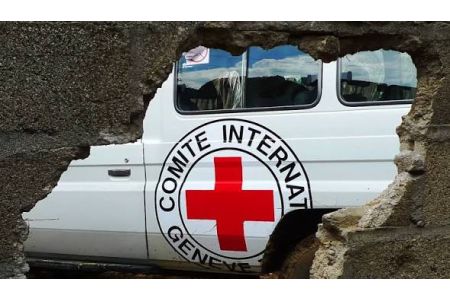
Arminfo. In the Nagorno-Karabakh conflict zone, more than 1,000 people from Armenia and Nagorno-Karabakh have been considered missing during the period from 1990 to 2026. This is stated in a report by the International Committee of the Red Cross (ICRC).
The organization presented these data ahead of an international conference dedicated to missing persons, which will take place
in Yerevan on November 19-20. The ICRC summarized the activities carried out during the period 2020-2026, including support provided to the families of people who went missing as a result of the escalation of the Nagorno-Karabakh conflict in the 1990s and 2020s, as well as work carried out with the relevant authorities.
The organization recalled that, in accordance with its mandate, the ICRC assists parties to the conflict by drawing on its expertise and acting as a neutral intermediary. It added that since the early 1990s, the ICRC has been addressing the issue of missing persons and the situation of their families in the region.
It is emphasized that the ICRC accompanies the families of missing persons and provides support to the Armenian authorities in advancing the process of searching for and identifying missing persons.
"Supporting the families of missing persons consists of helping them overcome difficulties, restore connections and ensure that they do not have to face uncertainty alone. We accompany the families of missing persons in order to strengthen their ability to cope with the difficulties associated with the disappearance of loved ones and, over time, help them return to normal social life, gradually and fully reintegrating into society," the ICRC stated.
The humanitarian organization said that it had supported the authorities in collecting critically important information to determine the fate of people who went missing as a result of the conflict of the 1990s. More than 750 forms containing detailed information about missing persons and the circumstances of their disappearance were provided to them; 1,586 biological reference samples from relatives of 528 missing persons were collected for DNA comparison with remains; and tools were provided for the collection and secure storage of data on missing persons. In addition, the identification procedure through DNA analysis was ensured and supported; assistance was provided to strengthen forensic capabilities and improve forensic infrastructure; more than 1,700 DNA extraction tests and other necessary genetic materials were provided; a genetic analyzer and other laboratory equipment were provided to support identification and more than 50 units of IT equipment, including a server for the secure storage of genetic data.















 A security sphere expert commented on a video about Papikyan`s achievements during his five years as Defense Minister
 The future of the South Caucasus was discussed in the capital of a country whose problem remains unresolved — Davtyan
 An Armenian orientalist presented possible US actions against Iran
 Expert: Official Yerevan should not base its calculations in relations with Ankara on the "crack" in the Turkish-Azerbaijani alliance
 Armenia wants to host COP-34 in 2029
 Speaker: Armenia has never approached the CSTO regarding the Karabakh issue
 Lavrov: Armenia will not be expelled from the CSTO
 Drmeyan: The ECHR rejected Azerbaijan`s appeal in the case of Artsakh Defense Army Major Hayk Toroyan
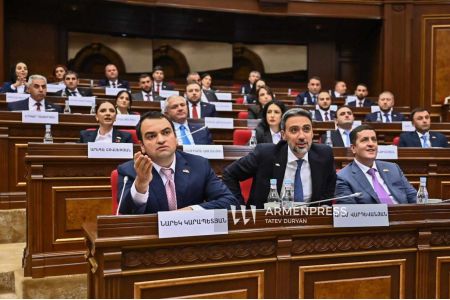 "Strong Armenia": The brawl in parliament was staged to distract public attention from Pashinyan`s failed foreign policy
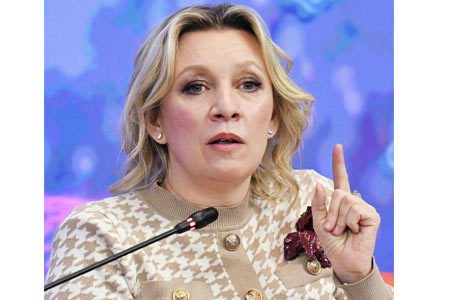 Zakharova commented on the scandalous epithets of the governor of Armenia`s Shirak region about "Ivanov"
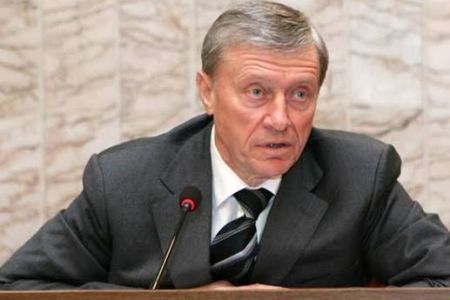 Nikolai Bordyuzha proposed excluding Armenia from the CSTO.
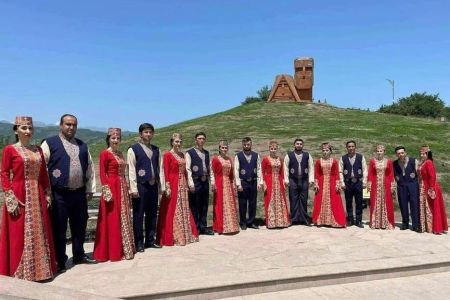 The participation of Artsakh ensembles in an international festival in Vienna was cancelled following the intervention of several foreign embassies
 Expert: It`s time for Armenia to move away from uncertainty and choose between West and East
 The Armenian Foreign Minister commented on the country`s return to work within the CSTO.
 The Artsakh Public Council expressed outrage at the UN Secretary-General`s behavior
 Lukashenko called for Armenia to assume the CIS presidency in 2029
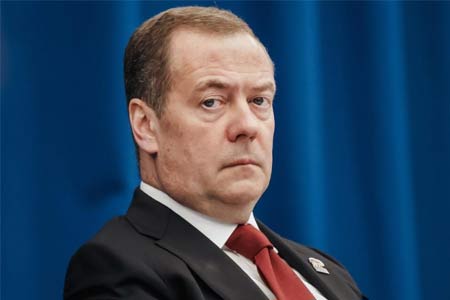 Dmitry Medvedev predicted a Ukrainian-like fate for Armenia amid the country`s shift in foreign policy
 Russian Security Council: In Armenia, they want to force Russian asset owners to dispose of their assets