

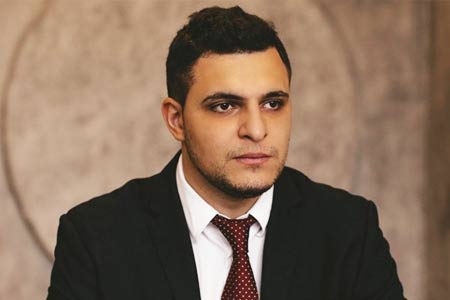
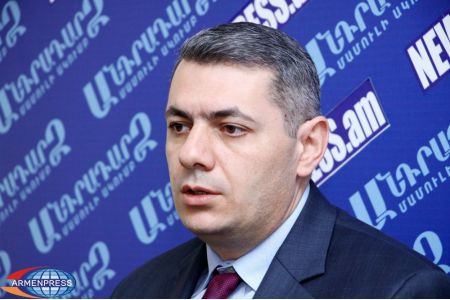
ArmInfo. Washington currently has three options regarding Iran: war, blockade, and a deal, according to Armenian orientalist Sergey Melkonyan.
The expert stated that the Republicans' defeat in the midterm elections reduces the window of opportunity for a new round of military escalation, which could last until the end of 2026. According to him, the domestic political situation in Israel remains an additional factor of uncertainty.
"The most likely scenario remains the continuation of the blockade, which continues to have a negative impact on the Iranian economy. However, under external pressure, the leadership in Tehran can more effectively support social consolidation." Therefore, even against the backdrop of worsening economic indicators, one should not expect radical domestic political changes," Melkonyan asserted.
Regarding the deal, the orientalist continued, the current domestic political configuration in the US and Israel could make Tehran less inclined to reach an agreement: there is no point in negotiating with an administration whose position could be significantly weakened in just a few months.
Melkonyan noted that as early as January 2027, when the Democrats gain control of both houses of Congress, domestic political constraints for Trump will increase. He added that the extreme unpopularity of a war against Iran, combined with a possible shift in US foreign policy priorities toward containing China and Russia, could further reduce the likelihood of a new military escalation.
"In a situation where Washington is less interested in continuing the war and Trump's domestic political position is weakened, Tehran could gain a relative strategic advantage." This could push Iran to take more decisive action, such as attempting to break the naval blockade or increasing pressure on US allies in the region. Henry Kissinger described this asymmetry in the military-political confrontation back in 1969, analyzing the experience of the Vietnam War: "We were waging a military war, our opponents a political one. We sought to exhaust them physically, they sought to exhaust us psychologically. In doing so, we lost sight of one of the main principles of guerrilla warfare: a guerrilla wins if he doesn't lose. A regular army loses if it doesn't win," Melkonyan concluded.

















 Expert: Official Yerevan should not base its calculations in relations with Ankara on the "crack" in the Turkish-Azerbaijani alliance
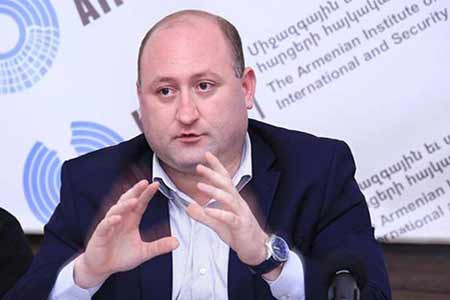 International expert: Trump is entering a "lame duck" period of rule
 Lavrov: Armenia will not be expelled from the CSTO
 Drmeyan: The ECHR rejected Azerbaijan`s appeal in the case of Artsakh Defense Army Major Hayk Toroyan
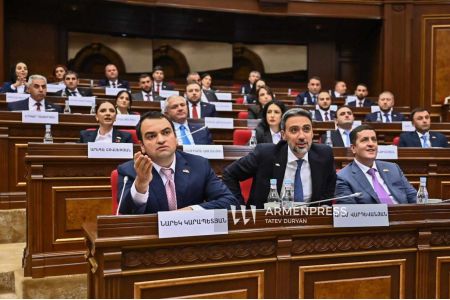 "Strong Armenia": The brawl in parliament was staged to distract public attention from Pashinyan`s failed foreign policy
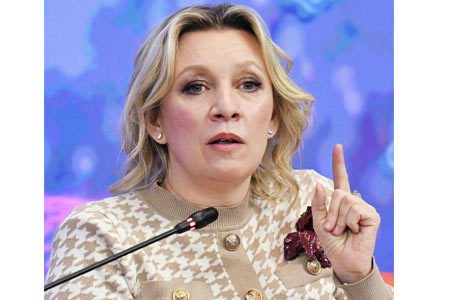 Zakharova commented on the scandalous epithets of the governor of Armenia`s Shirak region about "Ivanov"
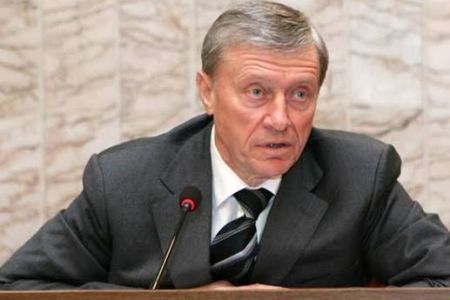 Nikolai Bordyuzha proposed excluding Armenia from the CSTO.
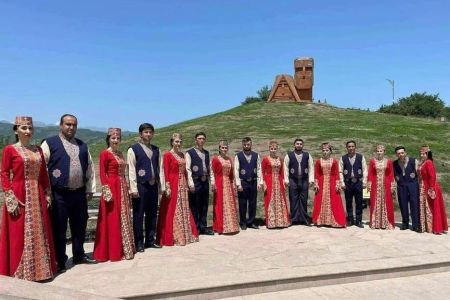 The participation of Artsakh ensembles in an international festival in Vienna was cancelled following the intervention of several foreign embassies
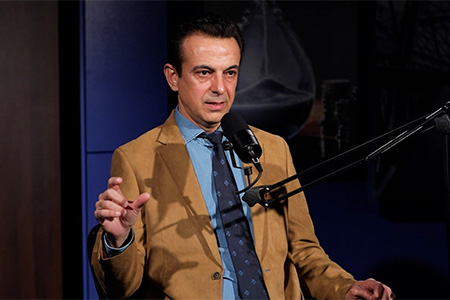 Expert: It`s time for Armenia to move away from uncertainty and choose between West and East
 The Armenian Foreign Minister commented on the country`s return to work within the CSTO.
 The Artsakh Public Council expressed outrage at the UN Secretary-General`s behavior
 Lukashenko called for Armenia to assume the CIS presidency in 2029
 Dmitry Medvedev predicted a Ukrainian-like fate for Armenia amid the country`s shift in foreign policy
 Russian Security Council: In Armenia, they want to force Russian asset owners to dispose of their assets
 Zakharova: Russia ready to discuss with Armenia the prospects for expanding military cooperation as part of a review of bilateral ties
 Tevanyan: Armenia, like Ukraine and Moldova, is being drawn into the EU’s global war