
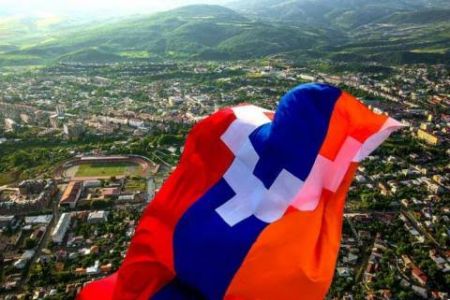
ArmInfo. On the sixth anniversary of the end of the 44-day military aggression against Artsakh in 2020, the Artsakh Public Council sent open letters to the Armenian government and the Russian Embassy, presenting its demands.
In an appeal to the Armenian government received by ArmInfo, the Public Council demanded that it clarify and publicly present its commitments to protecting the rights of the people of Artsakh. "The document of November 9 was signed amid a grave defeat for which the current Armenian government bears political responsibility. This document also provided for the return of displaced persons and refugees to Artsakh and adjacent areas under the supervision of the Office of the UN High Commissioner for Refugees. Therefore, the return of the Armenian population of Artsakh, forced to flee their homes, was also part of the process envisaged by this statement. "The statement also enshrined the exchange of prisoners of war, hostages, and other detainees, as well as safe passage between Armenia and Artsakh," the Council recalled.
However, as the NKR Public Council noted, six years later, Artsakh is deserted, Armenian prisoners continue to be held in Azerbaijan, and Armenian cultural and spiritual heritage is under threat. "These provisions of the November 9 statement failed to ensure the rights and security of the people they concerned. Failure to implement them cannot serve as a justification for excluding these demands from the political agenda." "The Armenian government has no right to consider the November 9 statement a passed stage, ignoring the unresolved issues of the return and release of prisoners," the statement continues.
Considering the above, the Artsakh Public Council demanded that the Armenian government ensure the voluntary, safe, and dignified return of NKR Armenians, as well as the release and return of all Armenians held in Azerbaijan. Furthermore, it is noted that the protection of Artsakh's Armenian cultural heritage must become a mandatory agenda item in the peace process with Azerbaijan and a condition for the signing and ratification of an agreement with clear international guarantees for its implementation. "The agreement previously signed in Washington cannot replace the resolution of these issues. We will regard the abandonment of interstate legal demands without these guarantees as a refusal to take measures to protect the rights of the people of Artsakh. We demand a public response: what specific steps the government is taking in these three areas and what results it demands from Azerbaijan before signing a peace agreement. Decisions on these issues must be made with the direct participation of representatives of the people of Artsakh. We demand a written response to this statement, outlining the government's position and specific planned steps. The November 9 anniversary is not simply a day of remembrance for defeat. It is also a day of unfulfilled commitments and demands for accountability for them. The right of our people to return, the freedom of our compatriots, and the protection of our heritage cannot be excluded from a peace agreement," the Council emphasized.
The NKR Public Council, in turn, demanded that the Russian Embassy "publicly explain why the peacekeeping mission failed to prevent the blockade of the Lachin corridor, the resumption of hostilities, and the expulsion of the Armenian population from Artsakh, as well as report on the assessment of the actions and inactions of the peacekeeping contingent." Furthermore, they demanded an answer on the legal and political grounds for the withdrawal of the Russian peacekeeping contingent from Artsakh in 2024—before the expiration of the initial five-year period stipulated by the trilateral statement of November 9, 2020—and how issues of security and the return of the displaced population were taken into account in this decision.
"We demand a clear statement on whether Russia is prepared to facilitate the voluntary, safe, and dignified return of the Armenians of Artsakh to their homes, with effective international guarantees, and what specific diplomatic steps it is prepared to take in this direction. We also demand that it use its existing ties with Azerbaijan and diplomatic tools to facilitate the release of all Armenians held in Baku, as well as the preservation of the Armenian cultural and spiritual heritage of Artsakh. We demand that this appeal be forwarded to the competent Russian authorities and that they provide us with a substantive written response. The completion of the peacekeeping mission does not close the issue of responsibility for its results. "We expect Russia to have an open and honest conversation about what happened, as well as concrete actions aimed at restoring our rights," the Council concluded.
As a reminder, on the night of September 27, 2020, the Azerbaijani Armed Forces, in tandem with Turkey, committed military aggression against Artsakh. During the bloody fighting that lasted 44 days, on the night of November 9-10, 2020, a statement was signed, with Russia's mediation, cessation of hostilities and the deployment of Russian peacekeepers to Artsakh. As a result of the 2020 aggression, Shushi and several districts of Artsakh were lost. Several thousand soldiers were killed, more than 10,000 sons of the Armenian people became disabled, and thousands of Artsakh residents lost their homes.








 Orientalist: In 2026, Baku made special efforts to achieve greater diplomatic effect on the issue of victory over Artsakh
 Expert: Official Yerevan should not base its calculations in relations with Ankara on the "crack" in the Turkish-Azerbaijani alliance
 International expert: Trump is entering a "lame duck" period of rule
 Political scientist: The failure of the mission to adopt a new Armenian Constitution could raise the question of Pashinyan`s resignation.
 Opinion: Russia`s involvement in the Organization of Turkic States may increase its international weight, but will force a redistribution of political influence within it
 Lavrov: Armenia will not be expelled from the CSTO
 Drmeyan: The ECHR rejected Azerbaijan`s appeal in the case of Artsakh Defense Army Major Hayk Toroyan
 "Strong Armenia": The brawl in parliament was staged to distract public attention from Pashinyan`s failed foreign policy
 Zakharova commented on the scandalous epithets of the governor of Armenia`s Shirak region about "Ivanov"
 Nikolai Bordyuzha proposed excluding Armenia from the CSTO.
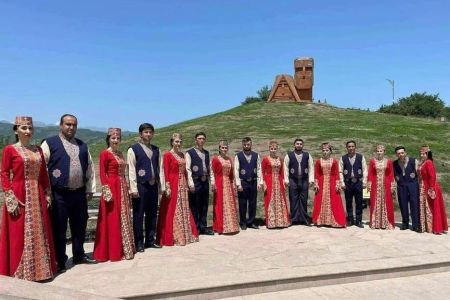 The participation of Artsakh ensembles in an international festival in Vienna was cancelled following the intervention of several foreign embassies
 Expert: It`s time for Armenia to move away from uncertainty and choose between West and East
 The Armenian Foreign Minister commented on the country`s return to work within the CSTO.
 The Artsakh Public Council expressed outrage at the UN Secretary-General`s behavior
 Lukashenko called for Armenia to assume the CIS presidency in 2029
 Dmitry Medvedev predicted a Ukrainian-like fate for Armenia amid the country`s shift in foreign policy
 Russian Security Council: In Armenia, they want to force Russian asset owners to dispose of their assets
 Zakharova: Russia ready to discuss with Armenia the prospects for expanding military cooperation as part of a review of bilateral ties
 Tevanyan: Armenia, like Ukraine and Moldova, is being drawn into the EU’s global war
 Yerevan City Hall is considering introducing a valet parking system in the city