
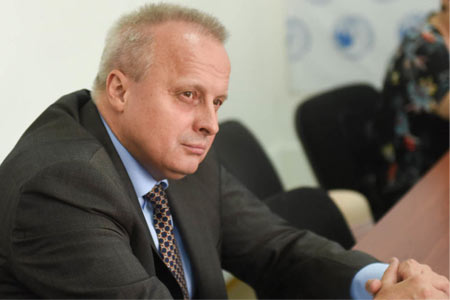
ArmInfo. The process of reformulating Armenia's strategic guidelines is in full swing, and naturally, this inevitably raises the question of finding new balances. This was stated by Russian Ambassador to Armenia Sergey Kopyrkin in an interview with the Public Radio of Armenia.
At the same time, he emphasized the importance of this dialogue being constructive, while maintaining the political will to preserve relations between the two countries and based on the search for common ground and respect.
"Many events have occurred in Armenian-Russian relations recently; there have been numerous statements, including from the Armenian leadership, on various aspects of bilateral relations. Armenia has frozen its participation in the CSTO, has embarked on a course to diversify foreign policy and foreign economic relations, and in 2025, a law was adopted on the beginning of accession to the European Union. This means that the coordinate system of our relations is truly changing." "We understand this, but, of course, all of this requires appropriate analysis, discussion, and adjustments to our relations in various areas," the diplomat emphasized.
He further recalled that the Russian leadership had urged Armenia to quickly determine its integration vector in light of Yerevan's adoption of the law on EU accession. Kopyrkin expressed confidence that the corresponding decision will, to some extent, influence the nature and mechanisms of interaction, including in the trade and economic sphere.
At the same time, the Russian ambassador acknowledged that choosing its foreign policy course and strategic partners is the sovereign right of any state. "For Russia, Armenia has always been, is, and, I am convinced, will remain a very important country. "The relations between our peoples have special and absolutely enduring values," he noted.
Regarding Armenia's choice of further integration path, Kopyrkin noted that the Russian side has been quite open and frank about its position, and that it will not be possible to move in any other direction.
"Furthermore, we cannot help but understand that the European Union today is completely different from what it was several years ago, including in the context of relations with Russia. Therefore, a choice must be made. In our view, it is, of course, in the interests of the Republic of Armenia to retain membership in the EAEU, because it truly offers very significant privileges." "Facts indicate that Armenia's participation in the EAEU is beneficial in terms of increased trade turnover, GDP, and other factors. But, of course, the choice is up to Armenia and the Armenian people, and we want this choice to be made as quickly as possible," he added.
Regarding the temporary restrictions imposed by the Russian Federation on certain Armenian goods imported into Russia, the diplomat noted that he is basing this on the official position of Russian regulatory agencies—Rospotrebnadzor and Rosselkhoznadzor—which are responsible for the safety of products supplied to the Russian market, including from EAEU members. "There were relevant inspections, as far as I know, and statements from these organizations about the need to step up efforts to bring products into compliance with phytosanitary and sanitary standards, the requirements of the Russian market," Kopyrkin added.
On May 9, Russian President Vladimir Putin, speaking to journalists, suggested that Armenia decide on its membership in the EU and the EAEU as soon as possible, expressing its readiness to "begin a civilized divorce" if necessary. Yerevan responded by stating that it would leave the EAEU whenever it deemed it necessary. And on May 29, the heads of four of the five EAEU countries adopted a resolution recommending that Armenia hold a referendum on its continued membership in the EAEU. On the same day, the Russian president stated that Armenia could not sit on two chairs and needed to make a choice as soon as possible.
It should be noted that on January 9, 2025, the Armenian government approved a draft law on the beginning of the process of joining the European Union, proposed by the "Eurakve" civic initiative. The draft was sent to the Armenian parliament for approval. On March 26, the parliament adopted it in its final reading and sent it to the president for signature. The document was signed on April 4 of that year. Moscow stated that Russia had conveyed to Armenia that simultaneous membership in the Eurasian Economic Union and the European Union was impossible.








 Orientalist: In 2026, Baku made special efforts to achieve greater diplomatic effect on the issue of victory over Artsakh
 Expert: Official Yerevan should not base its calculations in relations with Ankara on the "crack" in the Turkish-Azerbaijani alliance
 International expert: Trump is entering a "lame duck" period of rule
 Political scientist: The failure of the mission to adopt a new Armenian Constitution could raise the question of Pashinyan`s resignation.
 Opinion: Russia`s involvement in the Organization of Turkic States may increase its international weight, but will force a redistribution of political influence within it
 Lavrov: Armenia will not be expelled from the CSTO
 Drmeyan: The ECHR rejected Azerbaijan`s appeal in the case of Artsakh Defense Army Major Hayk Toroyan
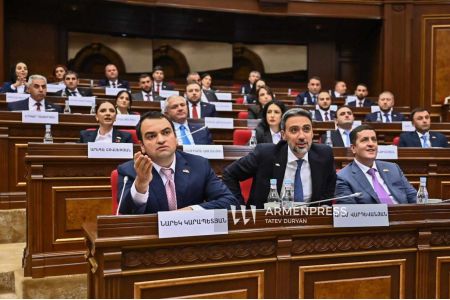 "Strong Armenia": The brawl in parliament was staged to distract public attention from Pashinyan`s failed foreign policy
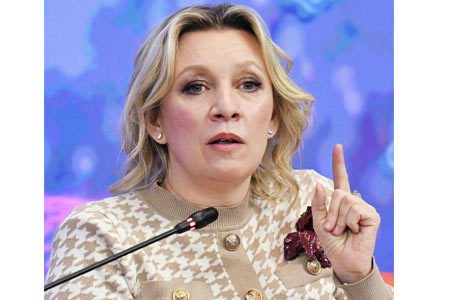 Zakharova commented on the scandalous epithets of the governor of Armenia`s Shirak region about "Ivanov"
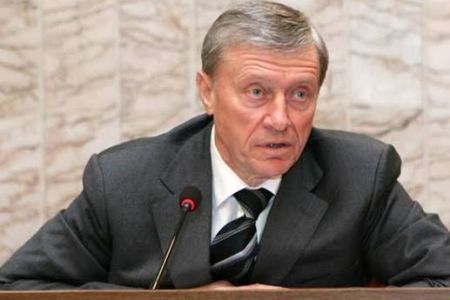 Nikolai Bordyuzha proposed excluding Armenia from the CSTO.
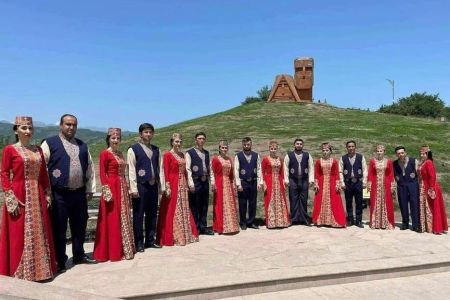 The participation of Artsakh ensembles in an international festival in Vienna was cancelled following the intervention of several foreign embassies
 Expert: It`s time for Armenia to move away from uncertainty and choose between West and East
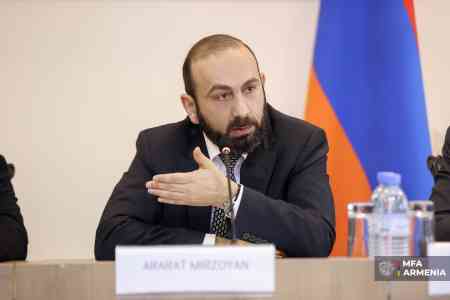 The Armenian Foreign Minister commented on the country`s return to work within the CSTO.
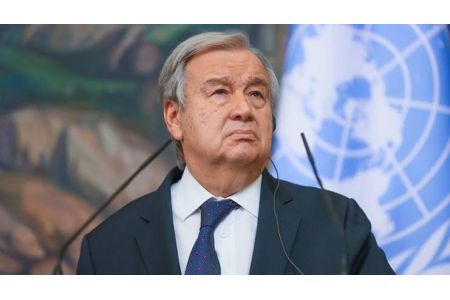 The Artsakh Public Council expressed outrage at the UN Secretary-General`s behavior
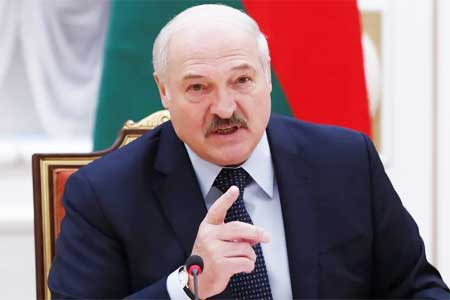 Lukashenko called for Armenia to assume the CIS presidency in 2029
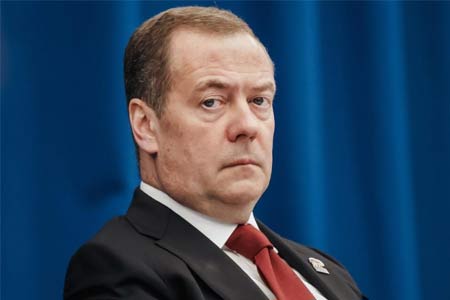 Dmitry Medvedev predicted a Ukrainian-like fate for Armenia amid the country`s shift in foreign policy
 Russian Security Council: In Armenia, they want to force Russian asset owners to dispose of their assets
 Zakharova: Russia ready to discuss with Armenia the prospects for expanding military cooperation as part of a review of bilateral ties
 Tevanyan: Armenia, like Ukraine and Moldova, is being drawn into the EU’s global war
 Yerevan City Hall is considering introducing a valet parking system in the city