
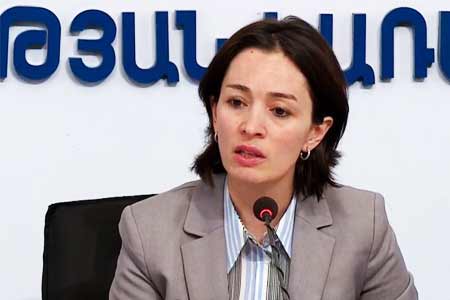
ArmInfo. After a 29-year hiatus, Armenia has resumed the process of inscription of new monuments on the UNESCO World Heritage List. This was stated by Zhanna Andreasyan, head of the Ministry of Education, Science, Culture, and Sports (MECS), during a discussion of the draft state budget for 2027 at a joint meeting of the parliament's standing committees, ArmInfo reported in the press service of the Ministry of Education, Science, Culture, and Sports (MECS). She stated that five more monuments or groups of monuments are planned to be included on the World Heritage Tentative List by 2031. "Inclusion on UNESCO's lists is not only an opportunity for international recognition but also an improvement in the quality of management, since an adequate monument management system is one of the important conditions," Andreasyan emphasized.
Currently, according to her, work is underway to prepare applications for the ancient capital of Armenia, Artashat, and the rock settlements of the Syunik region. In addition, the minister said, there are plans to nominate one of the Armenian fortresses. "Work to popularize intangible cultural heritage is also ongoing. In the coming years, we plan to submit two more sites for inclusion on the relevant UNESCO lists," Andreasyan added.
Speaking about the results achieved, the head of the Ministry of Education, Science and Culture mentioned the application "Areni Cave-1:" "Prehistoric Life and Winemaking in the Arpa River Valley," as well as a joint project with Iran dedicated to the traditions of rainmaking and water worship, which aims to popularize the Armenian Vardavar site internationally. The official further stated that approximately 1.79 billion drams will be allocated for the strengthening and restoration of monuments in 2027. At the same time, she noted, restoration work is underway at nine more historical and cultural monuments through public-private partnerships. Speaking about contemporary art, the minister emphasized the importance of diversifying cultural events, expanding theater and concert activities, and decentralizing cultural life. "Next year, theater attendance is expected to increase by approximately 20%." At the same time, the implementation of new funding models for cultural institutions, which contribute to the growth of their own revenues and financial independence, continues," Andreasyan noted.
The head of the Ministry of Education, Science and Culture also touched on the development of cinema, noting the potential for transforming film production into a competitive industry in Armenia. "An important tool in this direction is the mechanism for partial return of investment in film production, which is already facilitating the implementation of new film projects in Armenia. Eleven applications for film projects have been received, five of which have already received partial returns of investment in the amount of over 100 million drams," Andreasyan concluded.















 Political scientist: The failure of the mission to adopt a new Armenian Constitution could raise the question of Pashinyan`s resignation.
 Opinion: Russia`s involvement in the Organization of Turkic States may increase its international weight, but will force a redistribution of political influence within it
 Expert: Economic pressure on Armenia may be virtually painless for other EAEU members, but not for Armenia itself
 Drmeyan: The ECHR rejected Azerbaijan`s appeal in the case of Artsakh Defense Army Major Hayk Toroyan
 Zakharova commented on the scandalous epithets of the governor of Armenia`s Shirak region about "Ivanov"
 Nikolai Bordyuzha proposed excluding Armenia from the CSTO.
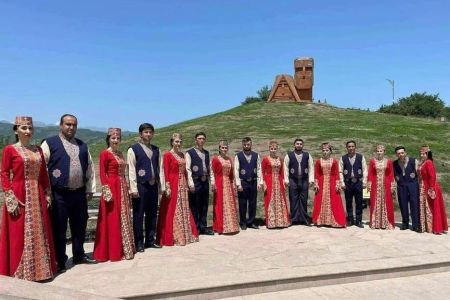 The participation of Artsakh ensembles in an international festival in Vienna was cancelled following the intervention of several foreign embassies
 Expert: It`s time for Armenia to move away from uncertainty and choose between West and East
 The Armenian Foreign Minister commented on the country`s return to work within the CSTO.
 The Artsakh Public Council expressed outrage at the UN Secretary-General`s behavior
 Lukashenko called for Armenia to assume the CIS presidency in 2029
 Dmitry Medvedev predicted a Ukrainian-like fate for Armenia amid the country`s shift in foreign policy
 Russian Security Council: In Armenia, they want to force Russian asset owners to dispose of their assets
 Zakharova: Russia ready to discuss with Armenia the prospects for expanding military cooperation as part of a review of bilateral ties
 Tevanyan: Armenia, like Ukraine and Moldova, is being drawn into the EU’s global war
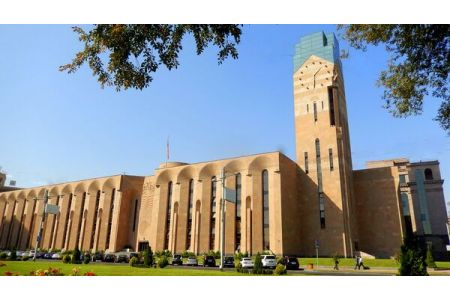 Yerevan City Hall is considering introducing a valet parking system in the city
 Expert: The circus surrounding the “Albanization” of Armenian culture in the presence of foreign ambassadors in occupied Artsakh is genocide