
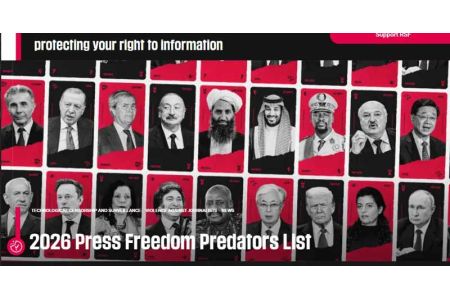
ArmInfo. On the occasion of the International Day to End Impunity for Crimes against Journalists, Reporters Without Borders (RSF) published profiles of 33 press freedom predators who attacked journalists and media outlets in 2026.
The organization also noted that these individuals are united by their hatred of press freedom. RSF noted that their means vary, but their goals are the same: to silence independent voices and trample freedom of information.
"Murder, imprisonment, defamation, propaganda, the use of a troll army... Any method is good to silence an opponent." This ironic ranking, however, reveals the diversity and brutality of the strategies used against journalism. Regardless of his previous achievements compared to other predators of press freedom, US President Donald Trump, who emerged as one of the front-runners this year, has well earned his place in the gallery of predators, having achieved impressive results in less than two years in office," the report states. It notes that since the beginning of his second term, attacks on the press have increasingly gone beyond rhetoric and general government policy, escalating into physical restrictions against journalists. [The report also states:] "Among those firmly in their positions are the unsinkable Vladimir Putin (Russia) and Daniel Ortega (Nicaragua). This year, as in previous years, such entities as the Israel Defense Forces, Mexican cartels, and the Chinese Communist Party, which continue their deplorable practice of violently suppressing journalists, have retained their positions." Benjamin Netanyahu's government, with the help of the Israel Defense Forces, is pursuing a repressive policy against journalists in the Gaza Strip, the West Bank, and even Lebanon. China, under Xi Jinping, remains the world's largest prison for journalists. As for the Mexican cartels, they maintain a climate of fear in a supposedly "peaceful" country, where journalists have been murdered monthly this year. A newcomer to this category: Egyptian President Abdel Fattah el-Sisi, under whose regime, in just the past few weeks, the fact-checking journalists of the website Matsaddash have been imprisoned. and the popular news website Mada Masr has been shut down," the statement continued.
"In the Legal category, Kazakh President Kassym-Jomart Tokayev has joined predators like Turkish Prime Minister Recep Tayyip Erdogan and Indian businessman Gautam Adani's conglomerate of companies, who are doing everything possible to persecute the press, initiating baseless lawsuits against journalists and media outlets.
In the Society category, organizations like the Rapid Information Response Battalion (BIR-C) in Burkina Faso and OpIndia in India point to another troubling trend: an increase in hacker attacks, carried out with the knowledge or on the orders of government officials, aimed at provoking hatred against the target media outlet. In Argentina, Javier Miley, who said "we don't hate journalists enough," epitomizes this trend: according to an RSF investigation, in just 47 days in April and May 2026, the social media account X published more than 1,600 posts negatively targeting journalists, the RSF report continues.
Reporters Without Borders They further note that, in economic terms, large tech corporations like Alphabet and Meta, influential billionaires like Bidzina Ivanishvili or Vincent Bolloré, and political figures like Vladimir Tabak demonstrate the diversity of economic strategies of "predators" aimed at weakening independent media, complicating their access to funding, and undermining their editorial independence.
"The Predator List is an RSF anti-rating, like the Golden Raspberry Awards for film, an award for the worst achievements in the field, whether in the form of work or attempts to do something against the press. It does not claim complete objectivity, but it only presents those individuals and organizations who, over the past difficult year, have demonstrated a clear desire to do harm." And as soon as someone we wouldn't regret leaving the list—for example, Ali Khamenei (Iran), Nicolás Maduro (Venezuela), Viktor Orbán (Hungary), or Aleksandar Vučić (Serbia)—a new contender immediately appears in their place. More seriously, in addition to RSF's World Press Freedom Index, in which we annually assess changes in the press freedom situation in various countries, there's this Predators' Gallery, which presents the situation from a different angle and identifies those responsible for the deterioration. Behind the statistics, the deterioration, and the obstruction of the press, there are specific individuals. They may act through physical or rhetorical violence, legislation, threats, online manipulation, or economic pressure, but these predators have one thing in common: a desire to prevent journalists from doing their job and deprive citizens of their right to free and independent sources of information. RSF doesn't make anything up: each predator is profiled, with a description of their activities, rhetoric, and the primary means they employ. Naming the predators, publicizing their methods, and describing their crimes is a refusal to accept such attacks. "In response to those who want to silence the press, RSF will continue to name those who kill journalism," said RSF Director General Thibaut Brutin.















 Expert: Economic pressure on Armenia may be virtually painless for other EAEU members, but not for Armenia itself
 Expert on protests in France: Civilizations fade when society loses a vision of the future
 Turkologist: Azerbaijan is not all-powerful—its vulnerabilities should become part of Armenia’s security strategy
 Opinion: The development of the Amulsar mine near the resort town of Jermuk is the beginning of an environmental disaster in Armenia
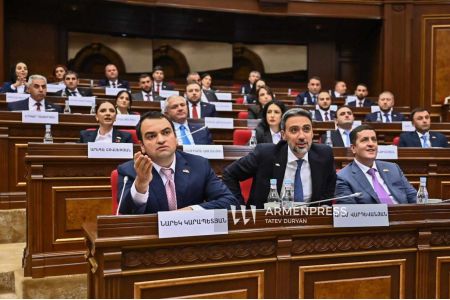 "Strong Armenia": The brawl in parliament was staged to distract public attention from Pashinyan`s failed foreign policy
 Zakharova commented on the scandalous epithets of the governor of Armenia`s Shirak region about "Ivanov"
 Nikolai Bordyuzha proposed excluding Armenia from the CSTO.
 The participation of Artsakh ensembles in an international festival in Vienna was cancelled following the intervention of several foreign embassies
 Expert: It`s time for Armenia to move away from uncertainty and choose between West and East
 The Armenian Foreign Minister commented on the country`s return to work within the CSTO.
 The Artsakh Public Council expressed outrage at the UN Secretary-General`s behavior
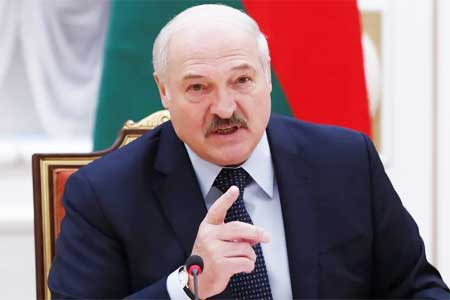 Lukashenko called for Armenia to assume the CIS presidency in 2029
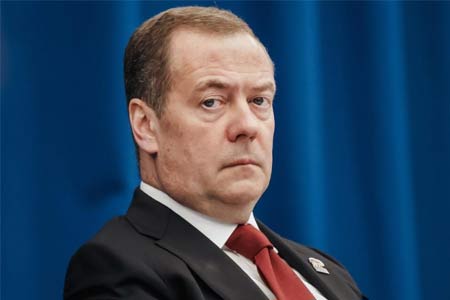 Dmitry Medvedev predicted a Ukrainian-like fate for Armenia amid the country`s shift in foreign policy
 Russian Security Council: In Armenia, they want to force Russian asset owners to dispose of their assets
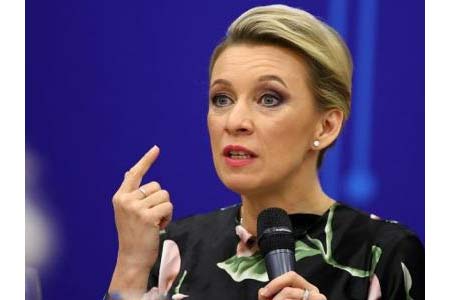 Zakharova: Russia ready to discuss with Armenia the prospects for expanding military cooperation as part of a review of bilateral ties
 Tevanyan: Armenia, like Ukraine and Moldova, is being drawn into the EU’s global war
 Yerevan City Hall is considering introducing a valet parking system in the city
 Expert: The circus surrounding the “Albanization” of Armenian culture in the presence of foreign ambassadors in occupied Artsakh is genocide
 Political scientist: If Russian-Armenian relations are destroyed, Turkey will take Russia`s place