
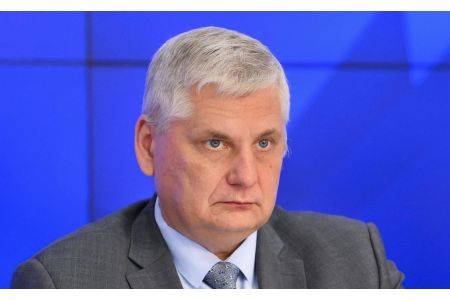
ArmInfo. For Ankara and Baku, Russia's involvement in the Organization of Turkic States could mean increasing the international profile of the UTG, but also raise the issue of redistributing political influence within the group, according to Russian political scientist Sergei Markedonov.
The expert called Kazakh President Kassym-Jomart Tokayev's proposal to invite Russia to the UTG in order to enhance the organization's authority a non-trivial initiative during his speech at the Organization of Turkic States summit in Ankara.
Markedonov noted that Tokayev's proposal has been the subject of widespread discussion.
"However, official representatives of both Moscow and Ankara are showing restraint regarding Tokayev's initiative. Many commentators have called the Kazakh leader's idea unexpected. This is not entirely true. Back in July 2016, during his speech at the All-Russian Youth Forum "Territory of Meanings," Russian Foreign Minister Sergey Lavrov, responding to a question about possible formats for Moscow's interaction with the Cooperation Council of Turkic States, allowed for Russia's participation if the Organization deemed it possible for a country with a Turkic population to join, the Russian expert recalled.
According to him, based on this, it can be concluded that the very idea of interacting with the Turkic association had been discussed previously. He added that Moscow has a somewhat similar experience: in June 2005, Russia became an observer country in the Organization of Islamic Cooperation (formerly the Organization of the Islamic Conference).
"But, as users of youth public groups say, on the RF-UTG line, 'things are not simple.'" Moscow is interested in maintaining its influence in Central Asia and the Transcaucasus through the development of the North-South transport corridor and cooperation with Turkey, as well as promoting the Greater Eurasian Partnership initiative.
On the other hand, the amalgamated territorial community is gradually transforming from a cultural and linguistic association into an independent political and economic center. In this area, too, "things are not so clear-cut." Both in the context of "historical politics" and language issues. And, of course, security issues. "The discussion about the military component of the Joint Territorial Community (JTC) is not yet complete," he continued.
In this vein, the political scientist noted that Tokayev is opposed to the militarization of the JTC, and in his October speech at the Organization's summit in Ankara, he specifically emphasized Kazakhstan's position that it "is not and should not in the future turn into a military alliance."
Markedonov emphasized that Astana is also cautious about the prospects for broader international legitimization of Northern Cyprus. Therefore, he continued, the Kazakh leader's initiative is not a demonstration of altruism, but a manifestation of pragmatism. "Moscow's potential participation in the 'JTC+' format would reduce the risk of this structure becoming an instrument of geopolitical confrontation." If we consider the potential forks in the road, Russia's acquisition of observer status would open the possibility of a permanent presence in the JTG, participating in discussions, and maintaining direct contacts with its participants without assuming the obligations of a full member. However, this option evokes the ominous specter of the Russia-NATO Council, where discussions were possible, but the definition and decision-making process was far from stellar," the expert believes.
At the same time, he is confident that maintaining the current distance would allow Moscow to continue cooperation with the Turkic states through bilateral mechanisms, the EAEU, the CSTO, and the SCO. Markedonov noted that such an approach would avoid the burden of new obligations, but would leave Russia outside the institutional development of the Organization of Turkic States.
"But it's not just Russia and the JTG that are participating in this 'Turkic tango.' Turkey and Azerbaijan have their own intrigues in their positions." "Aliyev's non-participation in the forum doesn't cancel his interest in the game. For Ankara and Baku, Russia's involvement could mean increasing the international weight of the UTC, but at the same time raise the issue of redistributing political influence within the association," Markedonov concluded.








 Expert: Economic pressure on Armenia may be virtually painless for other EAEU members, but not for Armenia itself
 Expert on protests in France: Civilizations fade when society loses a vision of the future
 Turkologist: Azerbaijan is not all-powerful—its vulnerabilities should become part of Armenia’s security strategy
 Opinion: The development of the Amulsar mine near the resort town of Jermuk is the beginning of an environmental disaster in Armenia
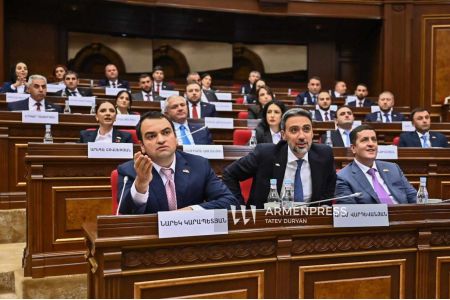 "Strong Armenia": The brawl in parliament was staged to distract public attention from Pashinyan`s failed foreign policy
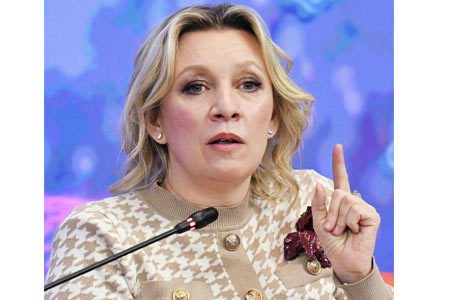 Zakharova commented on the scandalous epithets of the governor of Armenia`s Shirak region about "Ivanov"
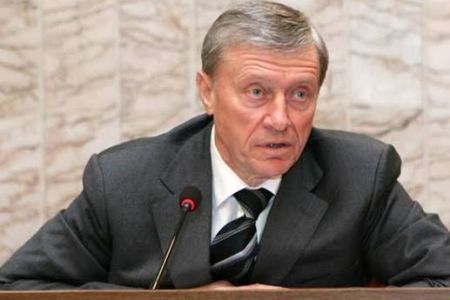 Nikolai Bordyuzha proposed excluding Armenia from the CSTO.
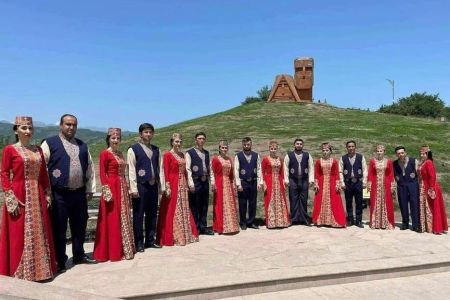 The participation of Artsakh ensembles in an international festival in Vienna was cancelled following the intervention of several foreign embassies
 Expert: It`s time for Armenia to move away from uncertainty and choose between West and East
 The Armenian Foreign Minister commented on the country`s return to work within the CSTO.
 The Artsakh Public Council expressed outrage at the UN Secretary-General`s behavior
 Lukashenko called for Armenia to assume the CIS presidency in 2029
 Dmitry Medvedev predicted a Ukrainian-like fate for Armenia amid the country`s shift in foreign policy
 Russian Security Council: In Armenia, they want to force Russian asset owners to dispose of their assets
 Zakharova: Russia ready to discuss with Armenia the prospects for expanding military cooperation as part of a review of bilateral ties
 Tevanyan: Armenia, like Ukraine and Moldova, is being drawn into the EU’s global war
 Yerevan City Hall is considering introducing a valet parking system in the city
 Expert: The circus surrounding the “Albanization” of Armenian culture in the presence of foreign ambassadors in occupied Artsakh is genocide
 Political scientist: If Russian-Armenian relations are destroyed, Turkey will take Russia`s place