

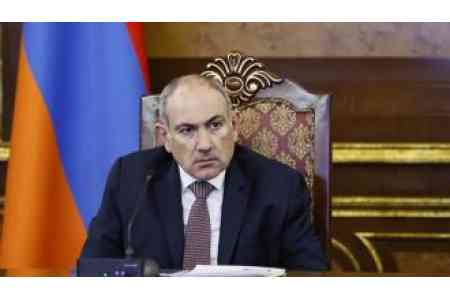
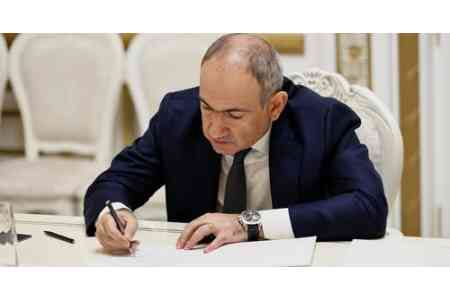
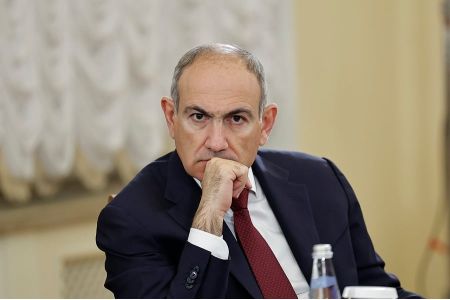
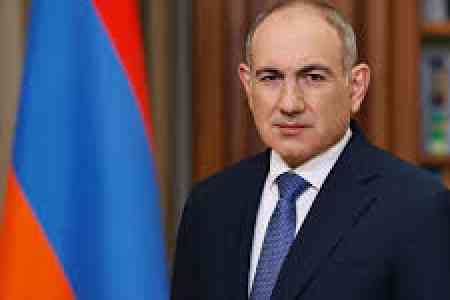
ArmInfo. Active work must continue to successfully conclude the visa liberalization negotiations between Armenia and the European Union. Prime Minister Nikol Pashinyan stated this on November 2 during discussions of the draft state budget at a joint session of the National Assembly committees.
According to him, a new system of biometric passports and identification cards was launched in Armenia on November 1. Its implementation was preceded by a large-scale reform program. The new passport and card system complies with all international standards, which is crucial for the success of the visa liberalization negotiations with the European Union. Along this path, the Prime Minister noted, a rather complex stage of reforms remains to be carried out, which should be aimed at bringing certain areas into line with European standards. The necessary systems must be reformed. "We are determined to follow this path: some change in the status of the border troops, which in the short term will have to take control of all state borders. The government's program for 2026-2031 contains a reference to this topic, and we will gradually move along this path," the head of government said, recalling that in the recent past, the Armenian side did not control some checkpoints. However, in recent years, control at these checkpoints has been exercised exclusively by the Armenian border troops, who, step by step, must fully assume control of the country's borders. Along this path, the country's border service must also be reformed. Pashinyan emphasized that in the near future, citizens with biometric passports will be able to cross the border using the e-gate system, an automated, contactless border control system. This means that citizens crossing the border will not have any contact with border guards. Initially, this capability will be implemented at Zvartnots International Airport, followed by all other border crossings. To address this issue with citizens located abroad, cooperation with foreign countries will be necessary.
As a reminder, the Armenian government officially approved the draft law "On the State Budget of the Republic of Armenia for 2027" on October 1, 2026. According to the document, state treasury revenues will amount to 3 trillion 603.8 billion drams (including approximately 3 trillion 462.7 billion drams in taxes and state duties, 14.2 billion drams in subsidies, and 126.9 billion drams in other revenues). This represents an increase of approximately 11.9% over the expected 2026 level. Expenditures will amount to 4 trillion 72 billion drams. The budget deficit will amount to 468.2 billion drams (about $1.3 billion). The deficit is planned to be financed from domestic sources (187.5 billion drams) and from external sources (about 280.7 billion drams). Armenia's nominal GDP in 2027 is expected to be 13.614 trillion drams, compared to 12.465 trillion drams in 2026.




















 Opinion: Russia`s involvement in the Organization of Turkic States may increase its international weight, but will force a redistribution of political influence within it
 Expert: Economic pressure on Armenia may be virtually painless for other EAEU members, but not for Armenia itself
 Expert on protests in France: Civilizations fade when society loses a vision of the future
 Turkologist: Azerbaijan is not all-powerful—its vulnerabilities should become part of Armenia’s security strategy
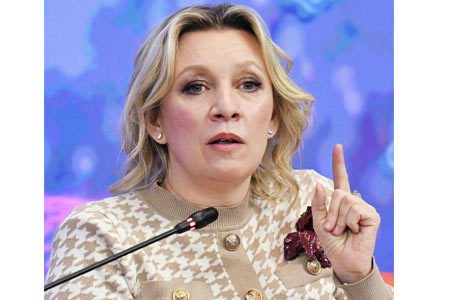 Zakharova commented on the scandalous epithets of the governor of Armenia`s Shirak region about "Ivanov"
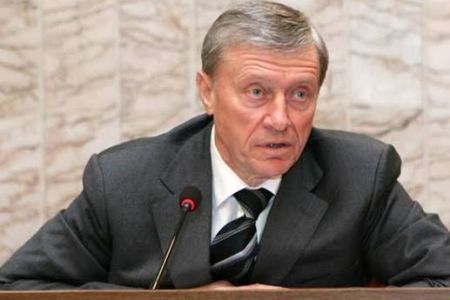 Nikolai Bordyuzha proposed excluding Armenia from the CSTO.
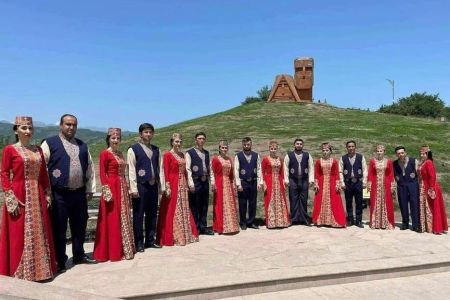 The participation of Artsakh ensembles in an international festival in Vienna was cancelled following the intervention of several foreign embassies
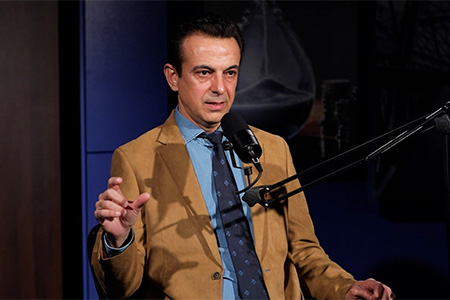 Expert: It`s time for Armenia to move away from uncertainty and choose between West and East
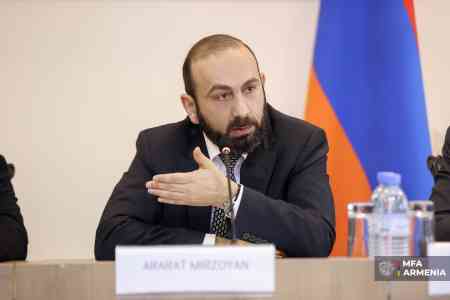 The Armenian Foreign Minister commented on the country`s return to work within the CSTO.
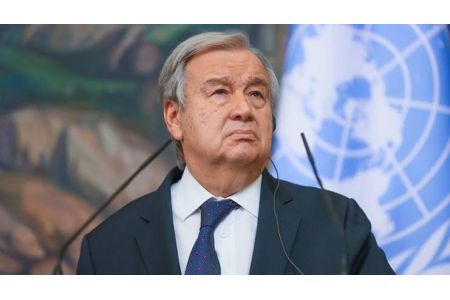 The Artsakh Public Council expressed outrage at the UN Secretary-General`s behavior
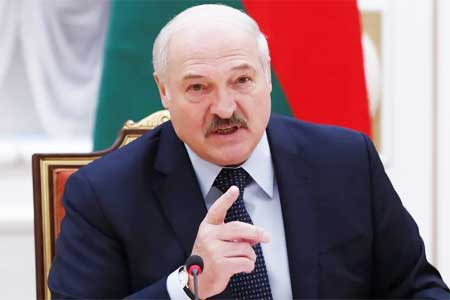 Lukashenko called for Armenia to assume the CIS presidency in 2029
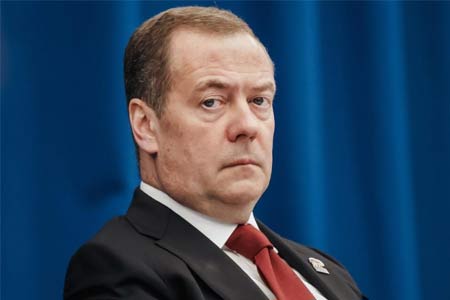 Dmitry Medvedev predicted a Ukrainian-like fate for Armenia amid the country`s shift in foreign policy
 Russian Security Council: In Armenia, they want to force Russian asset owners to dispose of their assets
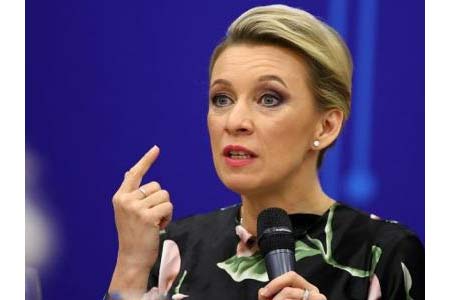 Zakharova: Russia ready to discuss with Armenia the prospects for expanding military cooperation as part of a review of bilateral ties
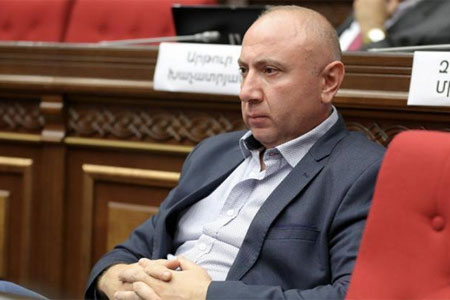 Tevanyan: Armenia, like Ukraine and Moldova, is being drawn into the EU’s global war
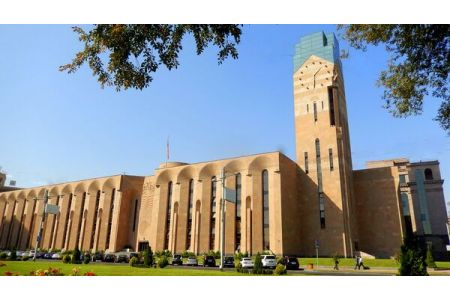 Yerevan City Hall is considering introducing a valet parking system in the city
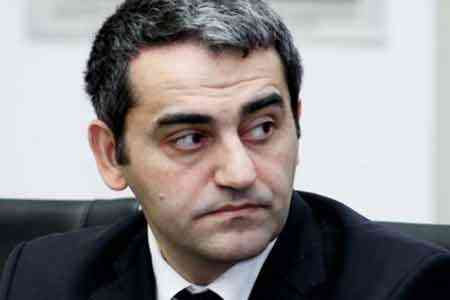 Expert: The circus surrounding the “Albanization” of Armenian culture in the presence of foreign ambassadors in occupied Artsakh is genocide