

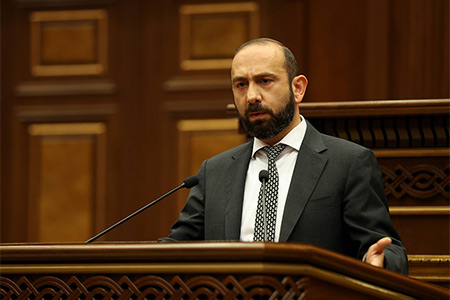
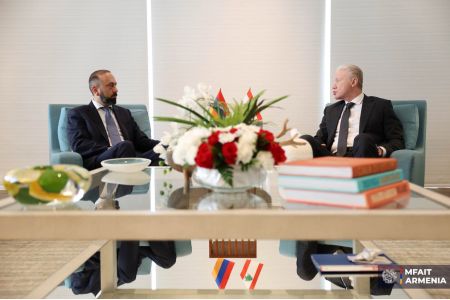
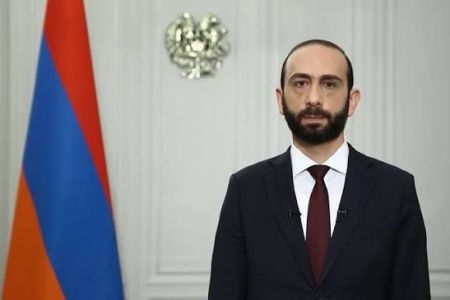
ArmInfo. Armenia has made its strategic choice and is deeply convinced that lasting peace, strengthened regional cooperation, and expanded connectivity are the foundation for a more stable, secure, and prosperous future for the South Caucasus. This was stated by Armenian Foreign Minister Ararat Mirzoyan at the final panel discussion of the Manama Dialogue forum on "Global Security Governance: Inclusiveness and Role."
The head of the Armenian Foreign Ministry expressed his conviction that every state, regardless of its size, chooses the role it can play in its region and on the international arena. According to him, regardless of its resources, every state can promote cooperation or deepen divisions, serve as a bridge between peoples or become a source of further division. He acknowledged that such choices are never made in isolation or independent of historical and geopolitical realities.
"It is shaped by a complex interplay of factors, including the wounds of the past, long-standing differences, both resolved and unresolved conflicts, and political, economic, and security constraints. However, the key question remains: what considerations should ultimately guide our decisions and determine the course of our actions? For Armenia, the answer is clear. Our choice is based on a firm commitment to peace, a determination to advance cooperation, and a shared responsibility to build a more secure and prosperous future. We fully recognize that peacebuilding is not a simple or spontaneous process, and it cannot occur in isolation from the challenges we face," the Armenian Foreign Minister said.
At the same time, he expressed conviction that peace is, above all, a conscious and strategic choice. "Armenia has made its strategic choice." We are deeply convinced that lasting peace, strengthened regional cooperation, and expanded connectivity are the foundation for a more stable, secure, and prosperous future for our region. In this context, the Washington Peace Summit on August 8, 2025, became a historic milestone in advancing peace between Armenia and Azerbaijan," he continued.
According to him, the agreement on the establishment of peace and interstate relations between Armenia and Azerbaijan is a significant achievement that has opened a new chapter and created opportunities for transforming the South Caucasus from a region characterized by conflict into a space of dialogue, cooperation, and potential shared prosperity.
Mirzoyan is confident that the experience of the South Caucasus demonstrates not only the cost of protracted confrontation but also the opportunities that diplomacy can create.
In this vein, the Armenian diplomat emphasized that political commitment must be accompanied by concrete actions and tangible results. He named the implementation of the “Crossroads of the World” projects as important areas of action from the point of view of communications development. and "Trump's Route for International Peace and Prosperity."
"The TRIPP project, which will be implemented in Armenia, with its railway, energy, fiber-optic, oil and gas infrastructure, will play a significant role in strengthening ties not only between Armenia and Azerbaijan or its immediate neighbors, but also between East and West, North and South, creating new opportunities for regional and interregional trade and promoting the diversification and resilience of international supply chains," Mirzoyan said.
The Armenian official went on to explain that Armenia has adopted a comprehensive approach aimed at strengthening its resilience and adaptability in an increasingly complex international environment, which, among other things, involves diversifying its international partnerships, expanding economic opportunities, and increasing economic resilience through diversification.
He recalled that the international rating agency S&P notes that Armenia's average economic growth from 2022 to 2025 was 7.8%, one of the highest rates among the 143 countries assessed by the agency. In the first five months of 2026, economic activity grew by 8% year-on-year, exceeding forecasts. In January-July 2026, the economic activity index increased by 7.7%, and by 17% in July alone.
"In this regard, I would like to particularly emphasize the importance Armenia attaches to further developing relations with the Gulf countries, including by expanding trade, promoting mutual investment, and identifying new areas of mutually beneficial cooperation," he added.
In conclusion, Mirzoyan emphasized that for the voices of small states to be heard and respected, not only the effective functioning of multilateral mechanisms and rules is necessary, but also a clear definition of each state's role and vision, the formation of mutually beneficial ties and interdependence, and, ultimately, a consistent commitment to this goal.


















 Expert: Economic pressure on Armenia may be virtually painless for other EAEU members, but not for Armenia itself
 Expert on protests in France: Civilizations fade when society loses a vision of the future
 Turkologist: Azerbaijan is not all-powerful—its vulnerabilities should become part of Armenia’s security strategy
 Opinion: The development of the Amulsar mine near the resort town of Jermuk is the beginning of an environmental disaster in Armenia
 "Strong Armenia": The brawl in parliament was staged to distract public attention from Pashinyan`s failed foreign policy
 Zakharova commented on the scandalous epithets of the governor of Armenia`s Shirak region about "Ivanov"
 Nikolai Bordyuzha proposed excluding Armenia from the CSTO.
 The participation of Artsakh ensembles in an international festival in Vienna was cancelled following the intervention of several foreign embassies
 Expert: It`s time for Armenia to move away from uncertainty and choose between West and East
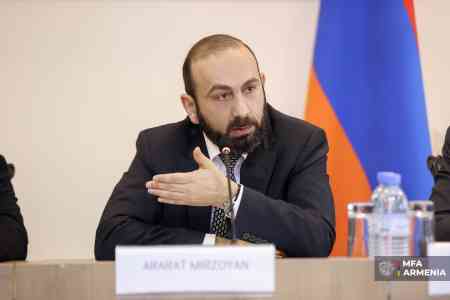 The Armenian Foreign Minister commented on the country`s return to work within the CSTO.
 The Artsakh Public Council expressed outrage at the UN Secretary-General`s behavior
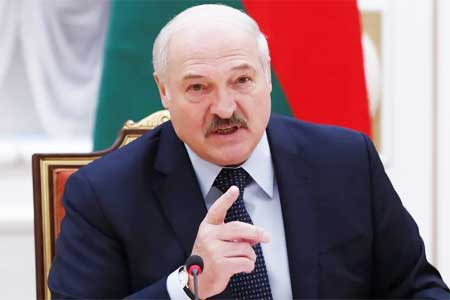 Lukashenko called for Armenia to assume the CIS presidency in 2029
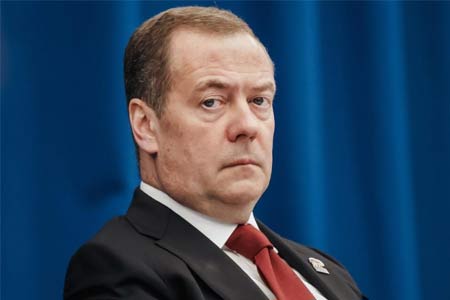 Dmitry Medvedev predicted a Ukrainian-like fate for Armenia amid the country`s shift in foreign policy
 Russian Security Council: In Armenia, they want to force Russian asset owners to dispose of their assets
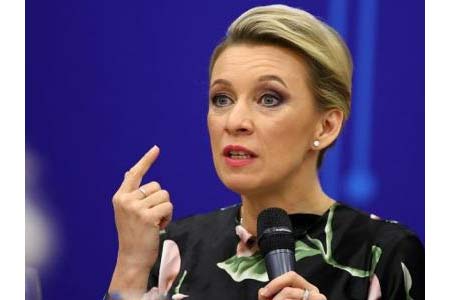 Zakharova: Russia ready to discuss with Armenia the prospects for expanding military cooperation as part of a review of bilateral ties
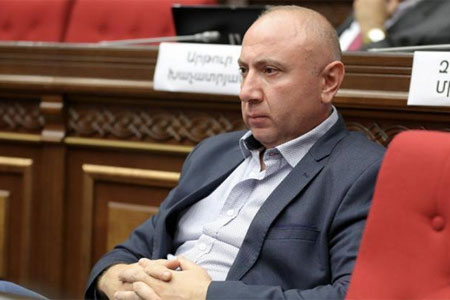 Tevanyan: Armenia, like Ukraine and Moldova, is being drawn into the EU’s global war
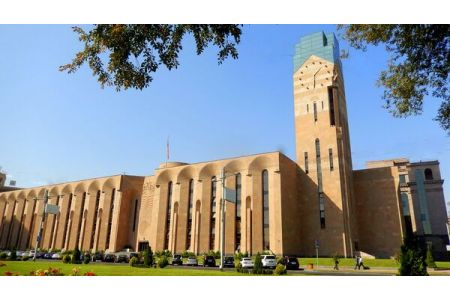 Yerevan City Hall is considering introducing a valet parking system in the city
 Expert: The circus surrounding the “Albanization” of Armenian culture in the presence of foreign ambassadors in occupied Artsakh is genocide
 Political scientist: If Russian-Armenian relations are destroyed, Turkey will take Russia`s place