

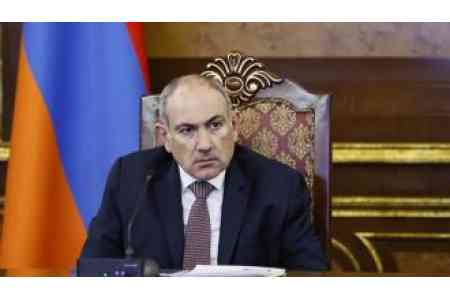
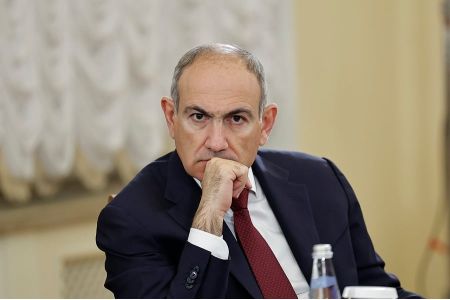
ArmInfo. Armenian Prime Minister Nikol Pashinyan's recent statements regarding the adoption of a new Constitution indicate that he has found himself in a multi-layered political impasse, attempts to resolve which could lead to an unprecedented domestic political crisis.
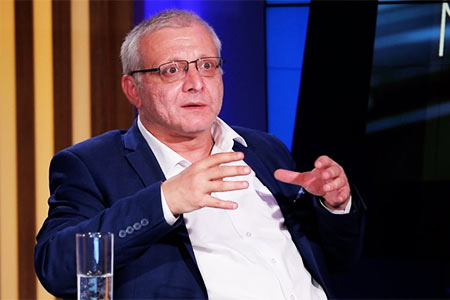
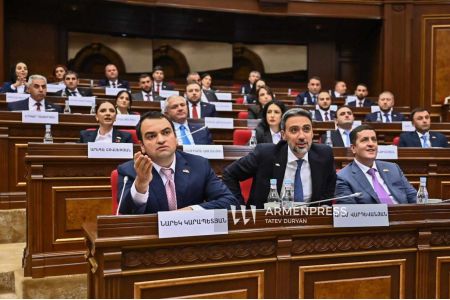
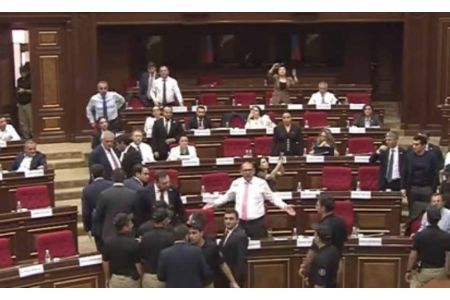
Political scientist Suren Surenyants expressed this opinion on his Facebook page, reacting to Pashinyan's statement to journalists that "following the discussion held yesterday in the National Assembly, the likelihood that snap parliamentary elections will not be necessary has increased." Moreover, as the expert recalled, Pashinyan stated that he intends to present the opposition with an offer they cannot refuse. However, according to the political scientist, this optimism has no serious political basis. "Firstly, Pashinyan unwittingly admits that the agenda for amending Armenia's Constitution is conditioned by Azerbaijan's demands, thereby demonstrating the bankruptcy of his own propaganda thesis about 'unprecedented sovereignty.' Secondly, Pashinyan is attempting to turn the cause-and-effect relationship on its head. However, it wasn't Armenia's parliamentary opposition that made the constitutional amendment a prerequisite for signing a peace treaty, but Azerbaijani President Ilham Aliyev. Deputy Speaker of the Armenian Parliament Aram Vardevanyan merely raised a fundamental question: what guarantee is there that Azerbaijan won't make new demands on Armenia after amending the Constitution? Pashinyan doesn't and can't have a convincing answer to this question," Sureniants asserted.
Meanwhile, as the political scientist noted, Azerbaijan's behavior gives reason to doubt that its strategic goal is signing a peace treaty with Armenia. "Baku is essentially waiting for a specific regional scenario to squeeze the maximum out of Armenia. Should the US and Israel take further military action against Iran, the balance of power in the region could change significantly. In such a scenario, it cannot be ruled out that Azerbaijan will try to take advantage of the geopolitical upheaval, even attempting to annex Syunik. This is an assessment of the potential risk, which would be unwise to ignore," the expert believes.
Surenyants is also confident that Pashinyan's hopes of convincing the parliamentary opposition are practically devoid of political foundation. In this regard, he recalled that the Strong Armenia and Armenia factions categorically reject the idea of amending the Constitution at Azerbaijan's request. In this regard, he described as most dangerous Pashinyan's possible reliance on exerting public pressure on the parliamentary opposition, similar to the events of October 2018 (when Pashinyan led his supporters into the streets and surrounded the Armenian parliament building to force deputies to participate in early parliamentary elections - ed.).
At the same time, according to the political scientist, even in this situation, Pashinyan is ignoring two significant circumstances. "Firstly, today he no longer possesses the public trust and mobilization resources he had in 2018. Secondly, it is difficult to imagine broad public unity around an agenda that, no matter how it is presented with promises of peace, is directly linked to the demands of the President of Azerbaijan. In a deeply polarized society, such an initiative may not resolve the political crisis, but rather deepen the internal political confrontation, even to the point of civil unrest. Pashinyan finds himself in a situation where, essentially, there is no good solution. Even in the event of early elections, where the Armenian Prime Minister could find himself in the position of a chess player caught in zugzwang (when any action leads to a worsening of the position or a loss - ed.)," Sureniants concluded.



















 Expert: Economic pressure on Armenia may be virtually painless for other EAEU members, but not for Armenia itself
 Expert on protests in France: Civilizations fade when society loses a vision of the future
 Turkologist: Azerbaijan is not all-powerful—its vulnerabilities should become part of Armenia’s security strategy
 Opinion: The development of the Amulsar mine near the resort town of Jermuk is the beginning of an environmental disaster in Armenia
 Expert: The arrest of opposition figures in Armenia for social media posts is a systematic attempt to intimidate the public and suppress dissent.
 Zakharova commented on the scandalous epithets of the governor of Armenia`s Shirak region about "Ivanov"
 Nikolai Bordyuzha proposed excluding Armenia from the CSTO.
 The participation of Artsakh ensembles in an international festival in Vienna was cancelled following the intervention of several foreign embassies
 Expert: It`s time for Armenia to move away from uncertainty and choose between West and East
 The Armenian Foreign Minister commented on the country`s return to work within the CSTO.
 The Artsakh Public Council expressed outrage at the UN Secretary-General`s behavior
 Lukashenko called for Armenia to assume the CIS presidency in 2029
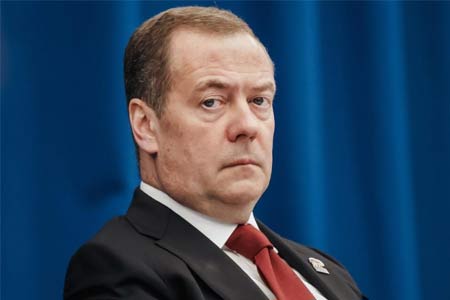 Dmitry Medvedev predicted a Ukrainian-like fate for Armenia amid the country`s shift in foreign policy
 Russian Security Council: In Armenia, they want to force Russian asset owners to dispose of their assets
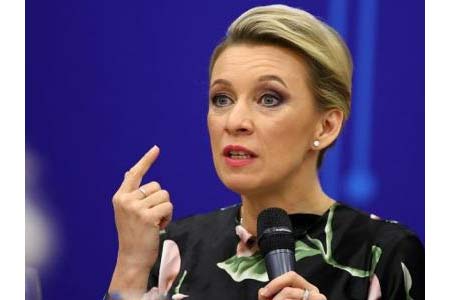 Zakharova: Russia ready to discuss with Armenia the prospects for expanding military cooperation as part of a review of bilateral ties
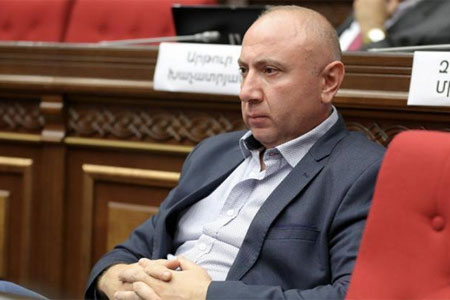 Tevanyan: Armenia, like Ukraine and Moldova, is being drawn into the EU’s global war
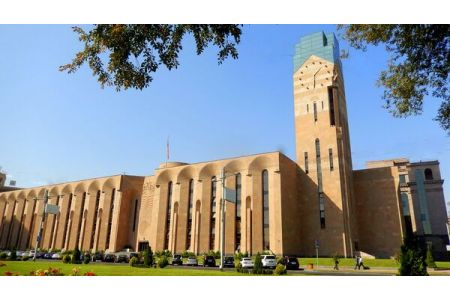 Yerevan City Hall is considering introducing a valet parking system in the city
 Expert: The circus surrounding the “Albanization” of Armenian culture in the presence of foreign ambassadors in occupied Artsakh is genocide
 Political scientist: If Russian-Armenian relations are destroyed, Turkey will take Russia`s place