

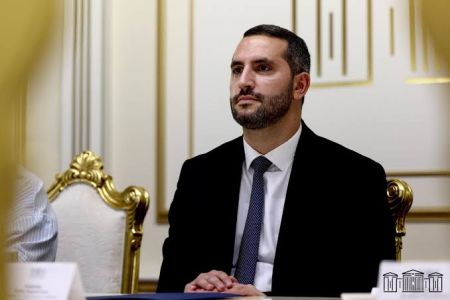
ArmInfo. If the opposition is convinced that the people of Armenia oppose the new Constitution, then let them submit it to public judgment. Armenian Parliament Speaker Ruben Rubinyan stated this in a conversation with journalists on October 30.
According to the Speaker of the Armenian Parliament, the process of adopting the new Constitution has not reached an impasse. Otherwise, he said, the issue would no longer be discussed. "A deadlock is a situation where none of the possible scenarios is discussed. If scenarios are discussed, then there is no impasse," Rubinyan explained.
Commenting on the statement by Narek Karapetyan, head of the Strong Armenia opposition faction, that any constitutional proposal put forward by Armenian Prime Minister Nikol Pashinyan would be unacceptable to them, the Speaker of the Armenian Parliament noted that it would be unwise to reject the proposal without familiarizing itself with its content. According to Rubinyan, the very fact that the opposition is raising certain issues in the context of the new Constitution demonstrates its interest in discussing this topic. He also commented on Karapetyan's statement that the constitution proposed by the authorities is "Aliyev's constitution." "No one in Armenia is going to adopt the constitution proposed by Aliyev. There is a proposal to adopt a new constitution through a referendum. The Armenian people cannot vote for a constitution that does not belong to them. Therefore, I do not understand the opposition's logic: why not allow the citizens of Armenia to make their own choice on this issue?" Rubinyan asked.
Separately, the Speaker of the Armenian Parliament commented on the issue of the Declaration of Independence, noting that it is impossible to exclude its provisions from the new text of the constitution, since we are talking about the development of an entirely new document. "Therefore, I repeat again: even if the opposition opposes the proposed draft, it's unclear what's stopping them from putting the issue to a referendum and giving the people the opportunity to decide for themselves. For example, in 2021, despite our party having a parliamentary majority after the war, a political crisis developed in Armenia. At that time, the ruling party was not obligated to hold snap parliamentary elections, but decided to give citizens the opportunity to independently determine the country's future political course. Pashinyan then resigned, even though the opposition did not want snap elections. Nevertheless, the people made their decision," Rubinyan recalled.
He believes the current situation is somewhat similar to that one. Under such circumstances, according to the Speaker of the Armenian Parliament, the final decision should once again be left to the citizens. "If citizens decide that a new Constitution for Armenia is unnecessary, this will create the preconditions for a new political situation, one that is unfavorable for our government." After all, then the opposition will be able to justify its position by citing the people's opposition to one of our main political commitments. And then they will also have grounds for demanding our withdrawal. I generally believe that the opposition's main weapon in this situation is the ability to offer the people a choice. If the opposition is convinced that the people of Armenia oppose this text and that it is bad, let them submit it to public judgment," Rubinyan concluded.
Recall that the draft of the new Constitution of Armenia has not yet been officially published. The authorities cite the removal of the reference to the Declaration of Independence of Armenia from the preamble of the current Constitution as one of the main goals of the reform. Armenian Prime Minister Nikol Pashinyan and Foreign Minister Ararat Mirzoyan emphasize that the adoption of a new Basic Law is an internal matter for Armenia aimed at long-term state stability, and not a concession to external demands. However, this demand has often been heard from Baku since the occupation of Artsakh. Baku claims that it allegedly contains territorial claims against Azerbaijan. Azerbaijan presents the fulfillment of these and other demands as a precondition for concluding a "peace treaty."
It should be noted that the approval of the new Constitution will require a national referendum, the decision to which must be made by the National Assembly of Armenia with a vote of at least two-thirds of its members. According to the results of the regular parliamentary elections in Armenia, held on June 7, 2026, the Civil Contract party has a 3/5 majority, which allows it to adopt constitutional laws and make appointments. However, the party does not have the 2/3 majority necessary to introduce direct amendments to the Armenian Constitution; to advance this issue, they must receive the support of the opposition.






















 Expert: Economic pressure on Armenia may be virtually painless for other EAEU members, but not for Armenia itself
 Expert on protests in France: Civilizations fade when society loses a vision of the future
 Turkologist: Azerbaijan is not all-powerful—its vulnerabilities should become part of Armenia’s security strategy
 Opinion: The development of the Amulsar mine near the resort town of Jermuk is the beginning of an environmental disaster in Armenia
 Expert: The arrest of opposition figures in Armenia for social media posts is a systematic attempt to intimidate the public and suppress dissent.
 Zakharova commented on the scandalous epithets of the governor of Armenia`s Shirak region about "Ivanov"
 Nikolai Bordyuzha proposed excluding Armenia from the CSTO.
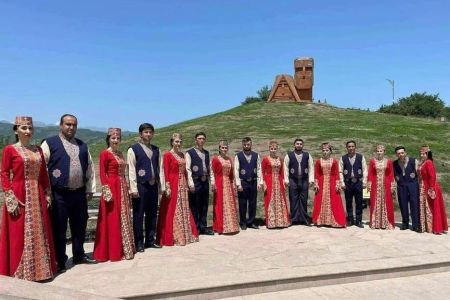 The participation of Artsakh ensembles in an international festival in Vienna was cancelled following the intervention of several foreign embassies
 Expert: It`s time for Armenia to move away from uncertainty and choose between West and East
 The Armenian Foreign Minister commented on the country`s return to work within the CSTO.
 The Artsakh Public Council expressed outrage at the UN Secretary-General`s behavior
 Lukashenko called for Armenia to assume the CIS presidency in 2029
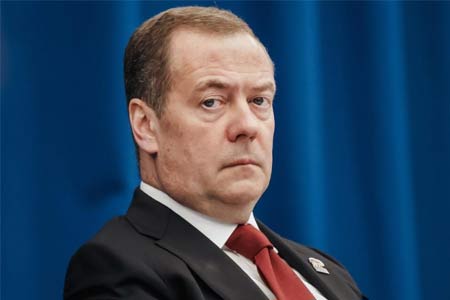 Dmitry Medvedev predicted a Ukrainian-like fate for Armenia amid the country`s shift in foreign policy
 Russian Security Council: In Armenia, they want to force Russian asset owners to dispose of their assets
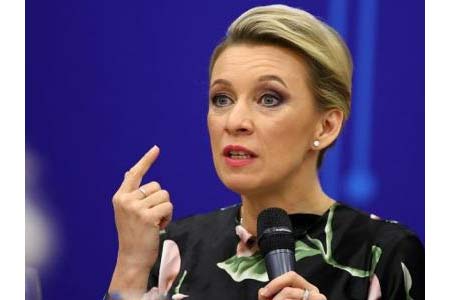 Zakharova: Russia ready to discuss with Armenia the prospects for expanding military cooperation as part of a review of bilateral ties
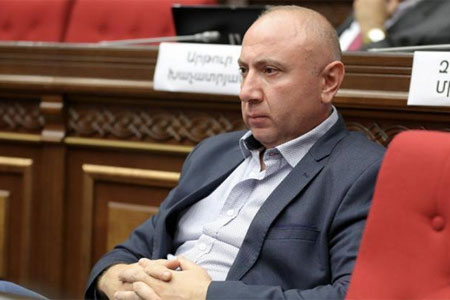 Tevanyan: Armenia, like Ukraine and Moldova, is being drawn into the EU’s global war
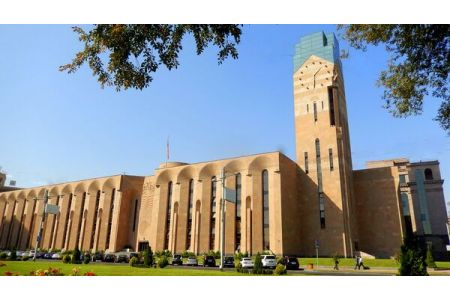 Yerevan City Hall is considering introducing a valet parking system in the city
 Expert: The circus surrounding the “Albanization” of Armenian culture in the presence of foreign ambassadors in occupied Artsakh is genocide
 Political scientist: If Russian-Armenian relations are destroyed, Turkey will take Russia`s place