
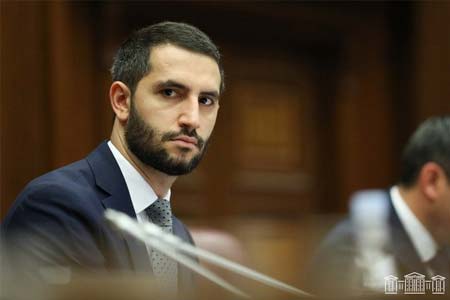
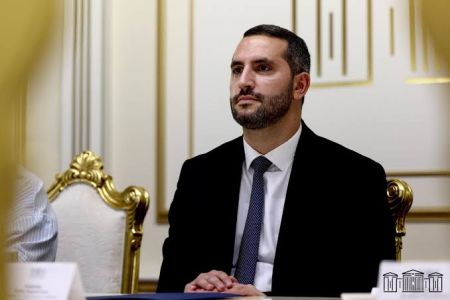
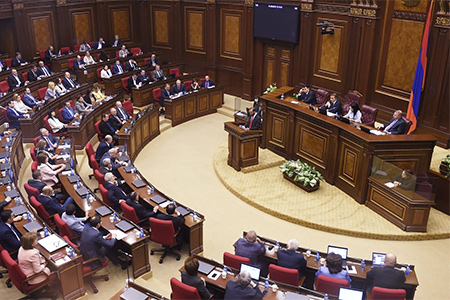
ArmInfo. Armenian National Assembly Speaker Ruben Rubinyan believes the TRIPP project is extremely important for the country. He stated this on October 27, speaking from the parliamentary rostrum.
According to Rubinyan, it's a good thing that this project is independent of the peace treaty between Armenia and Azerbaijan, as is the process of delimitation and demarcation of the borders between the two states. "Currently, Azerbaijan is putting forward certain demands, which we all know about, refusing to sign a peace treaty with Armenia right now. The Armenian side, in turn, claims that it does not agree with these demands, but is ready to sign the treaty right now. Against this backdrop, it is very good that other components of peace, including the unblocking of transport and economic ties, the intensification of border delimitation and demarcation, and the establishment of bilateral trade, can actually begin to work," the NA Speaker said.
Addressing the opposition, the Speaker noted that Armenia is not giving Azerbaijan anything by implementing the TRIPP project. Yerevan is simply opening the border to Baku, just as Azerbaijan is opening its border to Armenia. The project itself, as Rubinyan emphasized, is essentially commercial in nature.
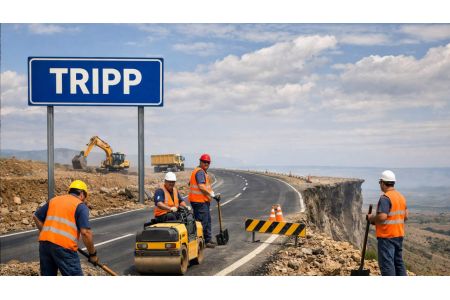
As a reminder, the country's parliament is currently discussing a framework agreement on strategic cooperation for the Trump Route for International Peace and Prosperity (TRIPP) project. The TRIPP project (full name - Trump Route for International Peace and Prosperity) envisions the creation and development of a multimodal transport and energy corridor through the South Caucasus. Specifically, the plan envisages the restoration and construction of railway and road routes through Armenia's Syunik region, which will connect the main part of Azerbaijan with Nakhichevan, as well as link the north and south of Armenia. This will create the opportunity to integrate the route into broader international logistics vectors, including the Middle Corridor and the East-West/North-South directions. It is envisaged to attract American investment and long-term U.S. participation in the management and construction of this infrastructure within the framework of agreements (including the Washington agreements between Armenia and Azerbaijan).












 Expert: Economic pressure on Armenia may be virtually painless for other EAEU members, but not for Armenia itself
 Expert on protests in France: Civilizations fade when society loses a vision of the future
 Turkologist: Azerbaijan is not all-powerful—its vulnerabilities should become part of Armenia’s security strategy
 Opinion: The development of the Amulsar mine near the resort town of Jermuk is the beginning of an environmental disaster in Armenia
 Expert: The arrest of opposition figures in Armenia for social media posts is a systematic attempt to intimidate the public and suppress dissent.
 Expert: It`s time for Armenia to move away from uncertainty and choose between West and East
 The Armenian Foreign Minister commented on the country`s return to work within the CSTO.
 The Artsakh Public Council expressed outrage at the UN Secretary-General`s behavior
 Lukashenko called for Armenia to assume the CIS presidency in 2029
 Dmitry Medvedev predicted a Ukrainian-like fate for Armenia amid the country`s shift in foreign policy
 Russian Security Council: In Armenia, they want to force Russian asset owners to dispose of their assets
 Zakharova: Russia ready to discuss with Armenia the prospects for expanding military cooperation as part of a review of bilateral ties
 Tevanyan: Armenia, like Ukraine and Moldova, is being drawn into the EU’s global war
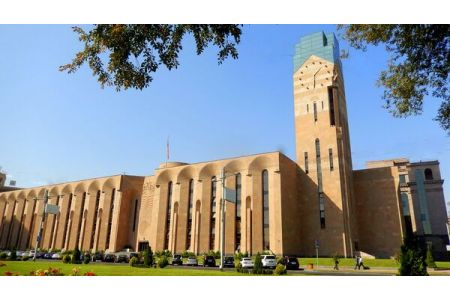 Yerevan City Hall is considering introducing a valet parking system in the city
 Expert: The circus surrounding the “Albanization” of Armenian culture in the presence of foreign ambassadors in occupied Artsakh is genocide
 Political scientist: If Russian-Armenian relations are destroyed, Turkey will take Russia`s place
 Political scientist: The Armenian public is simply obliged to significantly change the entire content of public discourse and struggle
 Cross tattoos are being removed from the skin of Christian prisoners in Azerbaijan by fire, according to a human rights activist.
 Zakharova: Armenia`s likely introduction of visas with Russia will be a step against Yerevan itself