
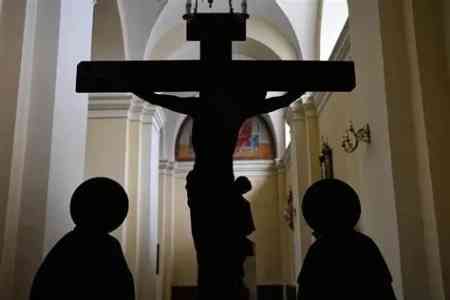
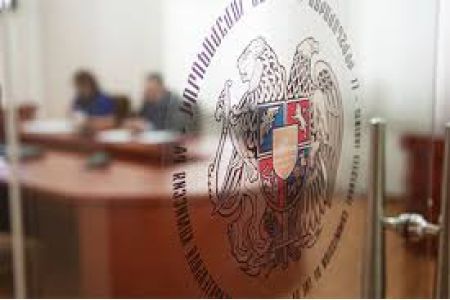
ArmInfo. The Investigative Commission investigating the crisis in the Church resulting from the actions of a number of clergymen of the Armenian Apostolic Church and the resulting failure to fulfill the exclusive mission of the AAC in the spiritual life of the Armenian people, the development of their national culture and the preservation of national identity, approved its rules of procedure at a meeting on October 26.
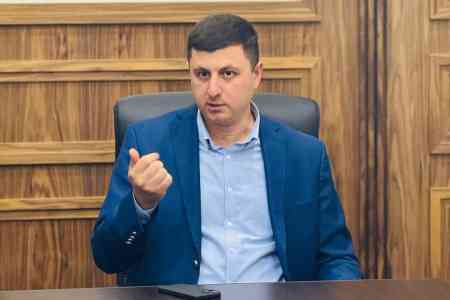
During the meeting, Commission Chairman Arman Yeghoyan addressed issues related to the approval of the commission’s rules of procedure, the holding of meetings (open or closed), deadlines and the participation of invited persons. According to him, the commission has the right to invite government officials, specialists and experts, while the information and conclusions obtained during closed meetings are published upon completion of its work in accordance with the country’s legislation.
Later, speaking to journalists, Yeghoyan assured them that the commission would not deal with individuals, but was intended to consider and put forward proposals concerning the regulation of relations between the state and the Church. This includes material, tax, financial and economic issues, as well as the participation of clergymen in political life. In response to journalists’ remark that resolving these issues would essentially mean interference in Church affairs, the inadmissibility of which was recently stated by the court when considering the issue of defrocking certain clergymen, the MP noted that media representatives had misunderstood the court’s decision. In his opinion, the court’s decision concerned the absence of an employment contract, and the commission would present proposals to prevent such a situation from arising in the future. “Someone became the head of the Church, but where is that written? There is property—how is it managed?” Yeghoyan asked, adding that property relations in the state should be regulated by laws. Meanwhile, it is unclear which provisions of the Labor Code, Civil Code or any other code apply to the AAC. Given that the Criminal Code applies to everyone, including clergymen, it can be concluded that all legislation should also apply to the AAC, without any restrictions.
Yeghoyan noted that everyone who has something to say would be invited to discussions held by the commission.















 Expert: Economic pressure on Armenia may be virtually painless for other EAEU members, but not for Armenia itself
 Expert on protests in France: Civilizations fade when society loses a vision of the future
 Turkologist: Azerbaijan is not all-powerful—its vulnerabilities should become part of Armenia’s security strategy
 Opinion: The development of the Amulsar mine near the resort town of Jermuk is the beginning of an environmental disaster in Armenia
 Expert: The arrest of opposition figures in Armenia for social media posts is a systematic attempt to intimidate the public and suppress dissent.
 The Armenian Foreign Minister commented on the country`s return to work within the CSTO.
 The Artsakh Public Council expressed outrage at the UN Secretary-General`s behavior
 Lukashenko called for Armenia to assume the CIS presidency in 2029
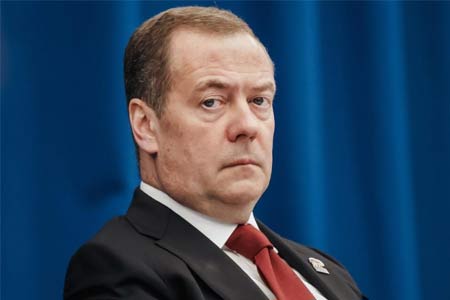 Dmitry Medvedev predicted a Ukrainian-like fate for Armenia amid the country`s shift in foreign policy
 Russian Security Council: In Armenia, they want to force Russian asset owners to dispose of their assets
 Zakharova: Russia ready to discuss with Armenia the prospects for expanding military cooperation as part of a review of bilateral ties
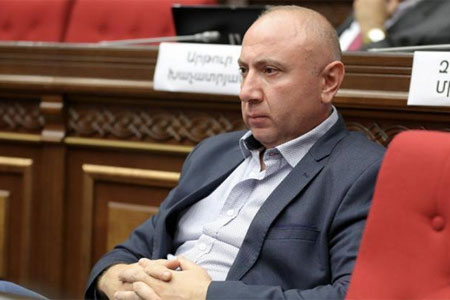 Tevanyan: Armenia, like Ukraine and Moldova, is being drawn into the EU’s global war
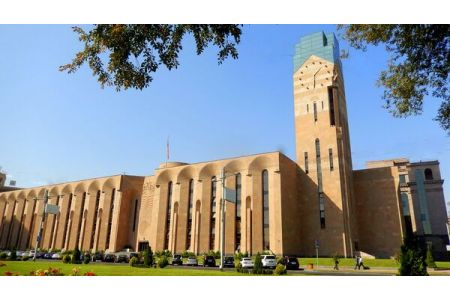 Yerevan City Hall is considering introducing a valet parking system in the city
 Expert: The circus surrounding the “Albanization” of Armenian culture in the presence of foreign ambassadors in occupied Artsakh is genocide
 Political scientist: If Russian-Armenian relations are destroyed, Turkey will take Russia`s place
 Political scientist: The Armenian public is simply obliged to significantly change the entire content of public discourse and struggle
 Cross tattoos are being removed from the skin of Christian prisoners in Azerbaijan by fire, according to a human rights activist.
 Zakharova: Armenia`s likely introduction of visas with Russia will be a step against Yerevan itself
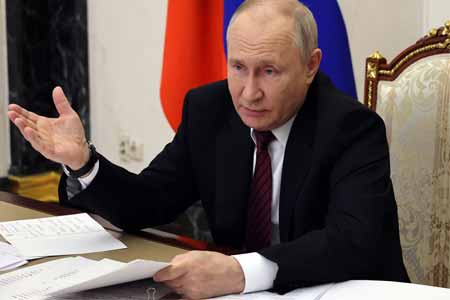 Putin: Armenia`s recognition of Karabakh as part of Azerbaijan in Prague has given Russia`s position on this issue an ambivalent character
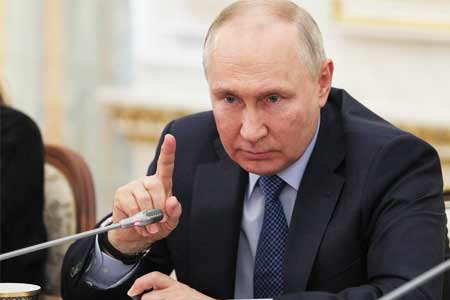 Putin: Armenia`s adoption of the law on EU accession means an announcement of its withdrawal from the Eurasian Economic Union