
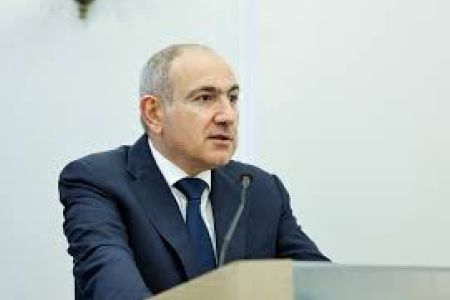
ArmInfo. While Armenia's strong economic activity is clearly visible, challenges remain, one of which, at this stage, is our relations within the Eurasian Economic Union (EAEU). Armenian Prime Minister Nikol Pashinyan stated this during a government meeting on October 22.
He noted that work will certainly be undertaken on this issue in the near future, but all state policy will be focused on ensuring economic dynamism and strengthening statehood, independence, and sovereignty. "These are not simply comparable objectives; one stems from the other; they are interconnected," the Prime Minister noted.
At the same time, Pashinyan noted with satisfaction the successful progress of export diversification. He noted that the current indicators inspire hope that diversification will only strengthen and deepen. "And we must remain focused on this task," the head of government emphasized.
Relations between Moscow and Yerevan have deteriorated amid Armenia's integration policy toward the EU. Since the end of May of this year, Russian authorized bodies—Rospotrebnadzor and Rosselkhoznadzor—have gradually introduced restrictions on the export of fresh agricultural produce, flowers, fish, fish products, and dairy products from Armenia to Russia and the EAEU market. Armenia traditionally exported approximately 80-90% of these product groups to Russia. Due to the difficult situation faced by Armenian producers and exporters, the government is developing support programs to stimulate exports to the EU and other countries. In particular, this includes covering transportation costs and customs duties for entering new markets.
Thus, in mutual trade with Russia from January-August 2026, The following picture emerged: trade turnover decreased by 19.2% to $3.6 billion. Exports amounted to $1.6 billion, a 9.1% year-on-year decline, while imports amounted to $1.9 billion, a 26.1% year-on-year decline.
Trends with the EAEU countries are also not encouraging. Mutual trade volume during the reporting period decreased by 17.2%, amounting to $3.8 billion. Exports, meanwhile, declined by 8.5% to $1.8 billion, while imports declined by 23.4%, exceeding $2 billion.










 Expert on protests in France: Civilizations fade when society loses a vision of the future
 Turkologist: Azerbaijan is not all-powerful—its vulnerabilities should become part of Armenia’s security strategy
 Opinion: The development of the Amulsar mine near the resort town of Jermuk is the beginning of an environmental disaster in Armenia
 Expert: The arrest of opposition figures in Armenia for social media posts is a systematic attempt to intimidate the public and suppress dissent.
 The Artsakh Public Council expressed outrage at the UN Secretary-General`s behavior
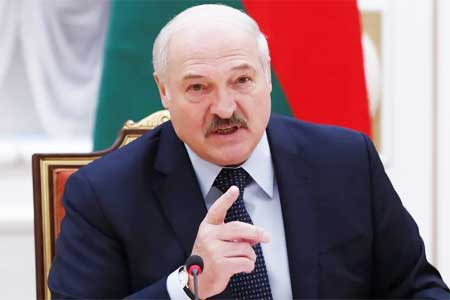 Lukashenko called for Armenia to assume the CIS presidency in 2029
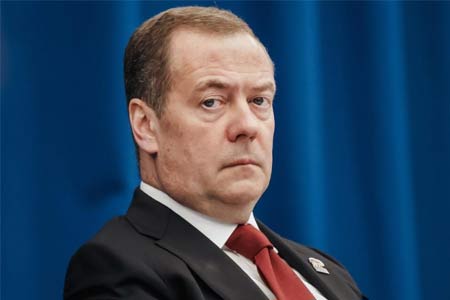 Dmitry Medvedev predicted a Ukrainian-like fate for Armenia amid the country`s shift in foreign policy
 Russian Security Council: In Armenia, they want to force Russian asset owners to dispose of their assets
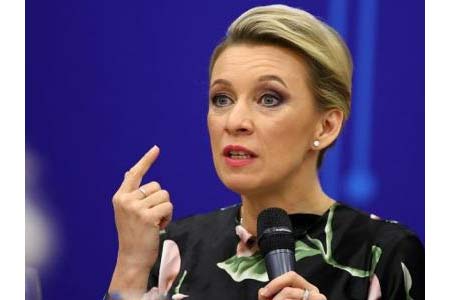 Zakharova: Russia ready to discuss with Armenia the prospects for expanding military cooperation as part of a review of bilateral ties
 Tevanyan: Armenia, like Ukraine and Moldova, is being drawn into the EU’s global war
 Yerevan City Hall is considering introducing a valet parking system in the city
 Expert: The circus surrounding the “Albanization” of Armenian culture in the presence of foreign ambassadors in occupied Artsakh is genocide
 Political scientist: If Russian-Armenian relations are destroyed, Turkey will take Russia`s place
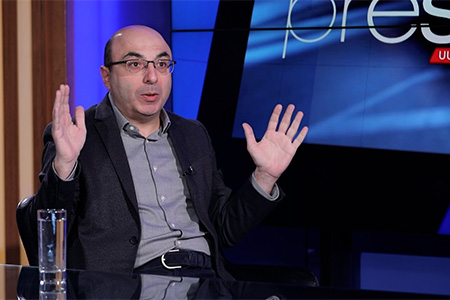 Political scientist: The Armenian public is simply obliged to significantly change the entire content of public discourse and struggle
 Cross tattoos are being removed from the skin of Christian prisoners in Azerbaijan by fire, according to a human rights activist.
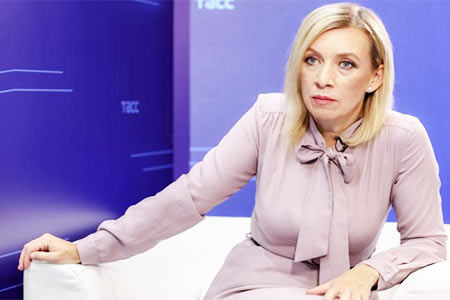 Zakharova: Armenia`s likely introduction of visas with Russia will be a step against Yerevan itself
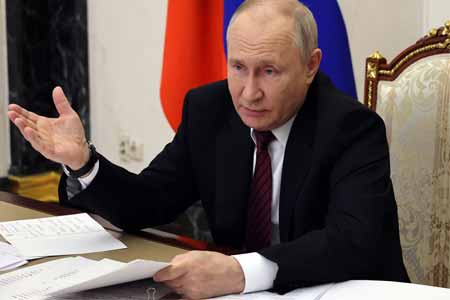 Putin: Armenia`s recognition of Karabakh as part of Azerbaijan in Prague has given Russia`s position on this issue an ambivalent character
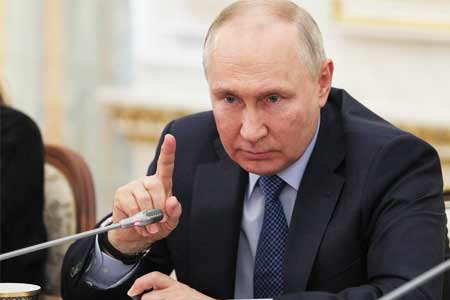 Putin: Armenia`s adoption of the law on EU accession means an announcement of its withdrawal from the Eurasian Economic Union