

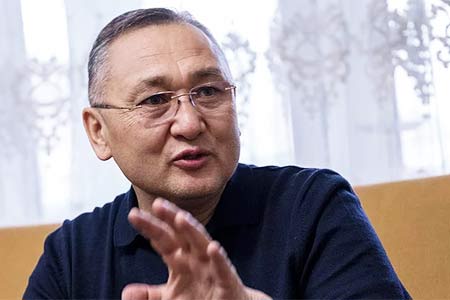
ArmInfo. Armenia remains a member of the Collective Security Treaty Organization (CSTO), despite suspending its participation in its activities. This was stated by Secretary General Taalatbek Masadykov at a briefing, commenting on the prospects for the republic's continued membership in the organization.
According to him, Armenian representatives have not participated in meetings of the Collective Security Council, the Council of Foreign Ministers, and the Council of Defense Ministers of the CSTO since 2023. The Secretary General noted that the Armenian side has not paid membership fees to the organization's budget for almost three years and has not filled quota positions in the CSTO Secretariat and Joint Staff.
The Secretary General also reported that the organization attempted to arrange a meeting with the Armenian side in 2024 to discuss these issues, but received a response indicating its unwillingness to negotiate.
In his opinion, the decision on Armenia's continued participation in the CSTO depends on the position of the country's leadership. The Secretary-General expressed hope that the Armenian side would reconsider its approach given the changing international situation.
In August, Armenian Prime Minister Nikol Pashinyan announced his support for Armenia's exclusion from the Collective Security Treaty Organization (CSTO). He emphasized that he would be "very pleased" if the organization decided to expel Armenia, as this would relieve Yerevan of the difficult choice of whether or not to leave the union, TASS reports.
As a reminder, Armenia has been boycotting CSTO events since the end of 2022. In February 2024, Armenian Prime Minister Nikol Pashinyan stated that Armenia had effectively frozen its participation in the CSTO, as the organization had failed to fulfill its obligations to Armenia, which could not go without consequences. And already on September 18, 2024, at the second World Armenian Summit, Pashinyan stated that the CSTO creates threats to Armenia's security, its continued existence, sovereignty and statehood.









 Expert on protests in France: Civilizations fade when society loses a vision of the future
 Turkologist: Azerbaijan is not all-powerful—its vulnerabilities should become part of Armenia’s security strategy
 Opinion: The development of the Amulsar mine near the resort town of Jermuk is the beginning of an environmental disaster in Armenia
 Expert: The arrest of opposition figures in Armenia for social media posts is a systematic attempt to intimidate the public and suppress dissent.
 The Artsakh Public Council expressed outrage at the UN Secretary-General`s behavior
 Lukashenko called for Armenia to assume the CIS presidency in 2029
 Dmitry Medvedev predicted a Ukrainian-like fate for Armenia amid the country`s shift in foreign policy
 Russian Security Council: In Armenia, they want to force Russian asset owners to dispose of their assets
 Zakharova: Russia ready to discuss with Armenia the prospects for expanding military cooperation as part of a review of bilateral ties
 Tevanyan: Armenia, like Ukraine and Moldova, is being drawn into the EU’s global war
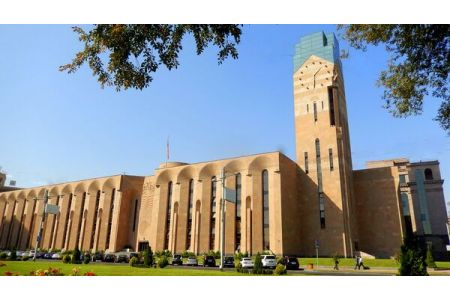 Yerevan City Hall is considering introducing a valet parking system in the city
 Expert: The circus surrounding the “Albanization” of Armenian culture in the presence of foreign ambassadors in occupied Artsakh is genocide
 Political scientist: If Russian-Armenian relations are destroyed, Turkey will take Russia`s place
 Political scientist: The Armenian public is simply obliged to significantly change the entire content of public discourse and struggle
 Cross tattoos are being removed from the skin of Christian prisoners in Azerbaijan by fire, according to a human rights activist.
 Zakharova: Armenia`s likely introduction of visas with Russia will be a step against Yerevan itself
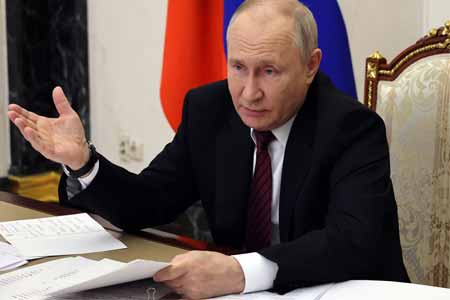 Putin: Armenia`s recognition of Karabakh as part of Azerbaijan in Prague has given Russia`s position on this issue an ambivalent character
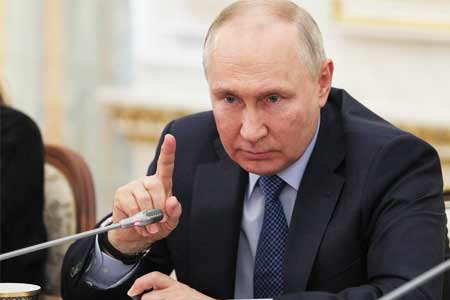 Putin: Armenia`s adoption of the law on EU accession means an announcement of its withdrawal from the Eurasian Economic Union