
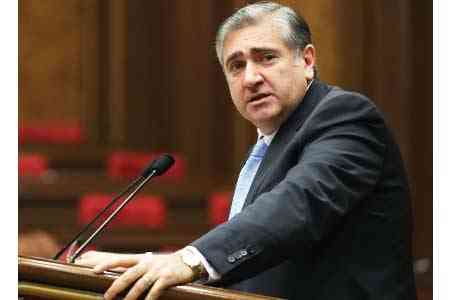
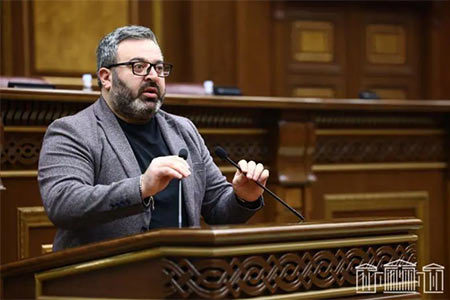
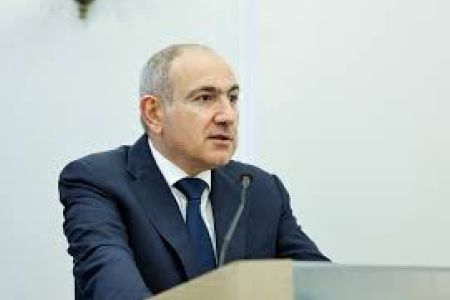
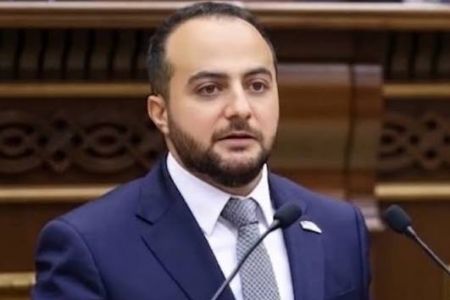
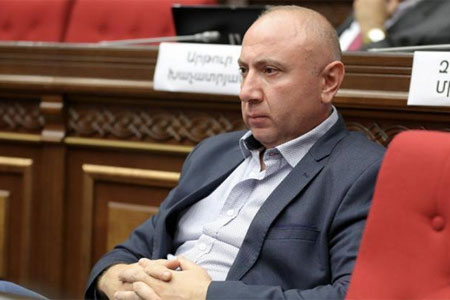
ArmInfo. Even half of the projected decline in gross domestic product (GDP) in the event of Armenia's withdrawal from the Eurasian Economic Union (EAEU), which is contained in the report on the possible consequences of suspending the EAEU Treaty with respect to Armenia, will become a serious problem for the Republic of Armenia. This was stated by a member of the National Assembly from the opposition faction "Armenia" in a conversation with journalists in the Armenian parliament. Artur Khachatryan, when asked to assess this report.
When asked to assess Armenian Economy Minister Gevorg Papoyan's statement that the report prepared by experts from EAEU member states was inflated by 50%, the MP noted that while he could neither confirm nor deny the completeness or accuracy of the calculations provided in the report, even if they were only half accurate, the future threatening the country could be "apocalyptic."
Commenting on claims that apricots could be exported not to Russia, but, for example, to Oman or Uzbekistan, the opposition leader urged a review of statistics. "And let's understand that behind these economic calculations lies a political message: what advantages will Armenia lose if it ceases to be a member of the EAEU? According to their calculations, our GDP will decline by approximately 17%. "Even if half of this figure turns out to be true, it will still be a serious problem for the country," Khachatryan is confident.
Speaking about the problems the country will face if its membership is frozen, the MP noted that they will definitely be significant for the Armenian economy. In this regard, he recalled that the report even indicates where these threats may originate. "For example, we are talking about restrictions on labor migration. If we look at the cash flows received from Russia through the banking system in the names of individuals, they amounted to approximately $3 billion in January-August of this year. Now imagine that such restrictions are introduced and this $3 billion does not arrive. One can imagine how the dollar-dram exchange rate will change in this case. To this must be added the possible increase in gas prices, which will be required to be paid in dollars. "Consider the impact this could have on prices in Armenia," the opposition figure noted.
Another problem, he said, is that Armenian consumer markets are primarily oriented toward the EAEU. "That is, we will have to adapt our products to the requirements of third markets."
We will need to convince Europeans to buy our apricots. And this doesn't happen in a couple of minutes. We must understand that we are not talking about a raw material, like copper. In this case, we need to create a desire in consumers to buy your product. When deciding the country's future, all risks must be taken into account. Armenia's main export and import markets today are the EAEU markets. We must also remember that the observed economic growth, which exceeded the country's potential, was precisely due to membership in the EAEU," Khachatryan emphasized.
He noted that today, exactly what the opposition warned about is happening. "Previously, Armenia, finding itself at a crossroads in a complex global geopolitical situation, could pursue a balanced policy and improve relations with both the United States and Russia, as well as Europe. Meanwhile, the authorities have forced the country into a situation where it is forced to choose. Instead of complementing the interests of these countries, Armenia has become the center of their conflict," the deputy concluded.
As a reminder, on October 20, a report on the possible consequences of suspending the Treaty on the Eurasian Economic Union for Armenia was published on the Russian government's website. The report was prepared by members of the Eurasian Intergovernmental Council from Russia, Belarus, Kazakhstan, and Kyrgyzstan. The 72-page report details the benefits Armenia receives from membership in the EAEU and the risks the republic would face if its membership in this integration union were suspended.














 Expert on protests in France: Civilizations fade when society loses a vision of the future
 Turkologist: Azerbaijan is not all-powerful—its vulnerabilities should become part of Armenia’s security strategy
 Opinion: The development of the Amulsar mine near the resort town of Jermuk is the beginning of an environmental disaster in Armenia
 Expert: The arrest of opposition figures in Armenia for social media posts is a systematic attempt to intimidate the public and suppress dissent.
 The Artsakh Public Council expressed outrage at the UN Secretary-General`s behavior
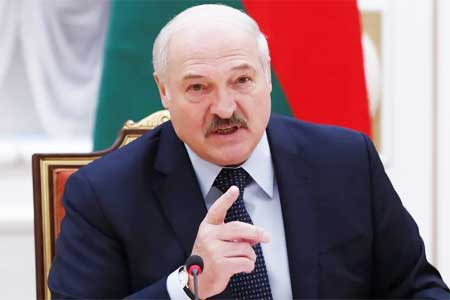 Lukashenko called for Armenia to assume the CIS presidency in 2029
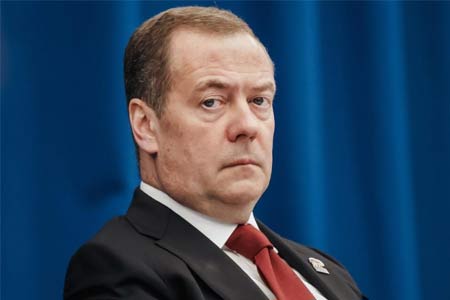 Dmitry Medvedev predicted a Ukrainian-like fate for Armenia amid the country`s shift in foreign policy
 Russian Security Council: In Armenia, they want to force Russian asset owners to dispose of their assets
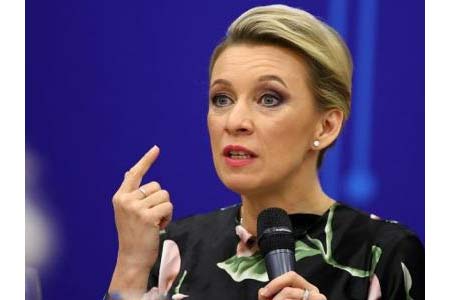 Zakharova: Russia ready to discuss with Armenia the prospects for expanding military cooperation as part of a review of bilateral ties
 Tevanyan: Armenia, like Ukraine and Moldova, is being drawn into the EU’s global war
 Yerevan City Hall is considering introducing a valet parking system in the city
 Expert: The circus surrounding the “Albanization” of Armenian culture in the presence of foreign ambassadors in occupied Artsakh is genocide
 Political scientist: If Russian-Armenian relations are destroyed, Turkey will take Russia`s place
 Political scientist: The Armenian public is simply obliged to significantly change the entire content of public discourse and struggle
 Cross tattoos are being removed from the skin of Christian prisoners in Azerbaijan by fire, according to a human rights activist.
 Zakharova: Armenia`s likely introduction of visas with Russia will be a step against Yerevan itself
 Putin: Armenia`s recognition of Karabakh as part of Azerbaijan in Prague has given Russia`s position on this issue an ambivalent character
 Putin: Armenia`s adoption of the law on EU accession means an announcement of its withdrawal from the Eurasian Economic Union