
ArmInfo. Armenian Prime Minister Nikol Pashinyan will not reconsider his decisions until their consequences directly impact him and his political future.
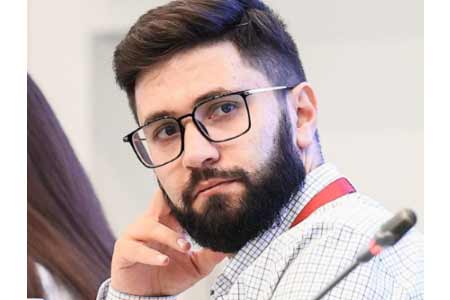
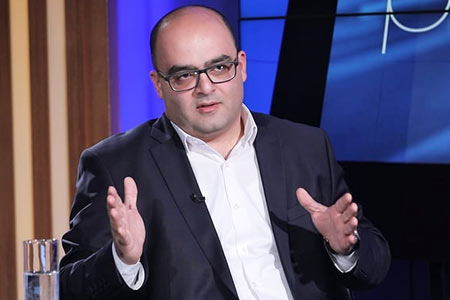
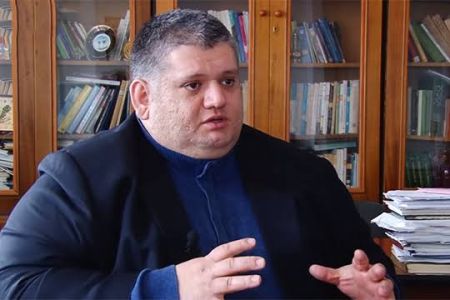
Political scientist and commentator Benjamin Matevosyan expressed this opinion on his Telegram channel following the publication of the report "On the Possible Consequences of Suspension of the Treaty on the Eurasian Economic Union of May 29, 2014, with Respect to the Republic of Armenia," which was published on the Russian government website.
Matevosyan recalled that, according to the report, the cost of gas imports to Armenia would increase by 69%, to $657.5 million per year, if the country withdraws from the EAEU. "The volume of remittances from Russia to Armenia would more than halve, to $1.8 billion per year, if its participation in the EAEU were suspended." "Suspension of Armenia's membership will lead to labor quotas and the requirement to obtain work permits. Another consequence will be higher prices for rail freight. All of this is discussed in the report by the members of the Eurasian Intergovernmental Council from Russia, Belarus, Kazakhstan, and Kyrgyzstan," the political scientist added.
As the expert explained, this means that starting January 1, 2027, gas prices in Armenia could increase by 69%, cash flow will decrease by $1.8 billion, and hundreds of thousands of migrant workers will be forced to return to Armenia. "Do you think this will somehow adjust Pashinyan's plans to implement a geopolitical project aimed at expelling Russia from the region to please Turkey? Of course not! Proof of this is the fact that immediately after the publication of the Intergovernmental Council's report, it became known that Pashinyan would attend the flagship summit on EU enlargement in Brussels on November 3. If Euronews' information is confirmed, the logic behind the Armenian prime minister's actions will become even clearer: in the lead-up to his meeting with Russian President Vladimir Putin, he will attempt to secure economic aid from his European partners in the amount of €1 billion. "In his view, this will be a trump card in negotiations with the Russian side," Matevosyan believes.
According to him, the reality is that Pashinyan will not back down until all the aforementioned consequences have occurred, nor will he do anything even when gas prices rise and crowds of migrants return to Armenia. "He will not reconsider his decisions until their consequences directly impact him and his political future." Pashinyan has privatized the benefits of power, but he's ready to further "nationalize" the problems, placing responsibility for solving them on citizens. In other words, Pashinyan is prepared for the sanctions to be imposed. All Armenian citizens need to know this. The situation, of course, cannot help but evoke déjà vu, and cannot help but take us back to the time when the decision was made to join the Customs Union. There's only one difference: Russia has become more open with the Armenian people and is learning from its own mistakes, preventing local politicians from returning to the country and manipulating public opinion, convincing people that "in exchange for Armenia's membership in the Customs Union, they promised to build a new nuclear power plant or a new railway to Iran," the political observer concluded.
As a reminder, on January 9, 2025, the Armenian government approved a draft law on the start of the process of joining the European Union, proposed by the "Eurakve" civic initiative. The draft was sent to the Armenian parliament for approval. On March 26, the parliament adopted it in its final reading and sent it to the president for signature.
The document was signed on April 4 of that year. Moscow stated that Russia had conveyed to Armenia that simultaneous membership in the Eurasian Economic Union and the European Union was impossible. On May 9, Russian President Vladimir Putin, speaking to journalists, suggested that Armenia decide on its membership in the EU and the Eurasian Economic Union (EAEU) as soon as possible, expressing its readiness to "begin a civilized divorce" if necessary. Yerevan responded by stating that it would leave the EAEU whenever it deemed it necessary. On May 29, the heads of state of four of the five EAEU countries adopted a resolution recommending that Armenia hold a referendum on its continued membership in the EAEU. That same day, the Russian president stated that Armenia would not be able to sit on both sides and needed to make a choice as soon as possible. And on October 20, the Russian government presented a report on the economic consequences of Armenia's possible withdrawal from the EAEU.







 Expert on protests in France: Civilizations fade when society loses a vision of the future
 Turkologist: Azerbaijan is not all-powerful—its vulnerabilities should become part of Armenia’s security strategy
 Opinion: The development of the Amulsar mine near the resort town of Jermuk is the beginning of an environmental disaster in Armenia
 Expert: The arrest of opposition figures in Armenia for social media posts is a systematic attempt to intimidate the public and suppress dissent.
 The Artsakh Public Council expressed outrage at the UN Secretary-General`s behavior
 Lukashenko called for Armenia to assume the CIS presidency in 2029
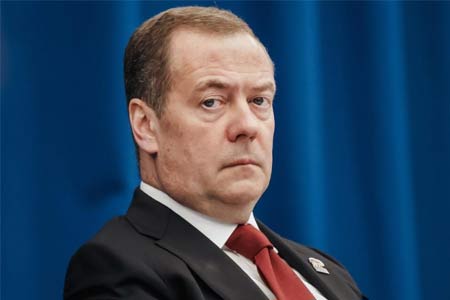 Dmitry Medvedev predicted a Ukrainian-like fate for Armenia amid the country`s shift in foreign policy
 Russian Security Council: In Armenia, they want to force Russian asset owners to dispose of their assets
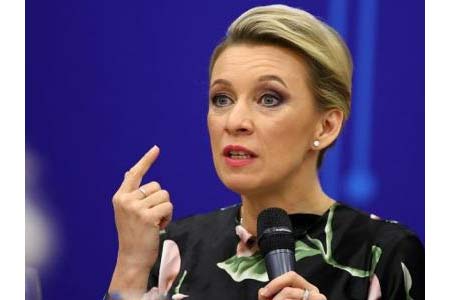 Zakharova: Russia ready to discuss with Armenia the prospects for expanding military cooperation as part of a review of bilateral ties
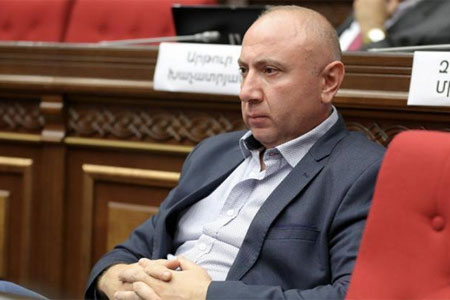 Tevanyan: Armenia, like Ukraine and Moldova, is being drawn into the EU’s global war
 Yerevan City Hall is considering introducing a valet parking system in the city
 Expert: The circus surrounding the “Albanization” of Armenian culture in the presence of foreign ambassadors in occupied Artsakh is genocide
 Political scientist: If Russian-Armenian relations are destroyed, Turkey will take Russia`s place
 Political scientist: The Armenian public is simply obliged to significantly change the entire content of public discourse and struggle
 Cross tattoos are being removed from the skin of Christian prisoners in Azerbaijan by fire, according to a human rights activist.
 Zakharova: Armenia`s likely introduction of visas with Russia will be a step against Yerevan itself
 Putin: Armenia`s recognition of Karabakh as part of Azerbaijan in Prague has given Russia`s position on this issue an ambivalent character
 Putin: Armenia`s adoption of the law on EU accession means an announcement of its withdrawal from the Eurasian Economic Union