

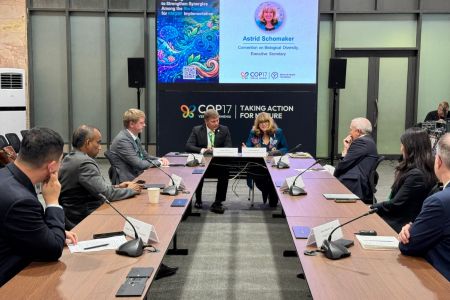
ArmInfo. An international discussion on the impact of artificial intelligence (AI) on biodiversity was held in Yerevan. The discussion was initiated by the Russian foundation "Nature and People" as part of the 17th Conference of the Parties to the UN Convention on Biological Diversity (COP17).
The foundation announced that this was the first official event at COP17 dedicated to the impact of AI on biodiversity. Representatives from countries in Europe, Asia, Africa, and Latin America, as well as experts from international organizations, government agencies, businesses, and the scientific community, participated. Discussed how AI can help consolidate efforts to implement the three Rio Conventions and achieve the goals of the Kunming-Montreal Global Biodiversity Framework (KIMGF).
The discussion "Using AI to Strengthen Synergies between the Three Rio Conventions for the Implementation of the KIMGF" provided a platform for discussing not only the potential of AI in environmental monitoring but also its own environmental impact. Participants considered the need to consider energy consumption, carbon footprint, and e-waste associated with technology development.
"It is already important today to unite the efforts of different countries and jointly discuss the principles and rules for the use of AI so that the environmental aspects of this technology's development are taken into account when formulating international approaches to its regulation." If we don't participate in this dialogue now, we risk being left behind in the decisions that will shape the future of technology. Therefore, it is especially valuable that we were able to gather representatives from different regions of the world at the same table: only through international cooperation can we find solutions that will harness the potential of AI for the benefit of nature," noted Sergei Rybakov, CEO of the Nature and People Foundation and moderator of the discussion, in his welcoming remarks. He also read a message from Ruslan Edelgeriev, Presidential Aide and Special Presidential Representative for Climate and Water Resources, stating that, in an era where artificial intelligence is becoming ingrained in production processes, we must foresightedly establish a number of requirements for its maintenance and use. "It is essential that this tool realizes its environmental potential, rather than becoming a drain on water and energy resources. Furthermore, it must be properly integrated into the existing institutional framework for addressing environmental issues." "Countries have long agreed on the terms under which they agree to combat climate change and land degradation, as well as to conserve and sustainably use biodiversity and share the benefits from the use of genetic resources," Edelgeriev said in his message to the discussion participants.
In turn, Astrid Schoemaker, Executive Secretary of the Convention on Biological Diversity, noted that it is important for the biodiversity community to understand that AI offers exceptional opportunities, but realizing them requires great responsibility. "We believe that AI can fundamentally change our understanding of the planet, monitoring ecosystems, and responding to challenges. This is not just about monitoring, but also about forecasting. Thanks to this, we will be able to gradually move from eliminating existing problems to preventing them. Artificial intelligence can play an important role here, but we must not forget its ecological footprint. "It raises serious concerns both under our convention and under the Climate Convention," Shomaker said.
And Stuart Maginnis, Deputy Director-General of the International Union for Conservation of Nature (IUCN), expressed his belief that AI itself is neutral: it acts according to given parameters. "However, algorithmic bias, technological systems, threats to data sovereignty, and rights violations raise serious concerns. The misuse of science and scientific knowledge is equally serious. Existing mechanisms for AI governance, procurement, and capacity development are not yet sufficient to ensure the effective, equitable, and rights-based use of these technologies in conservation," he noted.
In July 2026, the Nature & People Fund Together with partners from Fudan University (China), the Pahle India Foundation (India), and the UN Internet Governance Forum (IGF), the White Paper on AI and Environment was presented. The presentation took place in Geneva at the first meeting of the Global Dialogue on AI Governance, established by the UN General Assembly. The international discussion began at the 17th Conference of the Parties to the UN Convention to Combat Desertification (COP17) in Mongolia and continued at the 17th Conference of the Parties to the Convention on Biological Diversity (CBD COP17) in Armenia. The report's theme was addressed in the context of biodiversity conservation and the synergies between the three Rio Conventions.











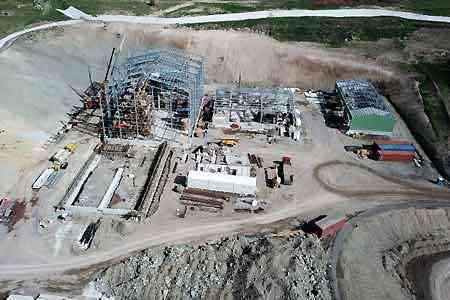












 Opinion: The development of the Amulsar mine near the resort town of Jermuk is the beginning of an environmental disaster in Armenia
 Expert: The arrest of opposition figures in Armenia for social media posts is a systematic attempt to intimidate the public and suppress dissent.
 Azerbaijani Studies Expert: While Azerbaijan Prepares Its Generation for War, Aliyev’s Aide Calls on Armenia to Prepare Armenian Society for “Peace”
 Lukashenko called for Armenia to assume the CIS presidency in 2029
 Dmitry Medvedev predicted a Ukrainian-like fate for Armenia amid the country`s shift in foreign policy
 Russian Security Council: In Armenia, they want to force Russian asset owners to dispose of their assets
 Zakharova: Russia ready to discuss with Armenia the prospects for expanding military cooperation as part of a review of bilateral ties
 Tevanyan: Armenia, like Ukraine and Moldova, is being drawn into the EU’s global war
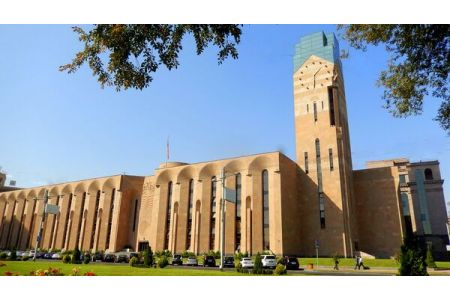 Yerevan City Hall is considering introducing a valet parking system in the city
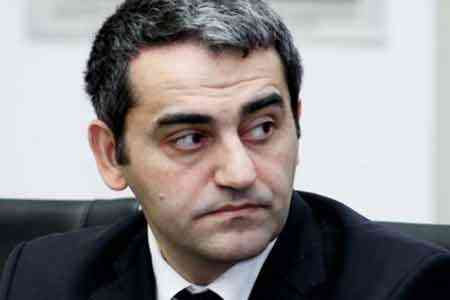 Expert: The circus surrounding the “Albanization” of Armenian culture in the presence of foreign ambassadors in occupied Artsakh is genocide
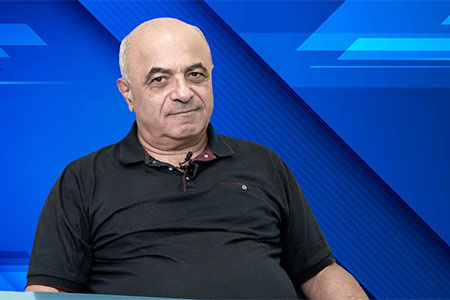 Political scientist: If Russian-Armenian relations are destroyed, Turkey will take Russia`s place
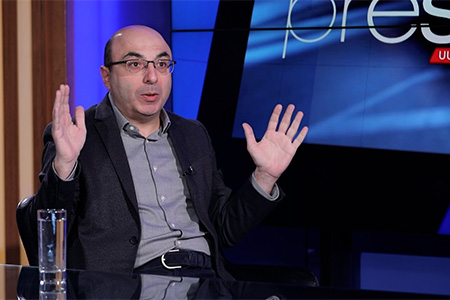 Political scientist: The Armenian public is simply obliged to significantly change the entire content of public discourse and struggle
 Cross tattoos are being removed from the skin of Christian prisoners in Azerbaijan by fire, according to a human rights activist.
 Zakharova: Armenia`s likely introduction of visas with Russia will be a step against Yerevan itself
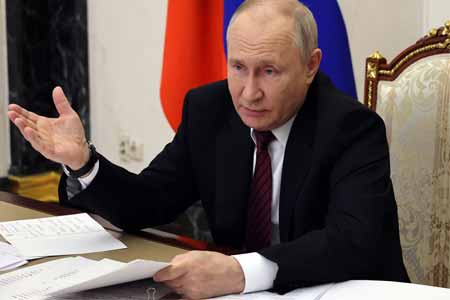 Putin: Armenia`s recognition of Karabakh as part of Azerbaijan in Prague has given Russia`s position on this issue an ambivalent character
 Putin: Armenia`s adoption of the law on EU accession means an announcement of its withdrawal from the Eurasian Economic Union