
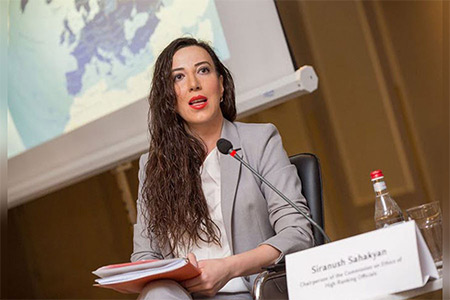
ArmInfo. In a report submitted to the Armenian side, the UN-sponsored Committee characterizes torture of Armenian prisoners of war held in Baku not so much as a systematic phenomenon, but rather as an endemic process. Siranush Sahakyan, a lawyer representing Armenian prisoners of war at the European Court of Human Rights (ECHR), announced this at a press conference in Yerevan on October 16.
She discussed the methodology for documenting possible torture and inhumane treatment of Armenian prisoners in Azerbaijan, restrictions on communication with them, and obstacles to obtaining powers of attorney and transmitting correspondence. "We carry out our work within a clear methodology. "There are well-founded suspicions that Armenian prisoners of war are being subjected to torture, which is ongoing and accompanied by inhumane treatment," Sahakyan noted.
Speaking about the basis on which they can make such allegations in the absence of full communication with the prisoners, the lawyer explained that an important source of information is the results of interviews with individuals who have returned from Azerbaijani captivity. That is, according to her, the testimony of people who were directly subjected to torture is of significant importance. Sahakyan also emphasized the importance of the assessments of her international colleagues. She mentioned the report of the Committee, operating under the auspices of the UN, as one of the most significant documents submitted to them. "The report contains a specific description of the situation that is difficult to find in other states where human rights violations are recorded. Torture in this case is characterized not so much as a systematic phenomenon, but rather as endemic." "In other words, we are talking about a phenomenon that has become part of normal practice," the lawyer explained.
Sahakyan also noted that many reports concerning Armenian prisoners are not published due to the lack of consent from the Azerbaijani side. In her opinion, this raises additional questions regarding the content of the relevant materials. The lawyer believes that if they did not record negative phenomena, Azerbaijan might be interested in publishing them, including to use the information they contain to refute the Armenian side's claims. "Communication with the prisoners is maintained exclusively through telephone calls, and the last direct physical contact with them took place on December 24-25, 2025. In 2026, no direct monitoring of the condition of the Armenian prisoners was carried out. The latest information on the prisoners was obtained through the European Court of Human Rights. "This information is presented in documentary form, with Azerbaijan being the source of collection and transmission," Sahakyan continued.
In particular, according to her, the Azerbaijani side provided records of the closed facility, which contained, among other things, the results of individual medical examinations and information about the cellmates of the Armenian prisoners. Furthermore, as the lawyer noted, they were given photographs of the premises in which Armenian prisoners of war are presumably being held. However, as Sahakyan noted, the photographs lack identification of the cells, as well as information that would allow for an objective connection between the premises depicted and the specific individuals held within them. "Previously, when the Azerbaijani side sent similar photographs, it also showed the Armenian prisoners themselves. This allowed for at least a rough assessment of their physical condition from the images and certain conclusions to be drawn. "In the current situation, we were only provided with photographs of the cells," the representative of Armenian prisoners of war at the ECHR said.
Sahakyan assessed the Azerbaijani side's refusal to display the prisoners as a negative trend. She assessed that this is not only a matter of limiting visits, but also of creating conditions that make it impossible to objectively assess the physical condition of Armenian prisoners of war, even from photographs. The lawyer also cited the refusal to allow Armenian prisoners of war to issue powers of attorney to international and Armenian lawyers as a problem. She noted that the Azerbaijani Ombudsman, in response to their appeal, reported that former Artsakh President Arayik Harutyunyan's request for notary services had been fully satisfied, but did not specify what services were in question or the content of the request. The lawyer also cited the example of former Artsakh State Minister and philanthropist Ruben Vardanyan, who attempted to obtain a power of attorney to participate in a legal process unrelated to Azerbaijan and not involving a lawsuit against that country. However, according to Sahakyan, his request was denied.
It should be noted that the exact number of Armenian prisoners of war and hostages held in Azerbaijani prisons remains unknown. Experts estimate the number to be several hundred. Azerbaijani authorities currently confirm the presence of 19 Armenians in their custody. Among those held in Azerbaijani captivity are eight former and current members of the military-political leadership of Artsakh. These include former Artsakh presidents Arkady Ghukasyan, Bako Sahakyan, and Arayik Harutyunyan; former Foreign Minister Davit Babayan; as well as Parliament Speaker Davit Ishkhanyan; former Commander of the Artsakh Defense Army General Levon Mnatsakanyan; General David Manukyan; and former State Minister Ruben Vardanyan.
In February, a Baku puppet court sentenced Arayik Harutyunyan, David Babayan, David Ishkhanyan, David Manukyan, and Levon Mnatsakanyan to life imprisonment on trumped-up charges, and Bako Sahakyan, Arkady Ghukasyan, and Ruben Vardanyan to 20 years in prison. The so-called court sentenced the remaining Artsakh residents to up to 15 years in prison.






 Opinion: The development of the Amulsar mine near the resort town of Jermuk is the beginning of an environmental disaster in Armenia
 Expert: The arrest of opposition figures in Armenia for social media posts is a systematic attempt to intimidate the public and suppress dissent.
 Azerbaijani Studies Expert: While Azerbaijan Prepares Its Generation for War, Aliyev’s Aide Calls on Armenia to Prepare Armenian Society for “Peace”
 Turkologist: Azerbaijan will never, under any circumstances, stop pressuring the Armenian people
 Political scientist: We need to move away from the question of "when" and replace it with more important questions
 Lukashenko called for Armenia to assume the CIS presidency in 2029
 Dmitry Medvedev predicted a Ukrainian-like fate for Armenia amid the country`s shift in foreign policy
 Russian Security Council: In Armenia, they want to force Russian asset owners to dispose of their assets
 Zakharova: Russia ready to discuss with Armenia the prospects for expanding military cooperation as part of a review of bilateral ties
 Tevanyan: Armenia, like Ukraine and Moldova, is being drawn into the EU’s global war
 Yerevan City Hall is considering introducing a valet parking system in the city
 Expert: The circus surrounding the “Albanization” of Armenian culture in the presence of foreign ambassadors in occupied Artsakh is genocide
 Political scientist: If Russian-Armenian relations are destroyed, Turkey will take Russia`s place
 Political scientist: The Armenian public is simply obliged to significantly change the entire content of public discourse and struggle
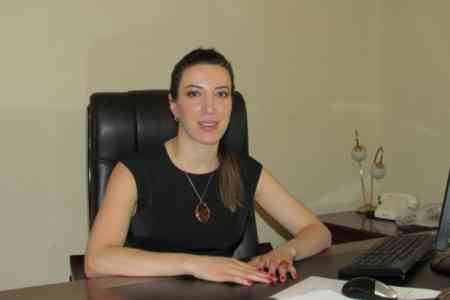 Cross tattoos are being removed from the skin of Christian prisoners in Azerbaijan by fire, according to a human rights activist.
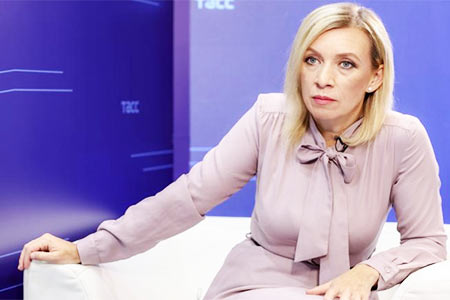 Zakharova: Armenia`s likely introduction of visas with Russia will be a step against Yerevan itself
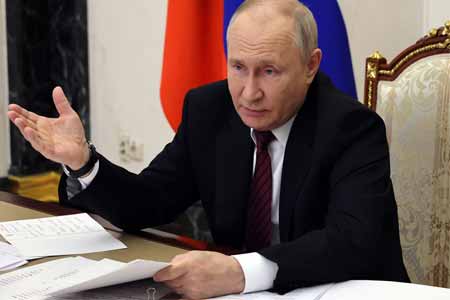 Putin: Armenia`s recognition of Karabakh as part of Azerbaijan in Prague has given Russia`s position on this issue an ambivalent character
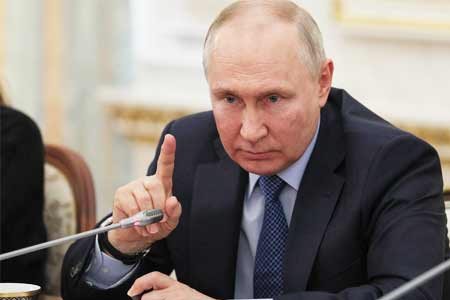 Putin: Armenia`s adoption of the law on EU accession means an announcement of its withdrawal from the Eurasian Economic Union
 Aram Vardevanyan: Public demands solutions, not apology scandals in Parliament