
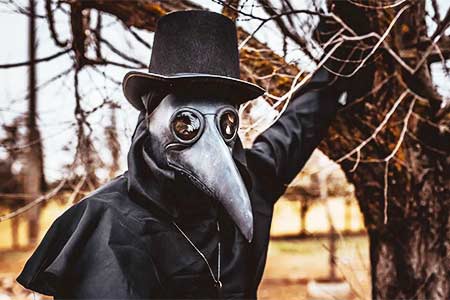
ArmInfo. A commission to prevent the spread of plague from Russia's Irkutsk region has been established in Armenia. Prime Minister Nikol Pashinyan signed the corresponding order.
According to the government's press service, the interdepartmental commission includes nine members representing various agencies.
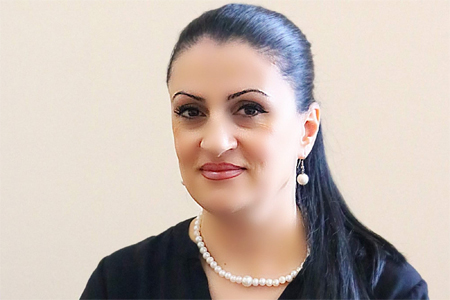
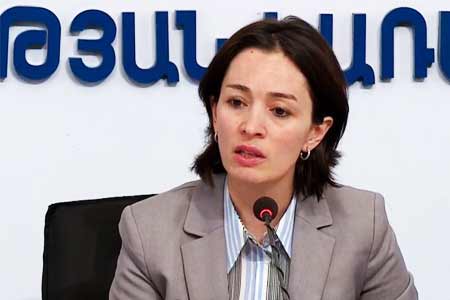
The commission will be headed by RA Minister of Health Anahit Avanesyan. The commission chair is obligated to promptly submit proposals on issues requiring interdepartmental coordination to the RA Prime Minister. She will be responsible for providing organizational and technical support to the commission, with the participation of the state non-profit organization "National Center for Disease Control and Prevention," and will appoint a secretary for the commission within five working days of the entry into force of this decision. Within the scope of its powers and functions, as stipulated by the charter of the said organization, the center undertakes to provide the commission with professional information, risk assessments, and response proposals.
It should be noted, however, that while there is no officially confirmed outbreak of plague in Russia, the situation in the Irkutsk region has attracted the attention of international organizations and other countries. On the night of October 2, 2026, Daria Shipilova, a 28-year-old employee of the Irkutsk Anti-Plague Research Institute, died in the Shelekhov District Hospital. Rospotrebnadzor reported that the deceased was diagnosed with pneumonia of unknown etiology (pneumonia). Meanwhile, unconfirmed reports have surfaced in the media and on Telegram channels regarding a possible leak of the plague pathogen (Yersinia pestis) as a result of a laboratory incident or contamination in a natural outbreak. Approximately 200 people who had contact with the deceased have been placed under medical observation and quarantine.
The WHO stated that Russia has informed the organization that there are no registered cases of plague in the region, but continues to assess the risks. The European Commission and US officials (including statements from Secretary of State Marco Rubio and President Donald Trump) have called on Moscow to provide transparent epidemiological and microbiological data on the incident.









 Azerbaijani Studies Expert: While Azerbaijan Prepares Its Generation for War, Aliyev’s Aide Calls on Armenia to Prepare Armenian Society for “Peace”
 Turkologist: Azerbaijan will never, under any circumstances, stop pressuring the Armenian people
 Political scientist: We need to move away from the question of "when" and replace it with more important questions
 International Law Specialist: Azerbaijan intends to initiate legal proceedings against Armenia by sentencing Armenian prisoners
 Dmitry Medvedev predicted a Ukrainian-like fate for Armenia amid the country`s shift in foreign policy
 Russian Security Council: In Armenia, they want to force Russian asset owners to dispose of their assets
 Zakharova: Russia ready to discuss with Armenia the prospects for expanding military cooperation as part of a review of bilateral ties
 Tevanyan: Armenia, like Ukraine and Moldova, is being drawn into the EU’s global war
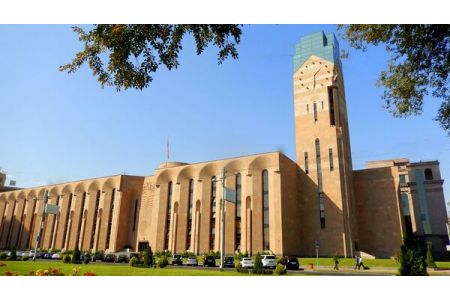 Yerevan City Hall is considering introducing a valet parking system in the city
 Expert: The circus surrounding the “Albanization” of Armenian culture in the presence of foreign ambassadors in occupied Artsakh is genocide
 Political scientist: If Russian-Armenian relations are destroyed, Turkey will take Russia`s place
 Political scientist: The Armenian public is simply obliged to significantly change the entire content of public discourse and struggle
 Cross tattoos are being removed from the skin of Christian prisoners in Azerbaijan by fire, according to a human rights activist.
 Zakharova: Armenia`s likely introduction of visas with Russia will be a step against Yerevan itself
 Putin: Armenia`s recognition of Karabakh as part of Azerbaijan in Prague has given Russia`s position on this issue an ambivalent character
 Putin: Armenia`s adoption of the law on EU accession means an announcement of its withdrawal from the Eurasian Economic Union
 Aram Vardevanyan: Public demands solutions, not apology scandals in Parliament
 Arrested Armenian oligarch on economy and new jobs