

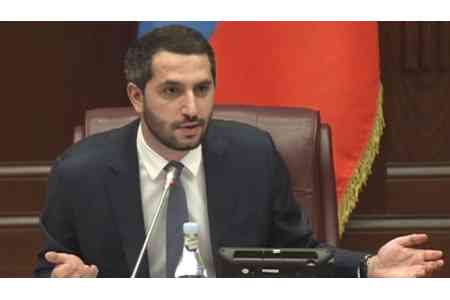
ArmInfo. Armenian National Assembly Speaker Ruben Rubinyan signed a document establishing an investigative commission on the Armenian Apostolic Church (AAC). This was reported by the press service of the Armenian parliament.
It is noted that the commission was created in accordance with Part 1 and Clause 2 of Part 5 of Article 20 of the constitutional law "Rules of Procedure of the National Assembly," at the request of at least one-quarter of the total number of deputies. "The purpose of the commission is to study the problems related to the crisis in the Armenian Apostolic Holy Church, which arose as a result of the activities of a number of clergy, as well as the Church's failure to fulfill its exclusive mission in the spiritual life of the Armenian people, the development of their national culture, and the preservation of their national identity," the Armenian parliament stated in a statement.
Furthermore, it is noted that, in accordance with Part 6 of Article 20 of the constitutional law "Rules of Procedure of the National Assembly," the parliament's draft resolution establishing the number of members of the investigative commission will be considered at the next session of the National Assembly.
As a reminder, according to the Constitution of Armenia, the Armenian Apostolic Church is separate from the state and has a special mission. However, since May of this year, the country's authorities have been pursuing an active anti-church policy and are seeking the resignation of Catholicos of All Armenians Garegin II, who was elected to this position posthumously. This campaign targets both clergy and citizens who support the Church.
It should be added that the Public Relations and Information Center of the Office of the Prime Minister of Armenia previously published a report on the situation in the Armenian Apostolic Church and possible solutions. The report, titled "On the Crisis that Has Arised in the Armenian Apostolic Church as a Result of the Actions of the De facto Leader of the Church and Several High-Ranking Clergy, and Ways to Resolve It," was prepared as part of the Armenian government's 2026-2031 program, at the instruction of Prime Minister Nikol Pashinyan. The purpose of the document is to document, through a study of open sources, the circumstances that its authors characterize as a crisis in the Armenian Apostolic Church and to propose ways to overcome it. The authors of the report propose a five-step "roadmap" for overcoming the situation, which they characterize as a crisis.












 Political scientist: We need to move away from the question of "when" and replace it with more important questions
 International Law Specialist: Azerbaijan intends to initiate legal proceedings against Armenia by sentencing Armenian prisoners
 Russian Security Council: In Armenia, they want to force Russian asset owners to dispose of their assets
 Zakharova: Russia ready to discuss with Armenia the prospects for expanding military cooperation as part of a review of bilateral ties
 Tevanyan: Armenia, like Ukraine and Moldova, is being drawn into the EU’s global war
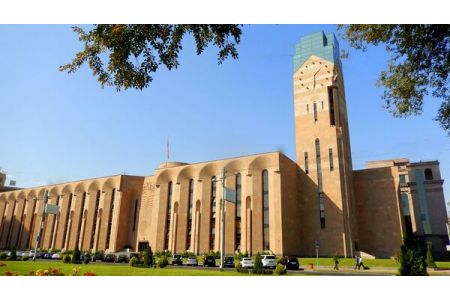 Yerevan City Hall is considering introducing a valet parking system in the city
 Expert: The circus surrounding the “Albanization” of Armenian culture in the presence of foreign ambassadors in occupied Artsakh is genocide
 Political scientist: If Russian-Armenian relations are destroyed, Turkey will take Russia`s place
 Political scientist: The Armenian public is simply obliged to significantly change the entire content of public discourse and struggle
 Cross tattoos are being removed from the skin of Christian prisoners in Azerbaijan by fire, according to a human rights activist.
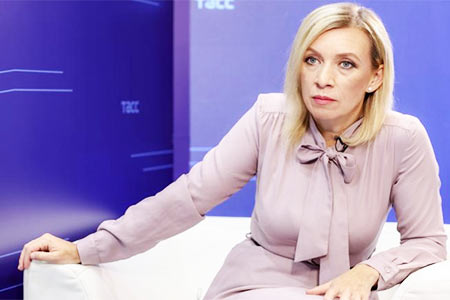 Zakharova: Armenia`s likely introduction of visas with Russia will be a step against Yerevan itself
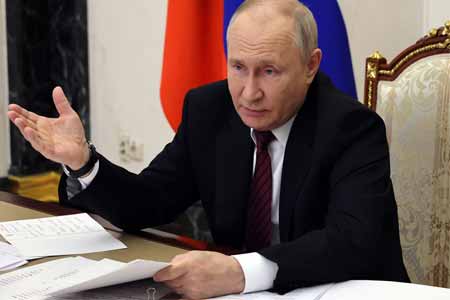 Putin: Armenia`s recognition of Karabakh as part of Azerbaijan in Prague has given Russia`s position on this issue an ambivalent character
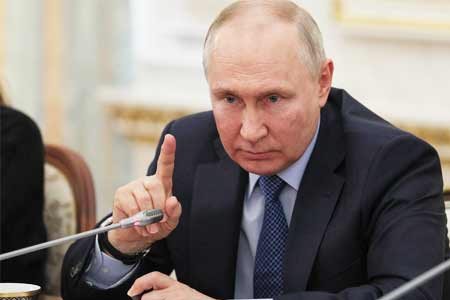 Putin: Armenia`s adoption of the law on EU accession means an announcement of its withdrawal from the Eurasian Economic Union
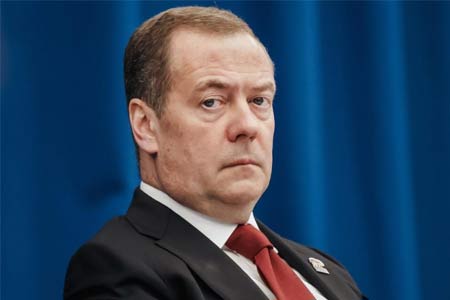 Medvedev: Yerevan will never become an EU member, but it will permanently damage relations with the Eurasian Economic Union, including with Moscow.
 Aram Vardevanyan: Public demands solutions, not apology scandals in Parliament
 Arrested Armenian oligarch on economy and new jobs
  "In Baku, we gave a worthy rebuff to the false claims regarding the past and present of our people" – Former Artsakh Parliament Speaker from Baku captivity