

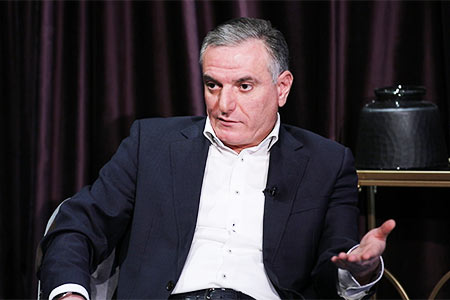
ArmInfo. If the pan-Turkic scenario is realized, Armenia, as a state, could find itself in great existential danger. Former Deputy Minister of Defense of the Republic of Armenia Artak Zakaryan writes about this in his article.
The former official wondered why Armenia's Syunik region found itself at the center of a multipolar geopolitical game. According to Zakaryan, the reduction of American military bases in the Middle East, from the Persian Gulf to the Caucasus, is changing the balance of power. American hegemony is gradually giving way to competition between Iran, Russia, and Turkey. In this competitive struggle, Armenia is becoming an important player. Israel.
"If this trend continues, in the next decade Iran will be able to expand its influence in the Caucasus, Turkey will try to expand its influence towards Azerbaijan and Central Asia, and Russia, naturally, will seek to maintain its southern security zone. For Turkey and Azerbaijan, the 45-kilometer section of Syunik is the missing link in the 'Middle Corridor.' Indirect control over it will open a direct route from Istanbul to Turkish Central Asia. For Iran, the loss of the border with Armenia is a strategic threat. Losing the route through Armenia will limit Iran's direct access to the Black Sea and Europe, increasing its dependence on routes controlled by competitors. Tehran seeks to become a key link on the route from the north to India. The 'Middle Corridor' bypasses Iran, reducing its transit importance and influence. Moreover, the creation of a 'Pan-Turkic corridor' "A corridor along its northern border poses a long-term threat to Tehran due to the potential for activating nationalist sentiment among Iranian Azerbaijanis. Therefore, Tehran views Syunik as a strategic border line, demanding the preservation of Armenia's territorial integrity and preventing the establishment of an American military presence. It is unacceptable for the TRIPP project to ultimately develop into a permanent Western presence on its border. Iran will not allow TRIPP to become such a corridor, regardless of the wording enshrined in the documents," the author notes.
He also noted that Moscow is interested in maintaining the 102nd Military Base in Gyumri, mechanisms for military cooperation with Armenia, and the air defense system. Russia also continues to wield economic and energy influence through the Eurasian Economic Union, the Russian market, and the energy sector. Moscow can use its influence in the countries of the South Caucasus. If Russia loses Armenia, Turkey will naturally gain greater freedom of action in the South Caucasus. Moreover, Western infrastructure will move closer to Russia's southern security zone and Iran's northern border.
Therefore, Moscow tolerates some degree of foreign policy independence from Yerevan, but will seek to prevent Armenia from becoming a full-fledged Turkish or Western strategic stronghold. Here, Russia and Iran also have overlapping interests, although they do not necessarily align on all issues. For now, it is sufficient that they both share a common interest in preventing the dominance of a third power in the South Caucasus.
If current trends continue, the struggle for the region over the next 20 years will be less about border changes than about network influence (railways, pipelines, energy, digital infrastructure, military installations, and trade routes).
Iraq could gradually come under Iran's full influence. Turkey will seek to connect Anatolia with Azerbaijan and Central Asia. Russia will seek to maintain its southern security zone. Israel will remain an important player, but its influence will depend on its ability to support Western policy and military superiority. After the loss of Artsakh, small Syunik became the target of a geopolitical grand game. Today, it is a turning point where the Iranian North-South axis, Turkey's Middle Corridor, and Russia's southern security zone will either find a fragile balance or collide. The further results of this multipolar game also depend on whether the re-Armenianization of Artsakh is possible. And if the pan-Turkic scenario is realized, Armenia, as a state, may find itself in great existential danger," the former deputy minister noted.













 Political scientist: We need to move away from the question of "when" and replace it with more important questions
 International Law Specialist: Azerbaijan intends to initiate legal proceedings against Armenia by sentencing Armenian prisoners
 Russian Security Council: In Armenia, they want to force Russian asset owners to dispose of their assets
 Zakharova: Russia ready to discuss with Armenia the prospects for expanding military cooperation as part of a review of bilateral ties
 Tevanyan: Armenia, like Ukraine and Moldova, is being drawn into the EU’s global war
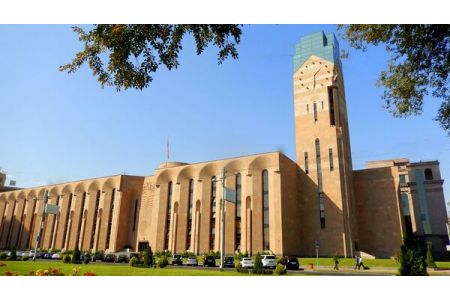 Yerevan City Hall is considering introducing a valet parking system in the city
 Expert: The circus surrounding the “Albanization” of Armenian culture in the presence of foreign ambassadors in occupied Artsakh is genocide
 Political scientist: If Russian-Armenian relations are destroyed, Turkey will take Russia`s place
 Political scientist: The Armenian public is simply obliged to significantly change the entire content of public discourse and struggle
 Cross tattoos are being removed from the skin of Christian prisoners in Azerbaijan by fire, according to a human rights activist.
 Zakharova: Armenia`s likely introduction of visas with Russia will be a step against Yerevan itself
 Putin: Armenia`s recognition of Karabakh as part of Azerbaijan in Prague has given Russia`s position on this issue an ambivalent character
 Putin: Armenia`s adoption of the law on EU accession means an announcement of its withdrawal from the Eurasian Economic Union
 Medvedev: Yerevan will never become an EU member, but it will permanently damage relations with the Eurasian Economic Union, including with Moscow.
 Aram Vardevanyan: Public demands solutions, not apology scandals in Parliament
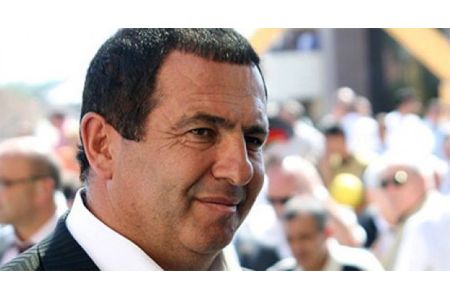 Arrested Armenian oligarch on economy and new jobs
 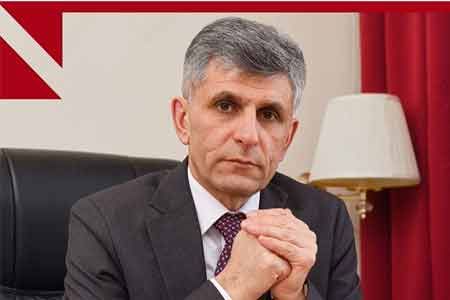 "In Baku, we gave a worthy rebuff to the false claims regarding the past and present of our people" – Former Artsakh Parliament Speaker from Baku captivity
