

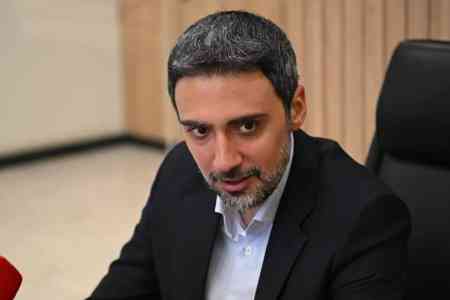
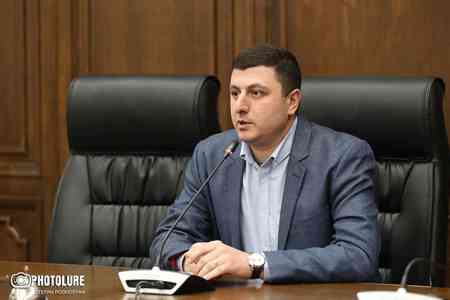
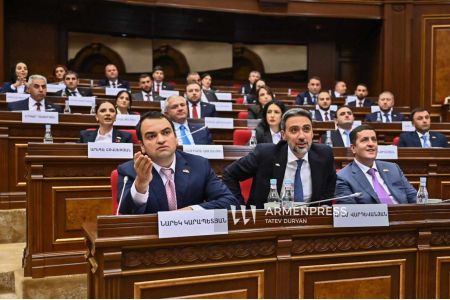
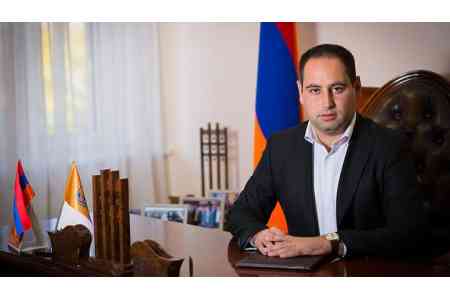
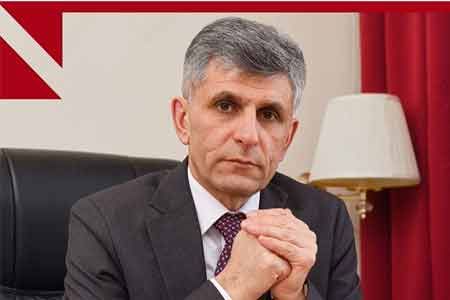
ArmInfo. The Parliamentary Assembly of the Council of Europe (PACE) recorded cases of selective political persecution during the parliamentary elections held in Armenia on June 7. This was stated by the Vice-Chairman of the Armenian Parliament from the Strong Armenia faction.
The PACE report contains a direct call, a demand that the Armenian authorities stop this political persecution, and mentions cases of abuse of administrative resources and social reforms launched by the authorities during the pre-election period. All this suggests that the interference in the elections, facilitated by the Armenian authorities, was so severe that it significantly impacted the election results," the Deputy Speaker noted.
According to him, the report also mentions the de facto legitimacy deficit of 3/5 mandates due to the arbitrary decisions of the head of the Armenian Central Election Commission, Vahagn Hovakimyan, to annul the results of three polling stations.
The Parliamentary Assembly of the Council of Europe (PACE) report on the results of the parliamentary elections in Armenia, held on June 7, 2026, recorded a number of violations by the Civil Contract party.
According to the published report, widespread public polarization and mass protests during the elections created a tense domestic political situation in the country. According to the source, additional factors contributing to the polarization were the unusually tense relations between the government and the leadership of the Armenian Apostolic Church, as well as criminal prosecutions, including pretrial detention, of several prominent opposition figures and religious figures. Attention is drawn to the hastily adopted amendments to the Electoral Code by the ruling party, which contradict the recommendations of the Venice Commission regarding the stability of electoral legislation. It is noted that the election campaign period was characterized by sharp polarization, aggressive rhetoric, and repeated accusations of violations, including direct threats against opposition candidates and the coercion of government officials at rallies held by Nikol Pashinyan's ruling party.
It is also noted that in recent years, there has been a broader use of law enforcement mechanisms against opposition candidates and activists, as well as a massive influx of criminal cases for vote-buying, almost all of which involved the opposition or business representatives associated with the opposition. It should be noted that at the time of preparation of the report, there were virtually no guilty verdicts in such cases.












 Russian political scientist: Moscow`s reaction to the TRIPP project will largely depend on the trend in Russian-American relations
 Armenian Political Scientist: The approaches, methods, rmphases and content of today’s struggle in Armenia Cannot Remain the Same
 Russian Security Council: In Armenia, they want to force Russian asset owners to dispose of their assets
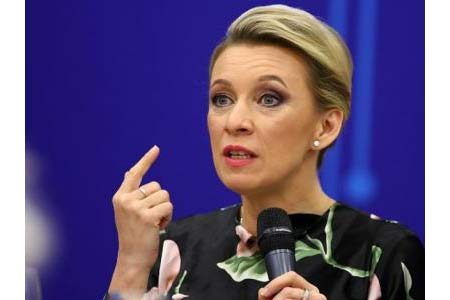 Zakharova: Russia ready to discuss with Armenia the prospects for expanding military cooperation as part of a review of bilateral ties
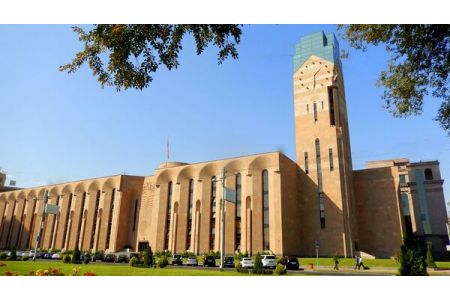 Yerevan City Hall is considering introducing a valet parking system in the city
 Expert: The circus surrounding the “Albanization” of Armenian culture in the presence of foreign ambassadors in occupied Artsakh is genocide
 Political scientist: If Russian-Armenian relations are destroyed, Turkey will take Russia`s place
 Political scientist: The Armenian public is simply obliged to significantly change the entire content of public discourse and struggle
 Cross tattoos are being removed from the skin of Christian prisoners in Azerbaijan by fire, according to a human rights activist.
 Zakharova: Armenia`s likely introduction of visas with Russia will be a step against Yerevan itself
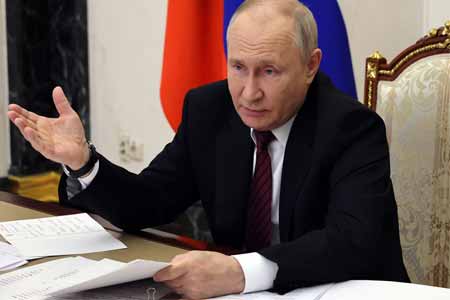 Putin: Armenia`s recognition of Karabakh as part of Azerbaijan in Prague has given Russia`s position on this issue an ambivalent character
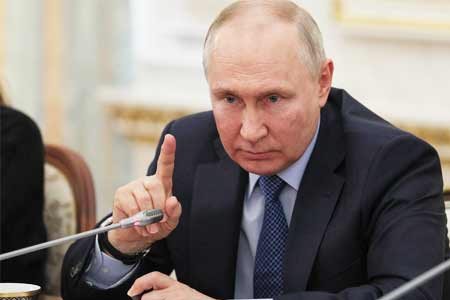 Putin: Armenia`s adoption of the law on EU accession means an announcement of its withdrawal from the Eurasian Economic Union
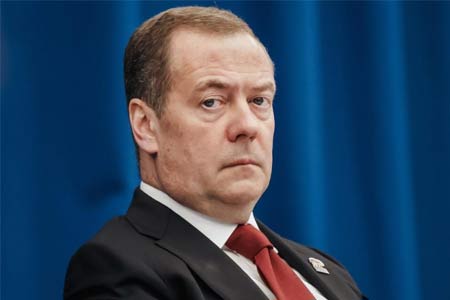 Medvedev: Yerevan will never become an EU member, but it will permanently damage relations with the Eurasian Economic Union, including with Moscow.
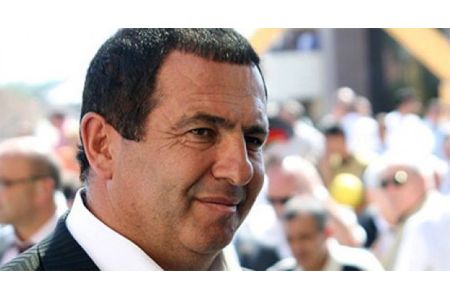 Arrested Armenian oligarch on economy and new jobs
  "In Baku, we gave a worthy rebuff to the false claims regarding the past and present of our people" – Former Artsakh Parliament Speaker from Baku captivity
