

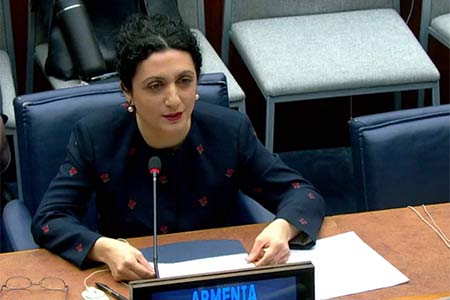
ArmInfo. Armenia's chairmanship of the 17th Conference of the Parties to the UN Convention on Biological Diversity (COP-17) will provide the country with the opportunity to become part of a global women's network on gender equality. Zoya Stepanyan, Head of the International Cooperation Department on Human Rights at the Armenian Ministry of Foreign Affairs, stated this on September 29 during the discussion "National Dialogue on Gender Equality, Biodiversity, and COP-17."
According to her, Armenia's COP-17 chairmanship offers a unique opportunity for the country to integrate into international networks working to protect women's rights and gender equality, as well as to clearly define its role and priorities on the global agenda. "The COP-17 presidency and hosting of this summit are key priorities of Armenia's multilateral diplomacy, designed to demonstrate to the international community the country's contribution to the sustainable development agenda." "Armenia will act as a neutral mediator, whose primary goal is to ensure an inclusive environment and achieve consensus between the parties to secure effective goals," the diplomat noted.
Stepanyan emphasized that the Armenian government and the Ministry of Foreign Affairs continue to adhere to a principled, human rights-based stance in their international positions. "As a small country operating in a complex regional and global environment, we have always maintained a human rights-based approach and a principled position on protecting women's rights. This was reflected in our votes and statements. We will act with the same determination during our presidency of COP-17, where the rights of women and girls, as well as gender equality, intersect with virtually all environmental issues. "I am confident that Armenia's presidency of COP-17 will give the country the opportunity to become part of a global women's network on gender equality and, within this network, define the country's role and understand what specific actions need to be taken," the Armenian Foreign Ministry representative noted.
In turn, environmental activist Varduhi Barseghyan spoke about the challenges they face in this area. According to her, the main obstacle is insufficient public participation in environmental protection issues. One such challenge they face as environmental activists, according to her, is related to the mining industry. As an example, she cited the situation in her village of Ginevet, where the construction of a cement plant is currently under discussion. "Public participation in such issues remains extremely passive: women and youth are afraid to raise these issues and speak openly about them. "Because we know that when a woman allows herself to speak out more boldly, she becomes a target," Barseghyan explained.
In particular, she said, female environmental activists in Armenia face SLAPP-type lawsuits (lawsuits aimed at intimidating or suppressing public criticism - ed.).
Speaking about young people, she said they lack confidence that their participation in decision-making processes can lead to real results. She also focused on the problems associated with holding public hearings. According to her, this mechanism has a number of shortcomings, including legislative ones. "Business entities often seek first and foremost to obtain the consent of community representatives to implement a particular project. At the same time, they typically do not discuss the possible negative consequences, focusing only on the supposed benefits - job creation, implementation of social programs, and so on. As a result, companies are able to obtain the necessary consent. The institution of the Council of Elders is not effective in this regard. Most of its members are men, and therefore women's voices in such matters are under pressure," Barseghyan emphasized.
















 Russian political scientist: Moscow`s reaction to the TRIPP project will largely depend on the trend in Russian-American relations
 Armenian Political Scientist: The approaches, methods, rmphases and content of today’s struggle in Armenia Cannot Remain the Same
 Russian Security Council: In Armenia, they want to force Russian asset owners to dispose of their assets
 Zakharova: Russia ready to discuss with Armenia the prospects for expanding military cooperation as part of a review of bilateral ties
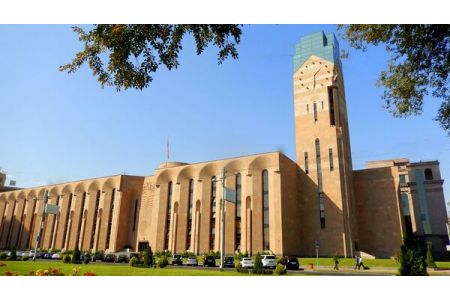 Yerevan City Hall is considering introducing a valet parking system in the city
 Expert: The circus surrounding the “Albanization” of Armenian culture in the presence of foreign ambassadors in occupied Artsakh is genocide
 Political scientist: If Russian-Armenian relations are destroyed, Turkey will take Russia`s place
 Political scientist: The Armenian public is simply obliged to significantly change the entire content of public discourse and struggle
 Cross tattoos are being removed from the skin of Christian prisoners in Azerbaijan by fire, according to a human rights activist.
 Zakharova: Armenia`s likely introduction of visas with Russia will be a step against Yerevan itself
 Putin: Armenia`s recognition of Karabakh as part of Azerbaijan in Prague has given Russia`s position on this issue an ambivalent character
 Putin: Armenia`s adoption of the law on EU accession means an announcement of its withdrawal from the Eurasian Economic Union
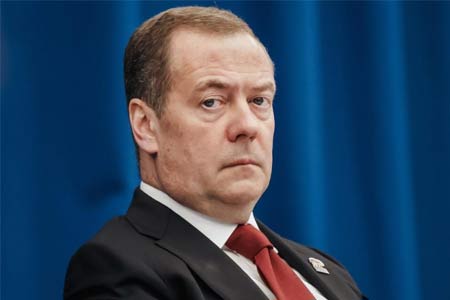 Medvedev: Yerevan will never become an EU member, but it will permanently damage relations with the Eurasian Economic Union, including with Moscow.
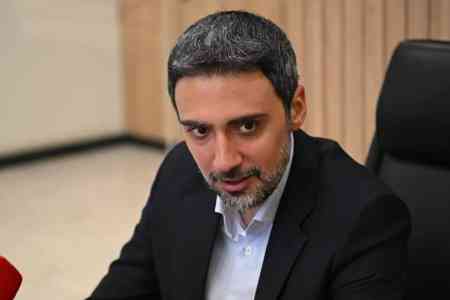 Aram Vardevanyan: Public demands solutions, not apology scandals in Parliament
 Arrested Armenian oligarch on economy and new jobs
 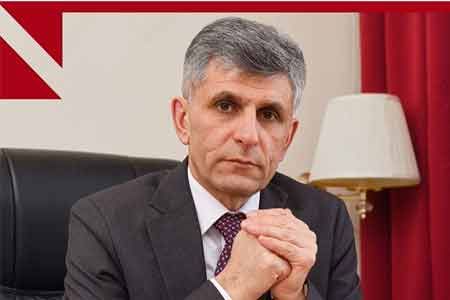 "In Baku, we gave a worthy rebuff to the false claims regarding the past and present of our people" – Former Artsakh Parliament Speaker from Baku captivity