


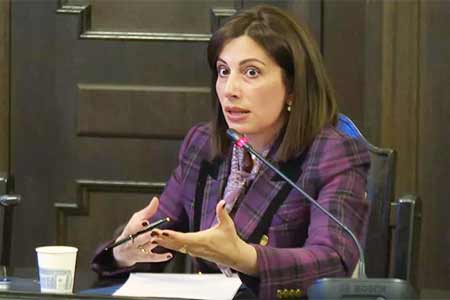
ArmInfo. Former Justice Minister and former National Assembly member Arpine Hovhannisyan expressed a number of comments regarding the PACE report on the Armenian elections.
Arpine Hovhannisyan believes that, beyond a few factual assertions, the opposition lacks sufficient grounds to be satisfied with the report or to use it against the authorities.
"Yes, the report also documents a number of issues raised by the opposition. But if we were to highlight the truly important points, I would draw attention to the following: the first is the issue of the Prosperous Armenia party's lack of representation in parliament. This is not about falsifying election results. The issue is presented in the context of sufficient justification for the decisions made and effective judicial protection." The second is the concerns expressed in the report regarding selective justice, especially in the context of the arrests and detentions of clergy and, mainly, opposition representatives. As for the rest, as a former member and head of the Armenian delegation to PACE, based on my experience participating in monitoring discussions and reporting processes in various countries, I can say that criticism of administrative resources, unequal conditions, shortcomings in the organization of elections, transparency of campaign spending and similar issues is quite typical, almost "obligatory" accompanying criticism of such reports. Therefore, I would not overestimate them. The rest is completely consistent with the statements of the authorities: "From external pressure to vote-buying," Arpine Hovhannisyan emphasized.
As a reminder, the final PACE report on the parliamentary elections in Armenia, held on June 7, 2026, was officially published and discussed at the organization's autumn session in Strasbourg on September 28, 2026. In the document, European observers presented both positive assessments and harsh criticism of key incidents in the pre-election process. PACE observers concluded that the elections provided citizens with a real choice between political alternatives and were technically conducted at a high and well-organized level. Election day itself received an entirely positive assessment at most polling stations. The report documents extensive foreign interference. In particular, it notes that the Russian Federation exerted direct pressure through economic levers (trade restrictions on the export of food, alcohol, and flowers from Armenia) and harsh rhetoric, attempting to tip the balance in favor of opposition forces. Statements by Western officials supporting the authorities were also deemed interference, but "without a comparable level of coercion." PACE concluded that Armenian society had demonstrated resilience to external pressure, and the election results reflected the people's choice of a pro-European path, giving the newly elected authorities a clear mandate.
Regarding the situation surrounding the Prosperous Armenia party, PACE identified the Central Election Commission's decision to annul the results of three polling stations (Nos. 10/51, 35/65, and 12/13) as the most controversial factor in the elections. Because of this, the party of prominent businessman Gagik Tsarukyan received 3.99% of the vote, failing to overcome the 4% threshold. Observers emphasized that the Central Election Commission's argument ("it did not affect the overall result") was insufficient, and the refusal to hold reruns at these polling stations resulted in a significant portion of the opposition electorate being left without parliamentary representation. The pre-election period was characterized as "extremely confrontational." More than 200 criminal cases of vote-buying were recorded, the majority of which were brought against opposition members, creating a perception among observers of selective law enforcement. Pressure was also noted on civil servants to attend rallies of the ruling Civil Contract party. The media were deemed pluralistic but deeply polarized (Public Television favored the authorities, while several private channels favored the opposition). PACE expressed concern over the lack of regulation of online campaigning and the widespread use of manipulative content and deepfakes created by AI to discredit politicians.
PACE's main recommendation is to urgently amend Armenia's Electoral Code, explicitly requiring the Central Electoral Commission to conduct a re-election if the annulment of results at individual polling stations jeopardizes the passage of parties and affects the balance of power in parliament.





















 Russian political scientist: Moscow`s reaction to the TRIPP project will largely depend on the trend in Russian-American relations
 Armenian Political Scientist: The approaches, methods, rmphases and content of today’s struggle in Armenia Cannot Remain the Same
 Russian Security Council: In Armenia, they want to force Russian asset owners to dispose of their assets
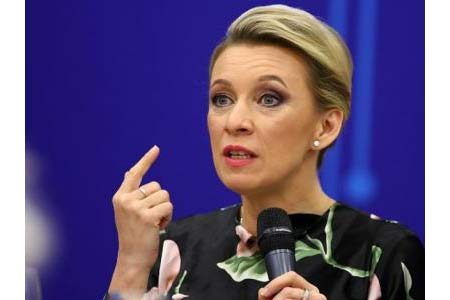 Zakharova: Russia ready to discuss with Armenia the prospects for expanding military cooperation as part of a review of bilateral ties
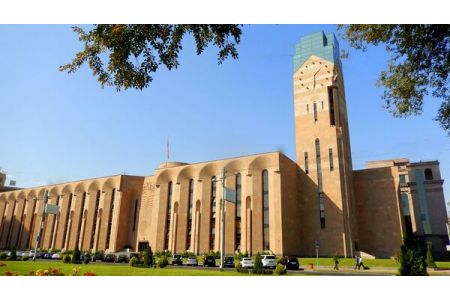 Yerevan City Hall is considering introducing a valet parking system in the city
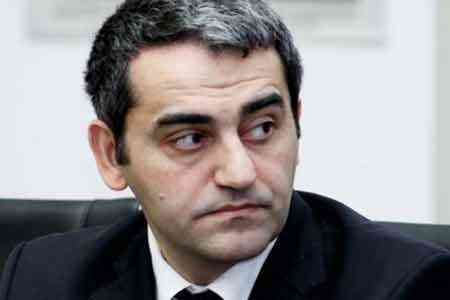 Expert: The circus surrounding the “Albanization” of Armenian culture in the presence of foreign ambassadors in occupied Artsakh is genocide
 Political scientist: If Russian-Armenian relations are destroyed, Turkey will take Russia`s place
 Political scientist: The Armenian public is simply obliged to significantly change the entire content of public discourse and struggle
 Cross tattoos are being removed from the skin of Christian prisoners in Azerbaijan by fire, according to a human rights activist.
 Zakharova: Armenia`s likely introduction of visas with Russia will be a step against Yerevan itself
 Putin: Armenia`s recognition of Karabakh as part of Azerbaijan in Prague has given Russia`s position on this issue an ambivalent character
 Putin: Armenia`s adoption of the law on EU accession means an announcement of its withdrawal from the Eurasian Economic Union
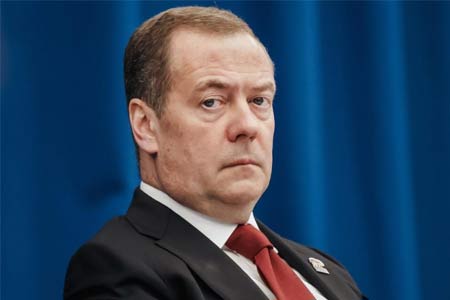 Medvedev: Yerevan will never become an EU member, but it will permanently damage relations with the Eurasian Economic Union, including with Moscow.
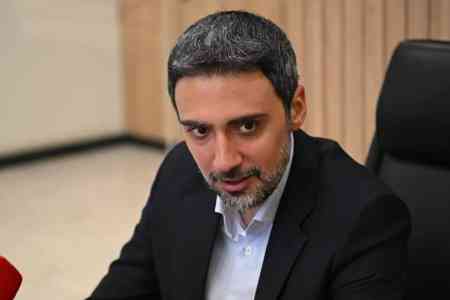 Aram Vardevanyan: Public demands solutions, not apology scandals in Parliament
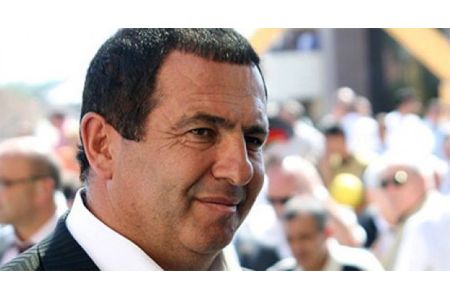 Arrested Armenian oligarch on economy and new jobs
 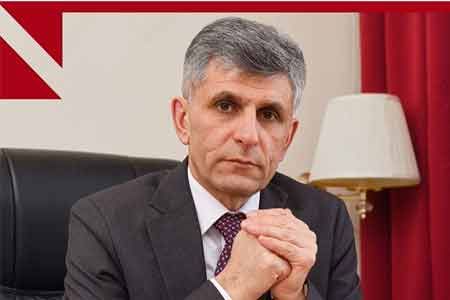 "In Baku, we gave a worthy rebuff to the false claims regarding the past and present of our people" – Former Artsakh Parliament Speaker from Baku captivity