
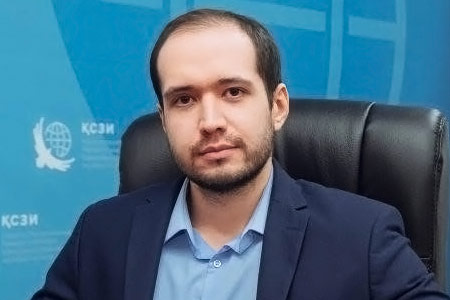
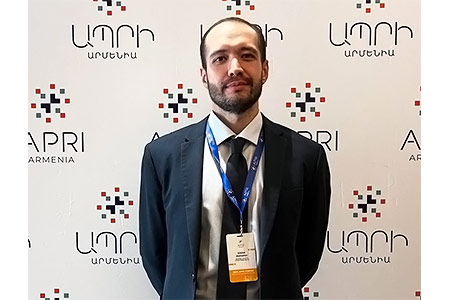
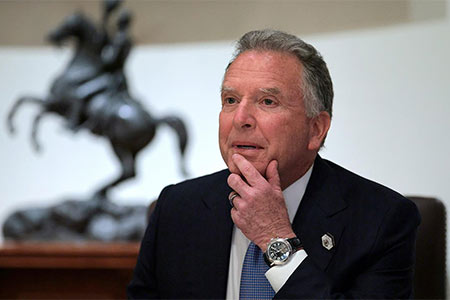
ArmInfo. Kazakhstan views the Trump Route Project (TRIPP) as an extension of the Middle Corridor. Alisher Abdreshev, a leading expert at the Department of European and American Studies at the Kazakhstan Institute for Strategic Studies (KISS), stated this in an interview with an ArmInfo correspondent on the sidelines of the APRI Armenia 2026 forum on September 24.
In general, according to the expert, Kazakhstan's position is: "the more alternative transport routes in the South Caucasus, the greater the opportunities for diversification." "For Kazakhstan, TRIPP is also an important project, but first and foremost, we see it as an extension of the Middle Corridor. For Kazakhstan, of course, the more alternative transport routes in the South Caucasus, the greater the opportunities for diversification." "I think TRIPP is an excellent opportunity for the supply and transit of goods from China through Central Asia to the South Caucasus and further towards Turkey and Europe," Abdreshev explained.
Overall, as the leading expert from KISS noted, expectations regarding TRIPP are very high – both among the Central Asian countries and among other project participants. "But here it is important, of course, to look at the extent to which the parties will comply with the agreements reached and move on to the practical aspects of cooperation within TRIPP," the expert noted.
Abdreshev also touched on the process of establishing relations between Armenia and Azerbaijan. According to him, Kazakhstan welcomes every step towards improving relations between the countries. "Kazakh President Kassym-Jomart Tokayev has repeatedly noted, including during the most tense phases of the conflict, when attacks escalated, that there is no other path than a diplomatic settlement. "Kazakhstan also welcomes US President Donald Trump's participation as a mediator in resolving the long-standing conflict between the two countries, which has raged for decades," the expert noted.
Overall, he said, they view positively the emergence of a new reality in the South Caucasus. Specifically, he noted, the period of unresolved issues and conflicts between Armenia and Azerbaijan is ending. "At the same time, Georgia is actively expanding its role in the region. The South Caucasus is also very important for Central Asia. I would like to note here that, for example, Azerbaijan has already joined the C5 platform (an international diplomatic and economic dialogue format – ed.), and we, of course, welcome such steps. "I believe we have opportunities to interact with Armenia not only as an individual country, but also as a full-fledged player in the South Caucasus," Abdreshev concluded.
As a reminder, on August 8, Armenian Prime Minister Nikol Pashinyan and Azerbaijani President Ilham Aliyev signed a seven-point joint "Declaration of Peace" in Washington. It provides for a joint appeal to the Organization for Security and Cooperation in Europe (OSCE) to terminate the OSCE Minsk Process and related structures, as well as the creation of a transport corridor through Armenian territory that will connect Azerbaijan with its Nakhchivan exclave, surrounded by Armenia, Turkey, and Iran. The TRIPP (Trump Route for International Peace and Prosperity) project is a 42-kilometer stretch of road through southern Armenia, rumored to be transferred to US management for 99 years.
On January 14, the Armenian Foreign Ministry published a framework document signed with the US in Washington for the implementation of the Trump Route for International Peace and Prosperity (TRIPP). The 12-page document outlines the project's main objectives and operating mechanisms. Among other things, the document emphasizes Armenia's intention to authorize and support the establishment of the TRIPP Development Company. The company is expected to be responsible for developing the TRIPP project, receiving an initial development right for a period of 49 years. Armenia intends to offer the United States a 74% stake in the TRIPP Development Company, retaining 26%. The partnership is expected to be extended for another 50 years, with an additional ownership stake granted to the Armenian government, bringing its stake to 49%.







 Armenian Political Scientist: The approaches, methods, rmphases and content of today’s struggle in Armenia Cannot Remain the Same
 Political scientist: Armenians will live peacefully in their homeland only when they can once again set national goals for themselves, such as Artsakh
 Armenian Historian: People Like Magdalena Grono Should Be Kept Away from the Thresholds of Armenian Shrines
 Azerbaijani studies expert: Armenia’s Foreign Ministry could use the ICC against Aliyev’s Armenophobic statements
 An Armenian political analyst exposed Hajiyev’s lies and attempts to mislead diplomats accredited in Azerbaijan in occupied Artsakh
 Russian Security Council: In Armenia, they want to force Russian asset owners to dispose of their assets
 Zakharova: Russia ready to discuss with Armenia the prospects for expanding military cooperation as part of a review of bilateral ties
 Tevanyan: Armenia, like Ukraine and Moldova, is being drawn into the EU’s global war
 Yerevan City Hall is considering introducing a valet parking system in the city
 Expert: The circus surrounding the “Albanization” of Armenian culture in the presence of foreign ambassadors in occupied Artsakh is genocide
 Political scientist: If Russian-Armenian relations are destroyed, Turkey will take Russia`s place
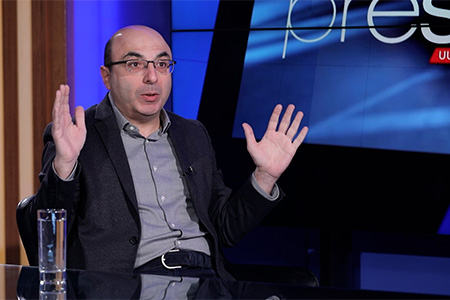 Political scientist: The Armenian public is simply obliged to significantly change the entire content of public discourse and struggle
 Cross tattoos are being removed from the skin of Christian prisoners in Azerbaijan by fire, according to a human rights activist.
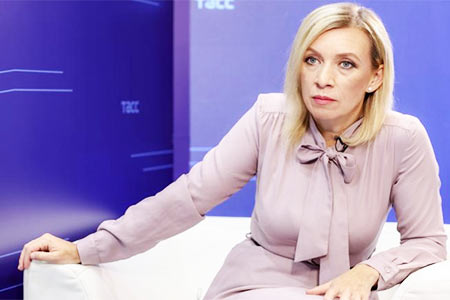 Zakharova: Armenia`s likely introduction of visas with Russia will be a step against Yerevan itself
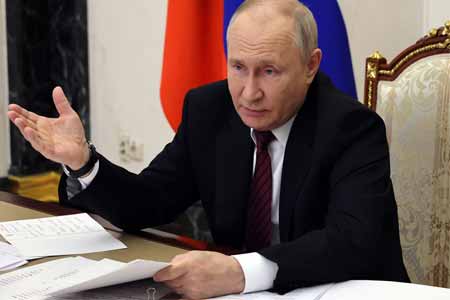 Putin: Armenia`s recognition of Karabakh as part of Azerbaijan in Prague has given Russia`s position on this issue an ambivalent character
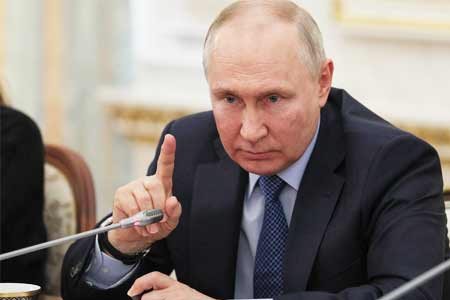 Putin: Armenia`s adoption of the law on EU accession means an announcement of its withdrawal from the Eurasian Economic Union
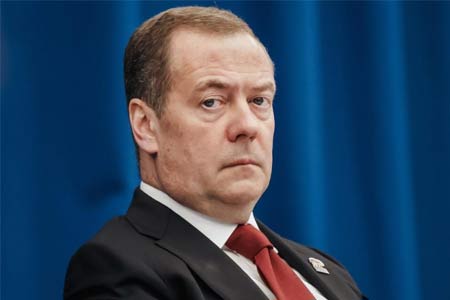 Medvedev: Yerevan will never become an EU member, but it will permanently damage relations with the Eurasian Economic Union, including with Moscow.
 Aram Vardevanyan: Public demands solutions, not apology scandals in Parliament
 Arrested Armenian oligarch on economy and new jobs
  "In Baku, we gave a worthy rebuff to the false claims regarding the past and present of our people" – Former Artsakh Parliament Speaker from Baku captivity