
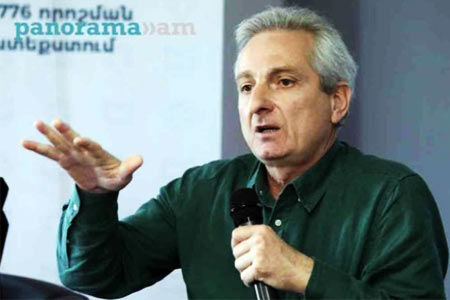
ArmInfo. In 2025, 657 applications regarding the protection of the property rights of Artsakh residents were filed with the European Court of Human Rights (ECHR). This was reported on September 23 at a hearing entitled "Socio-Economic and Legal Problems of Artsakh Residents and Their Solutions," by international law specialist and attorney Ara Ghazaryan.
According to him, the Ara Ghazaryan law firm receives five to six Artsakh families every day, who use Google Maps to show them the location of their homes and their coordinates. "After all, today we are faced with a situation where a year ago their house might have been there, and a year later it is no longer there. We collect this data as evidence and submit it to the ECHR. Last year, 657 applications were filed specifically regarding the protection of the property rights of Artsakh residents. This year, thanks to the efforts of five offices, we are receiving five to six Artsakh families every day. We see the people's spirit; they are ready to stand up for their rights," noted Kazaryan.
This desire, according to him, is due to the fact that this issue, namely a legal mechanism, is not included in the peace treaty between Armenia and Azerbaijan. "As long as the peace treaty does not offer any legal mechanisms for resolving this problem, then international tribunals are open to us," the lawyer noted.
Speaking about appeals, he clarified that the ECHR greatly appreciates them when they are handwritten by the victim themselves. According to Kazaryan, these statements also document the numerous socioeconomic problems faced by the Artsakh people in this situation. Overall, Kazaryan is confident that the Artsakh people will one day receive reparations for their property. "Even if this happens in 10 years, there are many examples of such cases in international practice. Currently, we have 950 Artsakh residents registered, but we lack the resources to quickly receive them all and record all their applications. But this process will not be stopped," Kazaryan assured.
He also clarified that they are faced with the problem that many Artsakh residents lack cadastral documents for their property. In this matter, he said, action should have been taken by the Armenian government. "For example, they could have demanded that Azerbaijan preserve the property of the Armenians." "After all, this condition is enshrined in a decision of an international court that has not yet been overturned," the international law expert recalled.
He also linked it to the right of return, recalling that it contains hundreds of components, including the right to preserve property, schools, churches, and cultural heritage. "These are all legal categories that are part of the concept of homeland and have a legal definition. In general, both international human rights law and humanitarian law are at work here. Humanitarian law, in this regard, states that if a person left their home as a result of military conflict, they have the right to return, which must be ensured in a dignified manner, with security and the creation of appropriate systems for the implementation of this right," Kazaryan concluded.
As a reminder, on September 19, 2023, Azerbaijan, under the pretext of an "anti-terrorist operation," committed another act of aggression against Artsakh. This was preceded by a nearly 10-month blockade of the republic. Since the enemy aggression that began in the fall of 2020, which culminated in the complete ethnic cleansing of Artsakh in September 2023, over 150,000 Artsakh residents have lost their homeland and become refugees. It should be added that, in addition to destroying Artsakh's cultural heritage, the Azerbaijani authorities are also continuing to destroy Artsakh property in Stepanakert and the surrounding regions. Entire villages are being wiped off the face of the earth.
















 Armenian Political Scientist: The approaches, methods, rmphases and content of today’s struggle in Armenia Cannot Remain the Same
 Political scientist: Armenians will live peacefully in their homeland only when they can once again set national goals for themselves, such as Artsakh
 Armenian Historian: People Like Magdalena Grono Should Be Kept Away from the Thresholds of Armenian Shrines
 Azerbaijani studies expert: Armenia’s Foreign Ministry could use the ICC against Aliyev’s Armenophobic statements
 An Armenian political analyst exposed Hajiyev’s lies and attempts to mislead diplomats accredited in Azerbaijan in occupied Artsakh
 Russian Security Council: In Armenia, they want to force Russian asset owners to dispose of their assets
 Zakharova: Russia ready to discuss with Armenia the prospects for expanding military cooperation as part of a review of bilateral ties
 Tevanyan: Armenia, like Ukraine and Moldova, is being drawn into the EU’s global war
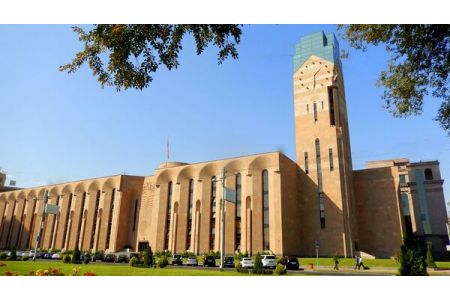 Yerevan City Hall is considering introducing a valet parking system in the city
 Expert: The circus surrounding the “Albanization” of Armenian culture in the presence of foreign ambassadors in occupied Artsakh is genocide
 Political scientist: If Russian-Armenian relations are destroyed, Turkey will take Russia`s place
 Political scientist: The Armenian public is simply obliged to significantly change the entire content of public discourse and struggle
 Cross tattoos are being removed from the skin of Christian prisoners in Azerbaijan by fire, according to a human rights activist.
 Zakharova: Armenia`s likely introduction of visas with Russia will be a step against Yerevan itself
 Putin: Armenia`s recognition of Karabakh as part of Azerbaijan in Prague has given Russia`s position on this issue an ambivalent character
 Putin: Armenia`s adoption of the law on EU accession means an announcement of its withdrawal from the Eurasian Economic Union
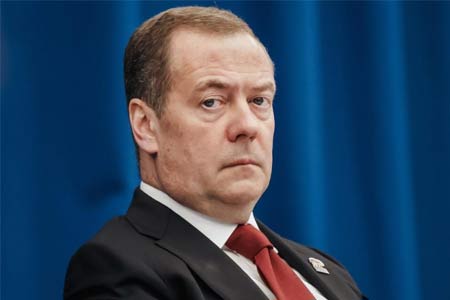 Medvedev: Yerevan will never become an EU member, but it will permanently damage relations with the Eurasian Economic Union, including with Moscow.
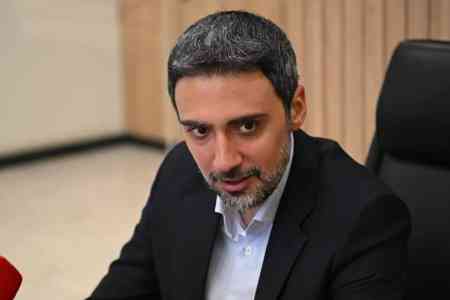 Aram Vardevanyan: Public demands solutions, not apology scandals in Parliament
 Arrested Armenian oligarch on economy and new jobs
 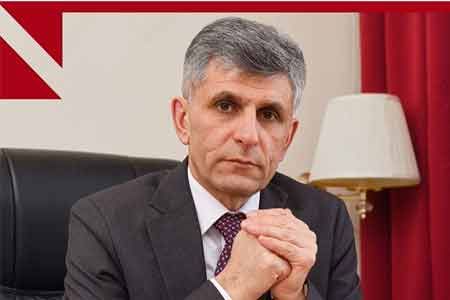 "In Baku, we gave a worthy rebuff to the false claims regarding the past and present of our people" – Former Artsakh Parliament Speaker from Baku captivity