

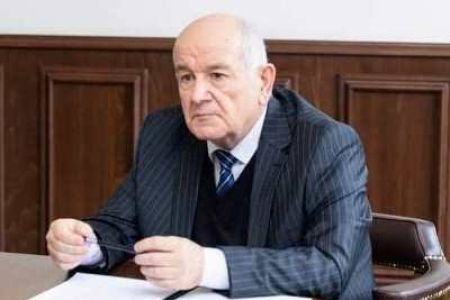
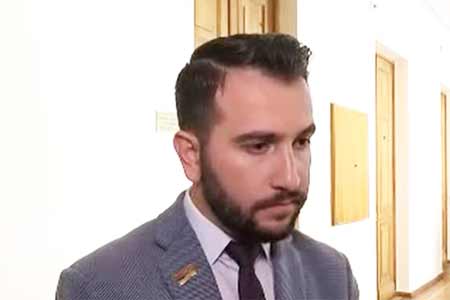
ArmInfo. Today, the Civil Aviation Committee has a structure that meets international requirements, a developed professional capacity, as well as a management, quality assurance and oversight system based on international standards and requirements. This is stated in a statement by Mihran Khachatryan on the occasion of completing his work as chairman of the Civil Aviation Committee.
Summing up the path covered by Armenia’s civil aviation in recent years, he recalled that, as a result of an EU assessment visit conducted in 2020, it was recorded that Armenia’s state civil aviation oversight system, as well as the structure of the aviation authorities, did not comply with the requirements of the International Civil Aviation Organization (ICAO). In addition, there was a shortage of appropriately qualified specialists in a number of important areas, while in some areas the necessary functions had not yet been fully established.
Thus, as Khachatryan noted, the main task during these years was not to eliminate individual shortcomings, but to establish an effective, sustainable and institutional system.
In particular, for this purpose, two new divisions were created, one of which established an entirely new function; the remuneration system for the Committee’s inspectors was reviewed and revised, and the foundations were laid for a competency-based remuneration system for specialists; more than 30 new policies and procedures (Policies and Procedures) were developed, approved and implemented from scratch; a competency-based training plan was introduced, within the framework of which the necessary training sessions were organized for Committee specialists; the oversight process became more systematic, documented and traceable; an internal quality management system was established, which is currently at the final stage of formation; a draft law on making amendments and additions to the law was developed, proposing to establish the necessary legal grounds for the operation of and oversight over general aviation, including unmanned aircraft systems and VTOL-type aircraft; cooperation with the European Union was expanded within the framework of various programs and initiatives, including the Eastern Partnership, Twinning and the Comprehensive and Enhanced Partnership Agreement (CEPA), as well as with the aviation authorities of a number of European countries, particularly Romania, France, Croatia, Slovakia and Lithuania.
According to Khachatryan, the results of this work were confirmed both by the progress recorded within the framework of the ICAO audit conducted in 2024 and by the results of the EU assessment visit conducted in 2025., he wrote.
At the same time, the now former head of the Committee noted that, while leaving his position, he was not leaving the sector.
remains an important professional mission for me, and I am ready to continue contributing to its further development through my experience and knowledge>, he noted.












 Armenian Historian: People Like Magdalena Grono Should Be Kept Away from the Thresholds of Armenian Shrines
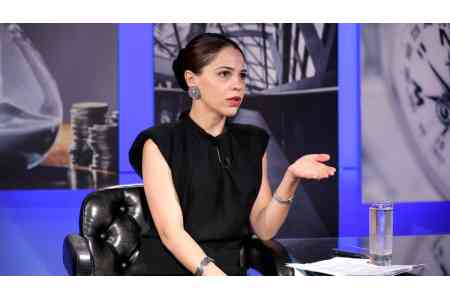 Azerbaijani studies expert: Armenia’s Foreign Ministry could use the ICC against Aliyev’s Armenophobic statements
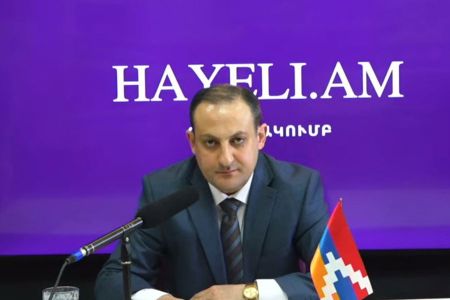 An Armenian political analyst exposed Hajiyev’s lies and attempts to mislead diplomats accredited in Azerbaijan in occupied Artsakh
 Expert: The circus surrounding the “Albanization” of Armenian culture in the presence of foreign ambassadors in occupied Artsakh is genocide
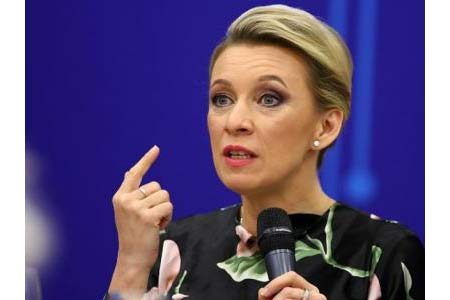 Zakharova: Russia ready to discuss with Armenia the prospects for expanding military cooperation as part of a review of bilateral ties
 Tevanyan: Armenia, like Ukraine and Moldova, is being drawn into the EU’s global war
 Yerevan City Hall is considering introducing a valet parking system in the city
 Political scientist: If Russian-Armenian relations are destroyed, Turkey will take Russia`s place
 Political scientist: The Armenian public is simply obliged to significantly change the entire content of public discourse and struggle
 Cross tattoos are being removed from the skin of Christian prisoners in Azerbaijan by fire, according to a human rights activist.
 Zakharova: Armenia`s likely introduction of visas with Russia will be a step against Yerevan itself
 Putin: Armenia`s recognition of Karabakh as part of Azerbaijan in Prague has given Russia`s position on this issue an ambivalent character
 Putin: Armenia`s adoption of the law on EU accession means an announcement of its withdrawal from the Eurasian Economic Union
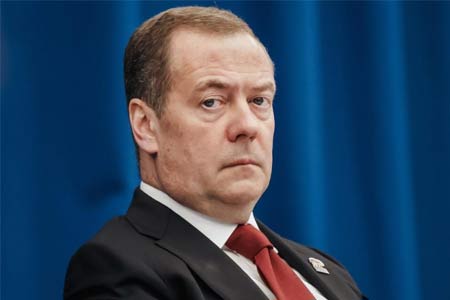 Medvedev: Yerevan will never become an EU member, but it will permanently damage relations with the Eurasian Economic Union, including with Moscow.
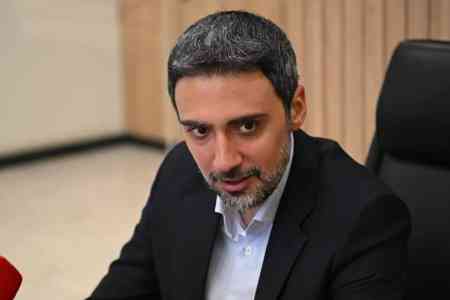 Aram Vardevanyan: Public demands solutions, not apology scandals in Parliament
 Arrested Armenian oligarch on economy and new jobs
 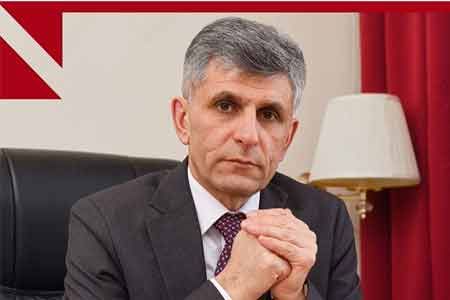 "In Baku, we gave a worthy rebuff to the false claims regarding the past and present of our people" – Former Artsakh Parliament Speaker from Baku captivity
  NA Vice Speaker candidate believes his wife`s salary as director of HayPost is the lowest in the company`s history