
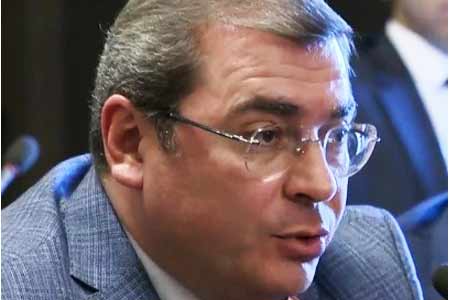
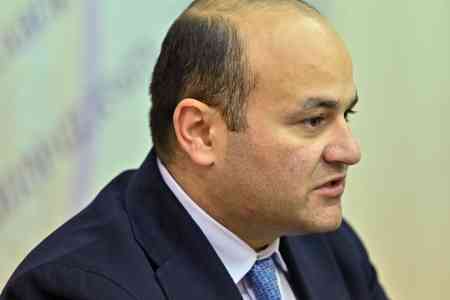
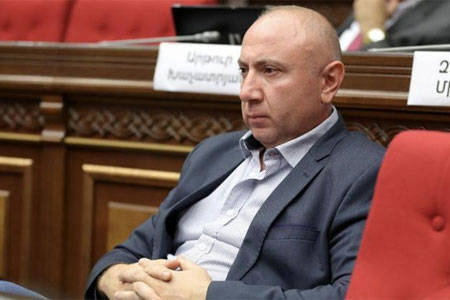
ArmInfo. Pashinyan is not leading Armenia from Russian dependence to national independence. He selectively maintains old dependencies, creates new ones against their backdrop, and places the country at the center of a clash of interests between competing external forces. David Ananyan, a member of the Wings of Unity political initiative and former Chairman of the State Revenue Committee of the Republic of Armenia, wrote this on his Facebook page.
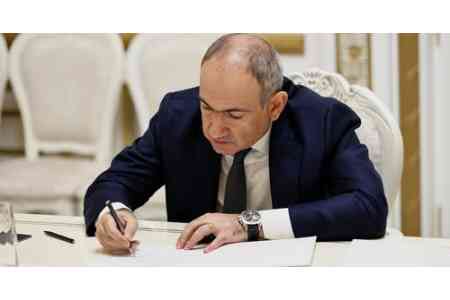
According to him, on September 1 in Bishkek, Prime Minister Nikol Pashinyan assured Russian President Vladimir Putin that Armenia is interested in developing relations with Russia, has not submitted any notifications about leaving the Eurasian Economic Union, and that the European direction is not directed against Russia. "Just two days later, he stated that Russia's 102nd Military Base was no longer vital, Armenia would not object if Russia decided to withdraw it, and that transferring Russian concession rights to the Armenian railway to a third party would be the best option. However, among the same statements, Pashinyan also announced that Armenia was awaiting an offer from Rosatom to build a new nuclear power plant. This is where the contradiction of the entire policy lies," Ananyan noted.
He added that in terms of military presence, Russia is presented as a no longer necessary force, in terms of railways, as a manager that should be removed, in the case of the Eurasian Economic Union, as a still-essential market, and in the case of nuclear energy, as a potential long-term strategic partner. Thus, "social relations" with Russia are not over. They've simply become selective, pragmatic, and closed to the public.
"A new nuclear power plant is not an ordinary economic contract. Its choice will determine Armenia's technological dependence, nuclear fuel supplies, maintenance system, professional capabilities, and external financial obligations for decades. It's impossible to simultaneously talk to the public about ending Russia's strategic presence and building the country's next energy pillar with Russia without explaining the state's overall strategy." The same uncertainty exists in the security sphere. There's a perception that the security system established by Russia has collapsed, and that Moscow's policy toward Armenia has been harsh, short-sighted, and has turned economic dependence into political pressure. But abandoning a "failed" ally is not yet national policy. It would become national policy if the government demonstrated what real power will defend Armenia after the possible withdrawal of the Russian military base, what binding international guarantees have been obtained, and how the security gap will be addressed. The EU Monitoring Mission is an unarmed civilian structure, and the Armenian-American documents contain no contractual obligation to defend Armenia. The same applies to the economy. The Russian market continues to occupy a significant share. Armenia is part of Armenia's foreign trade, the country has not withdrawn from the Eurasian Economic Union (EAEU), Russian gas continues to play a vital role, and the entire railway system remains under Russian control. The government has not presented a timetable for replacing these dependencies, nor a cost for the transition period, nor a program for protecting exporters and jobs. None of this constitutes a consistent pro-Western policy. Pashinyan is signaling to the West his willingness to limit Russia's presence, assuring Moscow of continued membership in the EAEU and continued energy cooperation, and telling the Armenian public a story about "creating alternatives." As a result, individual political steps objectively coincide with the interests of various external centers. The US and EU are interested in reducing Russia's influence in the South Caucasus. Turkey and Azerbaijan are interested in partially excluding Russia from the regional communications and security system. Russia, in turn, retains economic and energy leverage over Armenia. What remains are Armenia's national interests, which lack a clear definition, measurable results, and binding guarantees. This is not about confronting Russia. Confronting Russia's interests would be understandable and necessary for advancing Armenia's sovereignty, security, and economic independence. But today we see a different picture. Russia's interests are being pushed aside to where it benefits third-party centers and are preserved where the government still needs Russian resources. This is not foreign policy balance. This is unreliable geopolitical bargaining. Pashinyan is not leading Armenia from dependence on Russia to national independence. He is selectively preserving old dependent territories, forming new ones next to them, and placing the country at the center of a clash of interests between competing external powers," the politician noted.












 Expert: The defeated authorities` position on normalizing relations with the enemy should not affect the rights of Artsakh refugees
 Expert: Fourth Republic is not to begin with Kocharyan`s arrest
 Expert: Armenia continues to `peel away` from Russian-led military-political and economic structures
 Putin: Armenia`s recognition of Karabakh as part of Azerbaijan in Prague has given Russia`s position on this issue an ambivalent character
 Putin: Armenia`s adoption of the law on EU accession means an announcement of its withdrawal from the Eurasian Economic Union
 Medvedev: Yerevan will never become an EU member, but it will permanently damage relations with the Eurasian Economic Union, including with Moscow.
 Aram Vardevanyan: Public demands solutions, not apology scandals in Parliament
 Arrested Armenian oligarch on economy and new jobs
  "In Baku, we gave a worthy rebuff to the false claims regarding the past and present of our people" – Former Artsakh Parliament Speaker from Baku captivity
  NA Vice Speaker candidate believes his wife`s salary as director of HayPost is the lowest in the company`s history
 RF Permanent Representative: There is no CSTO-Armenia conflict
 Moscow: NATO seeking to "Pull" Armenia away from CSTO Allies
  Political analyst: Russia intends to determine which "Camp" Armenia will choose through a referendum
 Narek Karapetyan will give up his parliamentary salary in favor of charitable contributions.
 Armenia and France discuss further development of strategic partnership and EU cooperation
  To overcome risks Armenia must reduce domestic escalation - expert