

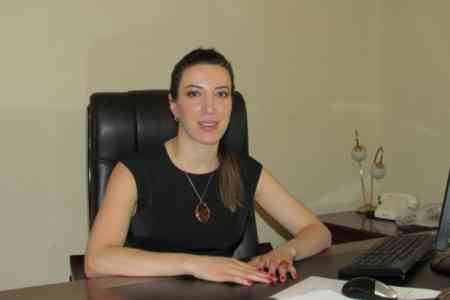
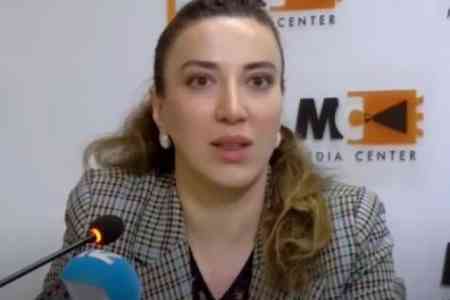
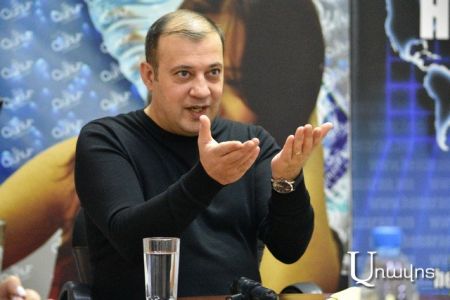
ArmInfo. Tattoos depicting crosses are being burned from the skin of Armenian prisoners held in Baku. Siranush Sahakyan, a human rights activist representing Armenian prisoners at the ECHR, stated this at a press conference in Yerevan on September 4.
As the human rights activist explained, there is a religious element in the context of relations between Armenia and Azerbaijan. In this regard, she recalled that Azerbaijan, in its destruction of Artsakh's heritage, is specifically targeting religious buildings.
"All Armenians held in Azerbaijani captivity are Christians. We have documented targeted attacks against religious symbols. These facts are presented, including in international reports. For example, tattoos depicting crosses were burned from the skin of prisoners. And although they are provided with some books, they are forbidden from reading the Bible. There were even cases where they were forced to read the Koran. These facts confirm that it is very difficult for adherents of Christian culture to establish a civilized dialogue with Azerbaijan," Sahakyan emphasized.
Regarding the conditions of detention of Armenian prisoners, the human rights activist noted that they have no physical contact with the outside world and are deprived of meetings with consular representatives, independent doctors, lawyers, and representatives of the International Committee of the Red Cross (ICRC) (on September 3, 2025, the ICRC closed its delegation in Azerbaijan by decision of the country's authorities - ed.). According to Sahakyan, even minimal rights, such as the right to exercise, are violated. "These are the minimum guarantees that should be ensured in closed institutions."
The Armenian prisoners are completely isolated. They are not provided with adequate medical care. There is no way to obtain precise information about their health, except for the information obtained by the European Court of Human Rights (ECHR). Even this is incomplete. The prisoners are also unable to write letters. Their only contact with the outside world is through phone calls, which are monitored and can be interrupted if information undesirable to the Azerbaijani side is revealed. "Through phone calls, the families of the Armenian hostages are trying to find out about their health," Sahakyan noted.
The human rights activist added that the captives, under threat, signed papers or made statements that did not reflect reality. "We know the names of the Armenian captives who suffered serious injuries, including fractures, from beatings and abuse in Baku, but we cannot yet disclose details or name the victims," she concluded.
It should be noted that the exact number of Armenian prisoners of war and hostages held in Azerbaijani prisons is still unknown. Experts estimate there are several hundred. Today, the Azerbaijani authorities confirm the presence of 19 Armenians in their custody. Among those held in Azerbaijani captivity are eight former and current representatives of the military-political leadership of Artsakh. These are former presidents of Artsakh; Arkady Ghukasyan, Bako Sahakyan, Arayik Harutyunyan, former Foreign Minister Davit Babayan, as well as Parliament Speaker Davit Ishkhanyan, former Commander of the Artsakh Defense Army, General Levon Mnatsakanyan, General David Manukyan, and former State Minister Ruben Vardanyan.
In February, the Baku puppet court sentenced Arayik Harutyunyan, Davit Babayan, Davit Ishkhanyan, Davit Manukyan, and Levon Mnatsakanyan to life imprisonment on trumped-up charges, and Bako Sahakyan, Arkady Ghukasyan, and Ruben Vardanyan to 20 years in prison. The so-called court sentenced the remaining Artsakh residents to up to 15 years in prison.










 Expert: The defeated authorities` position on normalizing relations with the enemy should not affect the rights of Artsakh refugees
 Expert: Fourth Republic is not to begin with Kocharyan`s arrest
 Expert: Armenia continues to `peel away` from Russian-led military-political and economic structures
 Putin: Armenia`s recognition of Karabakh as part of Azerbaijan in Prague has given Russia`s position on this issue an ambivalent character
 Putin: Armenia`s adoption of the law on EU accession means an announcement of its withdrawal from the Eurasian Economic Union
 Medvedev: Yerevan will never become an EU member, but it will permanently damage relations with the Eurasian Economic Union, including with Moscow.
 Aram Vardevanyan: Public demands solutions, not apology scandals in Parliament
 Arrested Armenian oligarch on economy and new jobs
 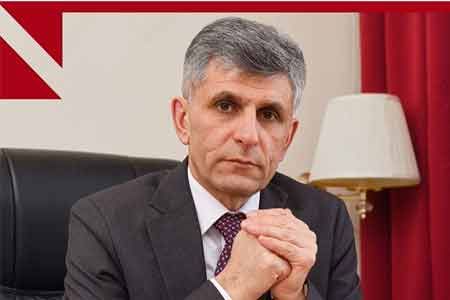 "In Baku, we gave a worthy rebuff to the false claims regarding the past and present of our people" – Former Artsakh Parliament Speaker from Baku captivity
  NA Vice Speaker candidate believes his wife`s salary as director of HayPost is the lowest in the company`s history
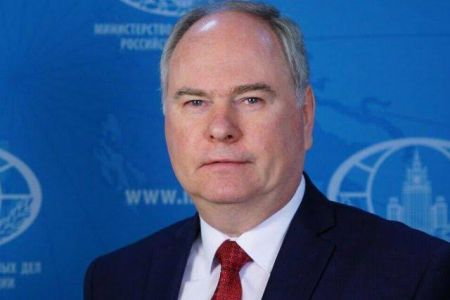 RF Permanent Representative: There is no CSTO-Armenia conflict
 Moscow: NATO seeking to "Pull" Armenia away from CSTO Allies
  Political analyst: Russia intends to determine which "Camp" Armenia will choose through a referendum
 Narek Karapetyan will give up his parliamentary salary in favor of charitable contributions.
 Armenia and France discuss further development of strategic partnership and EU cooperation
  To overcome risks Armenia must reduce domestic escalation - expert