
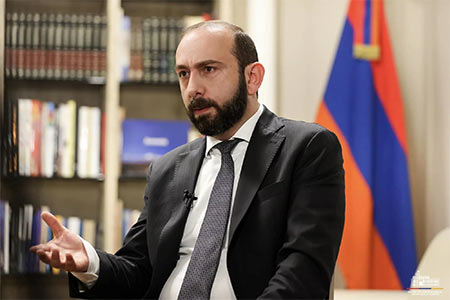
ArmInfo. Russia is, in fact, more than a strategic partner for Armenia in legal, political, and economic terms; it is an ally. Armenian Foreign Minister Ararat Mirzoyan stated this on Armenian Public Television.
"We have agreements that make us allies, which is more than a strategic partner. We are part of the same integrated economic union, the Eurasian Economic Union (EAEU), and we are members of the Collective Security Treaty Organization (CSTO). We have frozen our participation in the CSTO and see no prospect of reopening, but we have bilateral agreements and obligations that make us allies in the defense sector as well. So there's no need for any panicky connections or artificial themes," the Armenian diplomat said in response to a question about whether Armenia and Russia are no longer allies.
At the same time, he acknowledged that problems have recently arisen in relations between Armenia and Russia. According to him, this is evident both in the media and in the statements of controversial political figures. "Basically, it must be acknowledged, this is happening on the part of Russian media and officials, and in certain decisions by the Russian government, for example, restrictions on the export of our agricultural products, flowers, mineral water, and alcohol. I can say that this shows that, to a certain extent, there are obvious problems in our relations that require reconsideration, improvement, and mutual respect for interests. We believe that our Russian colleagues should have greater respect for our right to make independent decisions. Our Russian colleagues were wrong to block access of our goods to the Russian market. We are members of the EAEU and have all the rights and obligations. Armenia has fulfilled its obligations impeccably," Mirzoyan continued.
According to the Armenian Foreign Minister, the situation would have been different if they had said that this or that batch of flowers or sour cream showed such results; it's a question of standards. He noted that the apricot harvest had not yet been completed, and their import was prohibited. Mirzoyan considers such steps unhealthy and a violation of EAEU rules. The Armenian official is confident that the current situation requires not only Armenia and Russia, but all EAEU members to understand how to address this situation.
"We have fulfilled our obligations impeccably, and it is unfortunate that our rights are being violated. But you must have noticed that we do not want to aggravate the situation, we do not want to enter into a field of mutual accusations and statements. Just as we believed that Armenia and Russia are bound by strong friendly ties in various spheres—history, culture, political dialogue, economics—we also believe that this should be the case in the future. No realistic analysis or analysis based on Armenia's interests can demonstrate that Armenia should not have warm ties with Russia." "So we don't want to escalate the verbal spat, but rather sit down constructively and resolve all the issues in a friendly manner," he concluded.
As a reminder, Russia introduced gradual restrictions on imports of Armenian agricultural products in April. The official reason cited was sanitary and phytosanitary violations and a lack of safety oversight by authorized Armenian agencies. The real reason for the restrictions, however, is the Armenian leadership's overtly anti-Russian actions against the backdrop of Yerevan's course toward rapprochement with the European Union. These "sanctions" have already led to a decline in trade: in the first five months of 2026, mutual trade between Armenia and Russia fell by 21.5% compared to the same period last year. Difficulties have also arisen in agricultural exports: due to the blockage during the summer peak season, exports of Armenian fruits, vegetables, and flowers saw a sharp decline of 74.5%. Experts believe the financial losses to businesses amount to tens of millions of dollars, creating the threat of mass bankruptcy for hundreds of greenhouse and farming enterprises.







 Expert: Economic pressure on Armenia may be virtually painless for other EAEU members, but not for Armenia itself
 Expert on protests in France: Civilizations fade when society loses a vision of the future
 Turkologist: Azerbaijan is not all-powerful—its vulnerabilities should become part of Armenia’s security strategy
 Opinion: The development of the Amulsar mine near the resort town of Jermuk is the beginning of an environmental disaster in Armenia
 Expert: The arrest of opposition figures in Armenia for social media posts is a systematic attempt to intimidate the public and suppress dissent.
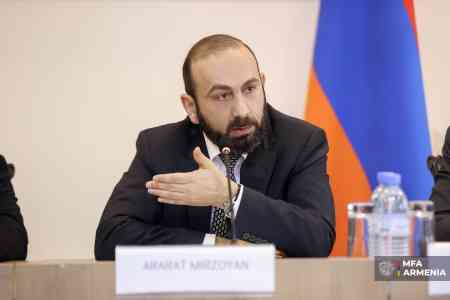 The Armenian Foreign Minister commented on the country`s return to work within the CSTO.
 The Artsakh Public Council expressed outrage at the UN Secretary-General`s behavior
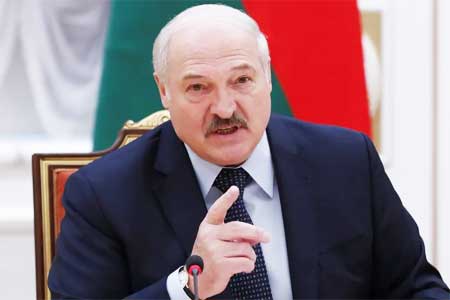 Lukashenko called for Armenia to assume the CIS presidency in 2029
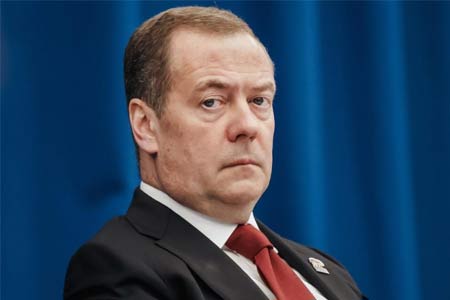 Dmitry Medvedev predicted a Ukrainian-like fate for Armenia amid the country`s shift in foreign policy
 Russian Security Council: In Armenia, they want to force Russian asset owners to dispose of their assets
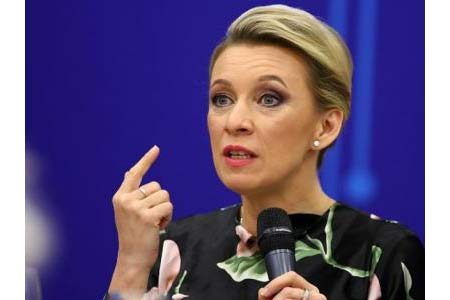 Zakharova: Russia ready to discuss with Armenia the prospects for expanding military cooperation as part of a review of bilateral ties
 Tevanyan: Armenia, like Ukraine and Moldova, is being drawn into the EU’s global war
 Yerevan City Hall is considering introducing a valet parking system in the city
 Expert: The circus surrounding the “Albanization” of Armenian culture in the presence of foreign ambassadors in occupied Artsakh is genocide
 Political scientist: If Russian-Armenian relations are destroyed, Turkey will take Russia`s place
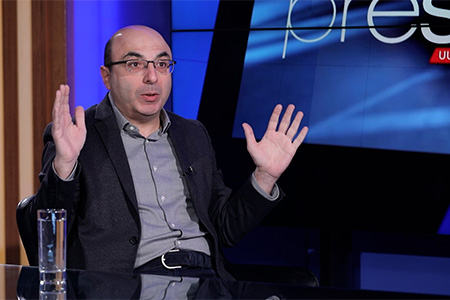 Political scientist: The Armenian public is simply obliged to significantly change the entire content of public discourse and struggle
 Cross tattoos are being removed from the skin of Christian prisoners in Azerbaijan by fire, according to a human rights activist.
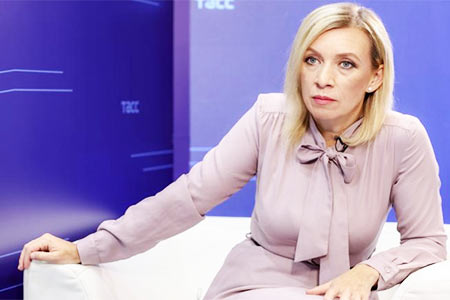 Zakharova: Armenia`s likely introduction of visas with Russia will be a step against Yerevan itself
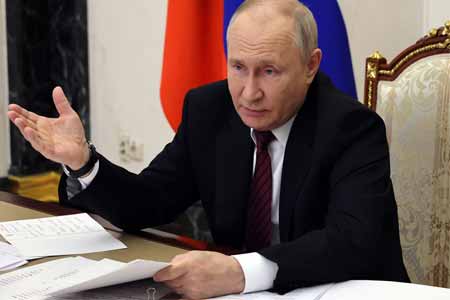 Putin: Armenia`s recognition of Karabakh as part of Azerbaijan in Prague has given Russia`s position on this issue an ambivalent character
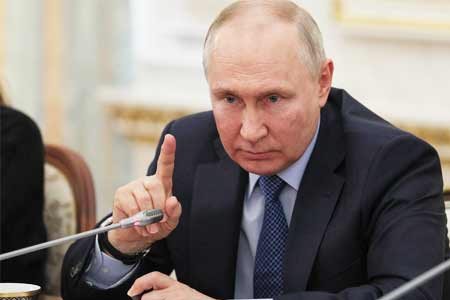 Putin: Armenia`s adoption of the law on EU accession means an announcement of its withdrawal from the Eurasian Economic Union