
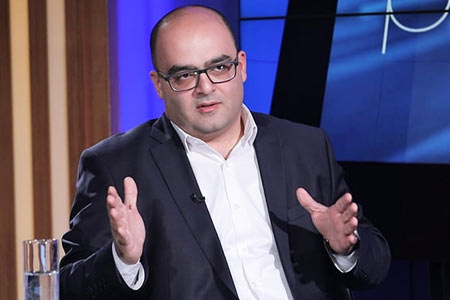
ArmInfo. Armenia needs to shift from predominantly sectoral water resource management to a comprehensive national water policy, which should include assessing strategic reserves and transboundary risks, developing water diplomacy, modernizing irrigation infrastructure, and drastically reducing water losses. Political scientist and Doctor of Political Science Vahe Davtyan writes about this in his article.
Recalling that Armenia celebrated Lake Sevan Day the day before, the political scientist noted that this is a good opportunity to discuss the lake beyond its environmental context. Vahe Davtyan emphasized that 2026 is demonstrating very positive hydrological trends: in June alone, the water level of Lake Sevan rose by 18 cm. This is the second-highest level recorded for June since 1927. There are also preconditions for record-low water withdrawals from the lake. However, Sevan is much more than just an ecological landmark. It is a strategic water resource for Armenia, accounting for approximately 96.5% of the country's national water resources.
"In the 21st century, water is gradually becoming a full-fledged geopolitical and geoeconomic resource, alongside energy, transport communications, and critical mineral resources. For the South Caucasus, characterized by the transboundary nature of river basins, climate risks, and high levels of conflict, the importance of hydropolitics will only grow. This is especially true given that Azerbaijan is increasingly incorporating water issues into its political discourse and strengthening its ambitions toward Armenia.
Under these circumstances, the Sevan issue is no longer solely an environmental or irrigation issue and is becoming a national security issue. Armenia needs to move from a predominantly sectoral approach to water resource management to a comprehensive national water policy, which should include an assessment of strategic reserves and transboundary risks, the development of water diplomacy, the modernization of irrigation infrastructure, and a drastic reduction in water losses. Sevan is a strategic reserve, an economic resource, and a key component of Armenia's sovereignty," the political scientist noted.
As a reminder, Lake Sevan Day is celebrated in Armenia yesterday.
Since 1999, it has fallen on the last Sunday in August. "Sevan is a blue eye opening among the mountains, reflecting all of Armenia in its gaze," Levon Azizyan, director of the Center for Hydrometeorology and Monitoring, wrote on his Facebook page. According to him, 2026 was a special year in the history of hydrometeorological observations of the lake. During June, Sevan's water level rose by 18 cm. This is the second-highest June level since observations began in 1927.
A more significant rise in the lake's water level in June was recorded only in 1988, which is considered the highest in the history of hydrometeorological observations of Sevan. Furthermore, this year could set another record. Before 2026, the lowest water discharge from Sevan was recorded in 2002 - 99.46 million cubic meters. According to Azizyan, the current positive conditions indicate that 2026 could be the year with the lowest volume of water releases from the lake.























 Expert: Fourth Republic is not to begin with Kocharyan`s arrest
 Political Scientist: Repressions in Armenia aimed at reshaping balance of power, centers of influence, and economic ownership
 Expert: Armenia continues to `peel away` from Russian-led military-political and economic structures
 Opinion: Pashinyan`s five-year government program aims to transform the current administration`s ideological concepts into state policy
 Medvedev: Yerevan will never become an EU member, but it will permanently damage relations with the Eurasian Economic Union, including with Moscow.
 Aram Vardevanyan: Public demands solutions, not apology scandals in Parliament
 Arrested Armenian oligarch on economy and new jobs
  "In Baku, we gave a worthy rebuff to the false claims regarding the past and present of our people" – Former Artsakh Parliament Speaker from Baku captivity
  NA Vice Speaker candidate believes his wife`s salary as director of HayPost is the lowest in the company`s history
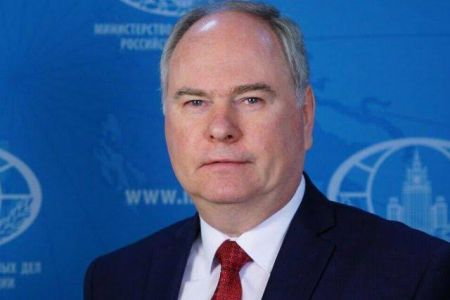 RF Permanent Representative: There is no CSTO-Armenia conflict
 Moscow: NATO seeking to "Pull" Armenia away from CSTO Allies
  Political analyst: Russia intends to determine which "Camp" Armenia will choose through a referendum
 Narek Karapetyan will give up his parliamentary salary in favor of charitable contributions.
 Armenian analyst: Developing relations with Europe and the U.S. must not jeopardize relations with regional powers
 Armenia and France discuss further development of strategic partnership and EU cooperation
  To overcome risks Armenia must reduce domestic escalation - expert
  Zatulin: Pashinyan was eager to get back to Russia because he actually lost the elections
 Human rights activist Ruben Melikyan dismissed from YSU
 Pashinyan removed from INNOPROM guest list