
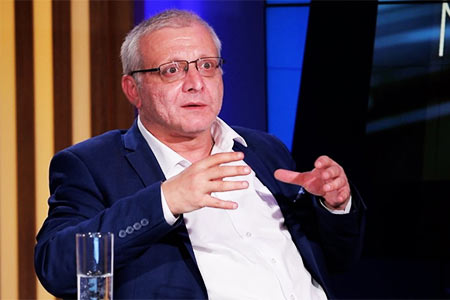
ArmInfo. The ongoing repressions in Armenia have several levels, and none of them, in essence, have anything to do with establishing justice or the rule of law. Political scientist Suren Surenyants writes about this in his article.
According to him, if the goal were to strengthen the rule of law, the law enforcement system would act not selectively and for political expediency, but according to universal and predictable rules. "The first and most discussed explanation for the repressions is domestic political retribution. Through criminal prosecution, forceful pressure, and administrative leverage, the authorities are attempting to weaken or neutralize undesirable political, economic, and social centers. However, explaining what is happening solely through this logic would be overly simplistic. The elections are over, the immediate problem of power reproduction has been resolved, and the pressure not only continues but is becoming more systemic. Therefore, it is necessary to understand what new problems are being addressed in post-election Armenia through repressive policies. This is where a second level emerges-the factor of external obligations. Extremely sensitive issues that will soon appear on the government's agenda include the adoption of a new Constitution, the return of enclaves, and the implementation of new agreements within the framework of Armenian-Azerbaijani relations. These decisions could provoke serious public and political resistance," the political scientist noted.
In this context, Suren Surenyants believes, the hypothesis that Nikol Pashinyan is attempting to weaken organized centers of potential resistance in advance is at least worth discussing. Repression, he argues, is becoming a means of creating a favorable environment for future political processes. In other words, the target may be not only today's political opponents, but also tomorrow's potential centers of resistance. However, even these two explanations don't fully capture the depth of what's happening. There's a third factor, perhaps the most systemic and with long-term consequences: a shift in Armenia's strategic course.
"Over the past three decades, Armenian-Russian strategic relations have not been limited to interstate ties. A broad system of political, economic, business, cultural and social relations has formed around them, with its own institutions, centers of influence, connections and interests. Today, it is precisely this environment that is being consistently destroyed. A change in strategic course also implies a restructuring of the country's internal structure. If the government removes Armenia from the previous geopolitical system, it is logical to assume that it will also try to weaken or eliminate those political, economic and social centers that were formed and gained influence within this system. From this point of view, repressions are already acquiring structural significance. The target is not only political opponents, but also centers with independent resources, influence and social connections, not controlled by the authorities and capable of hindering the internal and external reorganization of the country. However, dismantling the old system inevitably raises another question: what will be created in its place? Political and economic influence abhors a vacuum. If old centers are weakened or destroyed, new ones are formed in their place. And here we can already see The prospect of forming a new oligarchy with new privileged enterprises, new owners, new external connections, and new mechanisms of dependence on the government. Thus, the process taking place in Armenia is much deeper and more comprehensive. In one case, the government neutralizes political rivals; in another, it weakens those centers that could resist possible decisions regarding a new constitution, enclaves, or external agreements. However, at the third, most profound level, it is restructuring the country's political and economic system, bringing it into line with Armenia's new strategic orientation. These three levels complement each other. If this logic is correct, then the real goal of the ongoing repressions is much deeper than depriving individuals of freedom or silencing political opponents. It is about reformatting the balance of power in Armenia, centers of influence, economic ownership, and, ultimately, the country's political and geopolitical structure. The main question is: what kind of Armenia is being built through these repressions and whose interests will the emerging new system serve? - asks the political scientist.










 Expert: The arrest of opposition figures in Armenia for social media posts is a systematic attempt to intimidate the public and suppress dissent.
 Azerbaijani Studies Expert: While Azerbaijan Prepares Its Generation for War, Aliyev’s Aide Calls on Armenia to Prepare Armenian Society for “Peace”
 Turkologist: Azerbaijan will never, under any circumstances, stop pressuring the Armenian people
 Political scientist: We need to move away from the question of "when" and replace it with more important questions
 Lukashenko called for Armenia to assume the CIS presidency in 2029
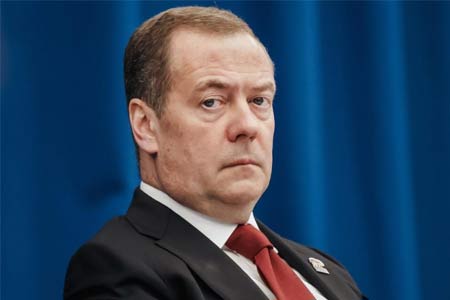 Dmitry Medvedev predicted a Ukrainian-like fate for Armenia amid the country`s shift in foreign policy
 Russian Security Council: In Armenia, they want to force Russian asset owners to dispose of their assets
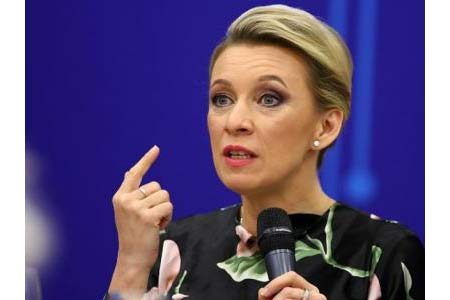 Zakharova: Russia ready to discuss with Armenia the prospects for expanding military cooperation as part of a review of bilateral ties
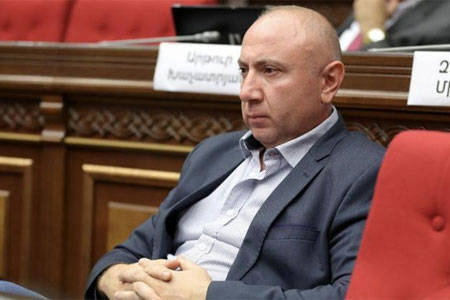 Tevanyan: Armenia, like Ukraine and Moldova, is being drawn into the EU’s global war
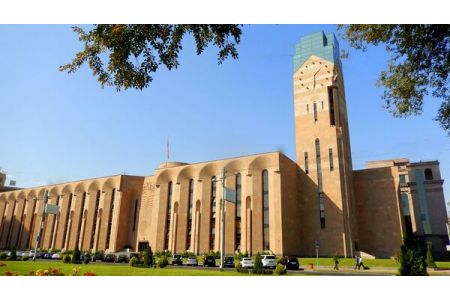 Yerevan City Hall is considering introducing a valet parking system in the city
 Expert: The circus surrounding the “Albanization” of Armenian culture in the presence of foreign ambassadors in occupied Artsakh is genocide
 Political scientist: If Russian-Armenian relations are destroyed, Turkey will take Russia`s place
 Political scientist: The Armenian public is simply obliged to significantly change the entire content of public discourse and struggle
 Cross tattoos are being removed from the skin of Christian prisoners in Azerbaijan by fire, according to a human rights activist.
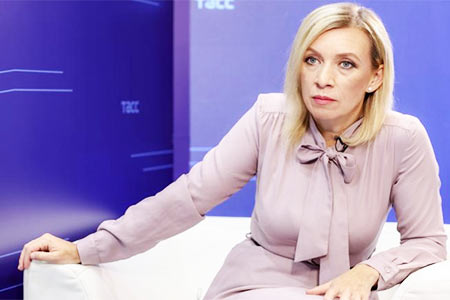 Zakharova: Armenia`s likely introduction of visas with Russia will be a step against Yerevan itself
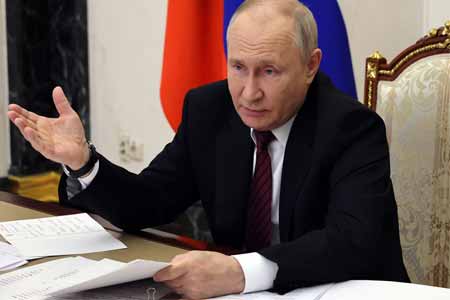 Putin: Armenia`s recognition of Karabakh as part of Azerbaijan in Prague has given Russia`s position on this issue an ambivalent character
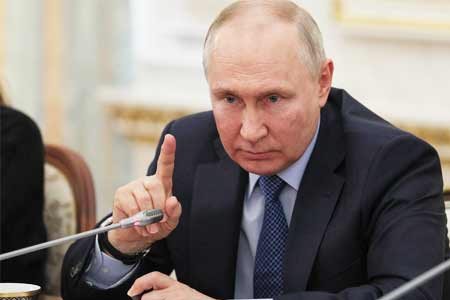 Putin: Armenia`s adoption of the law on EU accession means an announcement of its withdrawal from the Eurasian Economic Union