
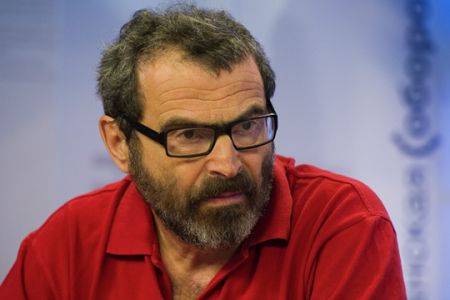
ArmInfo. Armenia continues to "peel" away from Russian-led military-political and economic structures, the CSTO, and the EAEU, and is also attempting to free itself from the Russian concession for Armenian Railways. This opinion was expressed by political observer, Central Asia expert, and Middle East specialist Arkady Dubnov.
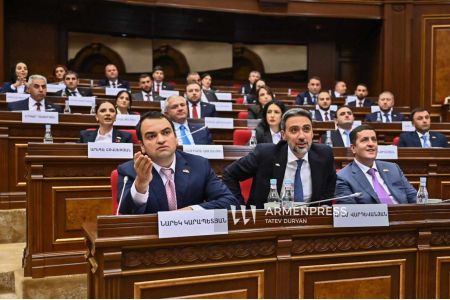
He noted that this conclusion can be drawn from the statements made by Prime Minister Nikol Pashinyan at a session of the National Assembly. Dubnov noted that Pashinyan confirmed that Armenia will soon apply for EU membership, after which the country could hold a referendum on whether to retain Armenia's membership in the EAEU or join the EU. The expert recalled that, according to Pashinyan, the application is necessary "to obtain answers to questions related to Armenia's possible accession to the EU and to determine the timeline for the necessary reforms."
"In general, the scope of 'work' is quite substantial, determined by the Copenhagen criteria for EU accession candidates, adopted back in 1993 at the EU summit in Denmark. There are 10 criteria-political, economic, and legislative-that are well known, and Armenia does not currently meet all of them. On the other hand, this spring, Vladimir Putin, on behalf of four members of the Community-Kazakhstan, Kyrgyzstan, Belarus, and Russia-stated that the fifth member of the EAEU, Armenia, 'should decide as soon as possible whether to participate in the EU or the EAEU,' in which case a 'soft and intelligent divorce' is possible. At the same time, he pointed out how much Armenia stands to lose if it continues its course toward Europeanization and refuses to cooperate with the EAEU," Dubnov noted. According to him, this was immediately demonstrated by Rosselkhoznadzor, which banned the import of Armenian stone fruits (cherries) and much else into Russia, suddenly discovering weak phytosanitary control on the Armenian side.
Dubnov, however, noted that these steps by Yerevan did not stop Pashinyan from continuing his "dissident" activities within the Moscow-oriented post-Soviet space, causing it some confusion. "This conclusion is obvious if you listen to the Russian president's press secretary, betraying some confusion, again explaining to the public what is well known: Yerevan's application for EU membership does not mean Armenia will soon join the union. He cited the example of Turkey, which submitted such an application back in 1987, and the process, he said, 'has not changed.' But that's not all. In parliament, Pashinyan also stated that Armenia will not return to active work within the CSTO within the next five years. He said that discussions are underway within the CSTO, and the charter allows for the expulsion of a member state," Dubnov noted.
He recalled that Armenia stopped paying membership dues in 2024, effectively freezing its participation in the CSTO. "The Russian Foreign Ministry later noted that such a refusal could lead to "various scenarios," but "it is unlikely to be expulsion from the CSTO." Meanwhile, Article 20 of the CSTO Charter provides for the possibility of expulsion in this case without taking into account the vote of the person violating the Charter. Apparently, such indifference on the part of Yerevan to its participation in the Organization took Peskov by surprise. And then suddenly the Kremlin discovered that Armenia doesn't need "such an important organization" and wants it expelled. Basically, this is the position - neither membership nor rejection: Some kind of Trotskyism, neither war nor peace. In the entire history of the CSTO, such a situation has never happened before; only Uzbekistan under Islam Karimov briefly joined twice, in 1992 and 2006, and then withdrew twice, in 1999 and 2012, respectively. This, however, did not prevent Tashkent from maintaining loyal relations with Moscow and retaining freedom of maneuver in foreign affairs. "politics," Dubnov believes.
However, according to the expert, this is not the end of Nikol Pashinyan's parliamentary burlesque on August 24. Dubnov noted that Pashinyan "politely asked his Russian partners to show flexibility" and sell the concession rights to a third country acceptable to both Armenia and Russia. "Peskov did not respond to this proposal of 'separation' from Russia. It is not within his authority," Dubnov concluded.







 Opinion: The development of the Amulsar mine near the resort town of Jermuk is the beginning of an environmental disaster in Armenia
 Expert: The arrest of opposition figures in Armenia for social media posts is a systematic attempt to intimidate the public and suppress dissent.
 Azerbaijani Studies Expert: While Azerbaijan Prepares Its Generation for War, Aliyev’s Aide Calls on Armenia to Prepare Armenian Society for “Peace”
 Turkologist: Azerbaijan will never, under any circumstances, stop pressuring the Armenian people
 Political scientist: We need to move away from the question of "when" and replace it with more important questions
 Lukashenko called for Armenia to assume the CIS presidency in 2029
 Dmitry Medvedev predicted a Ukrainian-like fate for Armenia amid the country`s shift in foreign policy
 Russian Security Council: In Armenia, they want to force Russian asset owners to dispose of their assets
 Zakharova: Russia ready to discuss with Armenia the prospects for expanding military cooperation as part of a review of bilateral ties
 Tevanyan: Armenia, like Ukraine and Moldova, is being drawn into the EU’s global war
 Yerevan City Hall is considering introducing a valet parking system in the city
 Expert: The circus surrounding the “Albanization” of Armenian culture in the presence of foreign ambassadors in occupied Artsakh is genocide
 Political scientist: If Russian-Armenian relations are destroyed, Turkey will take Russia`s place
 Political scientist: The Armenian public is simply obliged to significantly change the entire content of public discourse and struggle
 Cross tattoos are being removed from the skin of Christian prisoners in Azerbaijan by fire, according to a human rights activist.
 Zakharova: Armenia`s likely introduction of visas with Russia will be a step against Yerevan itself
 Putin: Armenia`s recognition of Karabakh as part of Azerbaijan in Prague has given Russia`s position on this issue an ambivalent character
 Putin: Armenia`s adoption of the law on EU accession means an announcement of its withdrawal from the Eurasian Economic Union
 Aram Vardevanyan: Public demands solutions, not apology scandals in Parliament