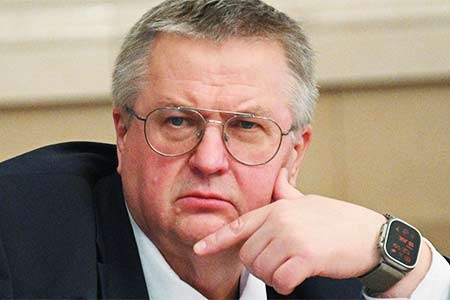
ArmInfo. Russia is ready for constructive dialogue with Armenia, but Yerevan faces certain issues. Deputy Prime Minister Alexei Overchuk stated this in a conversation with Kremlin Pool journalist Alexander Yunashev.
"Recently, [Minister of Agriculture] Oksana Lut met with the Armenian Minister of Economy and outlined these issues. Phytosanitary control requirements must be met," Overchuk noted.
As a reminder, since the end of May of this year, authorized Russian authorities have been imposing restrictions on the import of products from Armenia as a result of violations uncovered during inspections. Initially, the restrictions affected flowers, then fresh agricultural produce, fish, and fish products. News about dairy products had already emerged days earlier. Traditionally, Armenia exported over 80%-90% of this product to the Russian market.
It's worth noting that all of this began after a change in policy by the Armenian authorities. On January 9, 2025, the Armenian government approved a draft law on the initiation of the EU accession process, proposed by the "Eurakve" civic initiative. The draft was sent to the Armenian parliament for approval. On March 26, the parliament adopted it in its final reading and sent it to the president for signature. The document was signed on April 4 of that year. Moscow stated that Russia had conveyed to Armenia that simultaneous membership in the Eurasian Economic Union and the European Union was impossible. On May 9, Russian President Vladimir Putin, speaking to journalists, suggested that Armenia decide on its membership in the EU and the EAEU as soon as possible, expressing its readiness to "begin a civilized divorce" if necessary. Yerevan responded by stating that it would leave the EAEU whenever it deemed it necessary. And already on May 29, the heads of four of the five EAEU countries adopted a resolution recommending that Armenia hold a referendum on the issue of the country's continued membership in the EAEU.









 Political analyst: Election victory grants political force a mandate to govern the country, not the right to transform its own worldview into a state ideology
 Opinion: Pashinyan`s five-year government program aims to transform the current administration`s ideological concepts into state policy
 Constitutional law expert argues referendum needed for Tigranashen transfer
 Political analyst: Uncertainty filled with Hope differs fundamentally from uncertainty filled with despair
 Expert: Israel strikes at Turkey`s military ambitions in Syria
 Aram Vardevanyan: Public demands solutions, not apology scandals in Parliament
 Arrested Armenian oligarch on economy and new jobs
  "In Baku, we gave a worthy rebuff to the false claims regarding the past and present of our people" – Former Artsakh Parliament Speaker from Baku captivity
  NA Vice Speaker candidate believes his wife`s salary as director of HayPost is the lowest in the company`s history
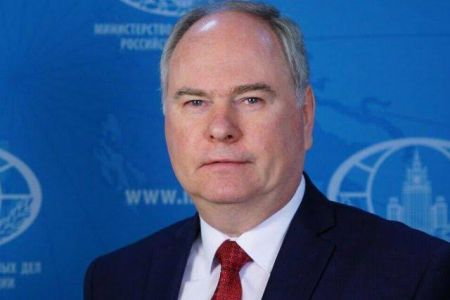 RF Permanent Representative: There is no CSTO-Armenia conflict
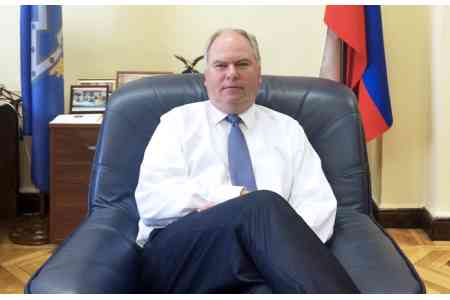 Moscow: NATO seeking to "Pull" Armenia away from CSTO Allies
 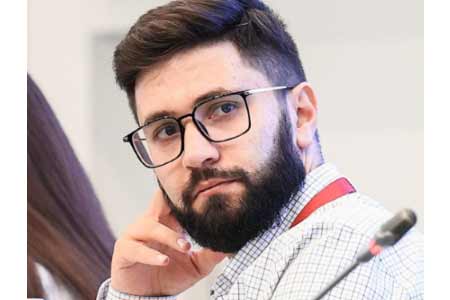 Political analyst: Russia intends to determine which "Camp" Armenia will choose through a referendum
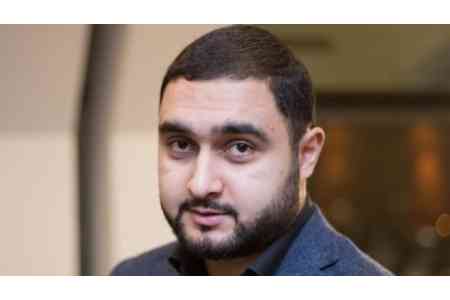 Armenian analyst: Developing relations with Europe and the U.S. must not jeopardize relations with regional powers
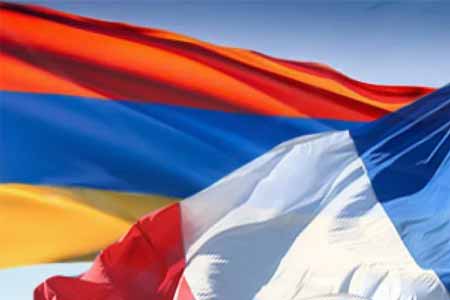 Armenia and France discuss further development of strategic partnership and EU cooperation
  To overcome risks Armenia must reduce domestic escalation - expert
  Zatulin: Pashinyan was eager to get back to Russia because he actually lost the elections
 Human rights activist Ruben Melikyan dismissed from YSU
 Zakharova: Armenia`s pro-EU pivot poses economic security risks to EAEU member states